
The formal conclusion of the reclamation phase for the area designated as Finger 3 within Tuas Port Phase 2 serves as a definitive statement regarding Singapore’s long-term commitment to maritime excellence. As the Maritime and Port Authority celebrates its 30th anniversary in 2026, this achievement highlights the meticulous nature of a project that required eight years of continuous engineering effort to transform open sea into a stable industrial foundation. By centralizing container operations into a single, massive hub, the nation is not merely expanding its physical footprint but is fundamentally redesigning its role in the global supply chain. This transition from dispersed city terminals to a high-tech, consolidated facility at Tuas allows for a level of operational synergy that was previously unattainable. The project represents a fortress of trade, designed to safeguard economic interests against global volatility while providing a launchpad for the next generation of automated port technologies.
Strategic Expansion of Global Trade Capacity
The scale of the Tuas Port development is meticulously calibrated to meet the evolving demands of the global shipping industry throughout the rest of this century. Once all four phases of construction reach completion in the 2040s, the facility will possess a staggering annual capacity of 65 million Twenty-Foot Equivalent Units, commonly known as TEUs. Phase 2 is a cornerstone of this long-term strategy, contributing 21 deep-water berths that are specifically engineered to accommodate the largest container vessels currently in service as well as the even larger ships anticipated in the coming years. This massive expansion is not just about increasing throughput numbers; it is about providing the physical room necessary to implement advanced automation systems that would be difficult to retrofit into older, more confined city terminals. By focusing on these deep-water berths now, the port ensures it can handle the increased draft requirements of ultra-large ships.
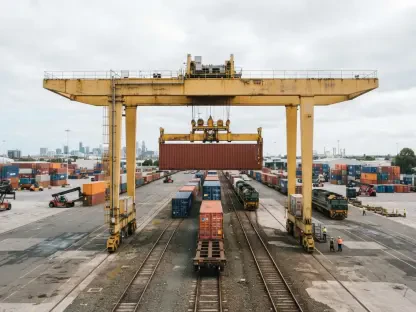
Centralizing these container operations at Tuas Port creates a significant opportunity for economies of scale that will redefine the cost-effectiveness of regional transshipment. By moving operations away from city-based terminals that have reached their physical limits, the industry can streamline complex logistics and drastically reduce the friction associated with inter-terminal transfers. This efficiency is vital for maintaining a competitive edge in a global market where shipping lines prioritize speed and reliability above all else. The consolidation effort also frees up prime waterfront land in the city for other high-value developments, illustrating how maritime strategy and urban planning can work in tandem. This logistical cohesion ensures that Singapore remains an indispensable node in international trade, offering a level of connectivity that few other ports can match. The focus remains on creating a resilient environment where goods can move seamlessly across borders without the bottlenecks of the past.
Engineering Precision and Technical Execution
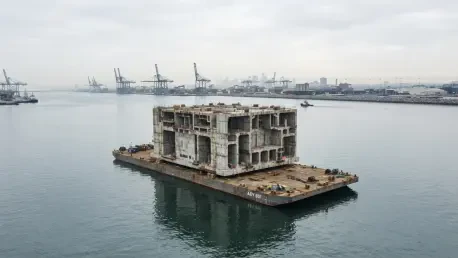
The reclamation of Finger 3 demanded an extraordinary level of engineering rigor, primarily through the utilization of massive concrete caissons to construct the seawall foundation. Each of these giant structures had to be meticulously fabricated, transported, and placed with extreme precision in an environment defined by unpredictable tidal movements and heavy marine traffic. Navigating these complexities required a sophisticated coordination of naval engineering and civil construction, ensuring that the underwater foundations were stable enough to support the immense weight of the terminal superstructure. This process involved not only high-tech sensors and positioning systems but also the deep expertise of maritime professionals who understood the nuances of the local waters. The successful installation of these caissons serves as a testament to the technical mastery and detailed planning that have become the standard for Singapore’s major infrastructure works, proving that even the most hostile marine conditions can be managed.
Beyond the construction of the seawalls, advanced ground improvement techniques were essential to prepare the reclaimed land for the heavy industrial loads it must eventually bear. These methods ensured that the soil reached the necessary density to prevent settlement when supporting stacked shipping containers and massive gantry cranes. A key aspect of the project’s success was the implementation of a phased handover strategy, which allowed the terminal operator, PSA Singapore, to begin infrastructure development on finished sections while reclamation work continued in adjacent areas. This overlapping schedule required a high degree of collaboration between contractors and government agencies to ensure safety and efficiency remained uncompromised. By effectively compressing the development timeline, this strategy demonstrates a more agile model for large-scale maritime civil engineering, allowing the facility to begin generating value much sooner than traditional linear construction sequences would permit while maintaining structural integrity.
Frequently Asked Questions Regarding Terminal Development
Regarding the long-term operational scale, many industry analysts have asked about the specific capacity targets that the nation aims to achieve upon full implementation. When all four phases of construction are completed in the 2040s, the port will have a total annual capacity of 65 million TEUs. This volume is specifically designed to meet the projected growth of international shipping and to solidify the facility’s position as the world’s largest fully automated container terminal. The infrastructure was built to handle the next century of trade, ensuring that even as vessel sizes increase, the port remains capable of efficient loading and unloading. This massive capacity is not just a theoretical number; it represents a commitment to maintaining Singapore’s status as a top-tier global hub. By creating this room for growth, the maritime sector is essentially future-proofing the national economy against the shifting patterns of global trade routes and the ever-growing demands for faster shipment processing.
In addition to capacity, the question of how long Finger 3 reclamation took and how the project protects marine life remains a point of interest for environmental stakeholders. The reclamation of the Northern Berths of Phase 2 was an eight-year journey that began in early 2018 and reached its formal conclusion in late 2026, involving massive caisson placements. Throughout this process, the protection of local ecosystems was prioritized through the relocation of coral colonies to the waters around Sultan Shoal. This effort ensured that biodiversity was preserved despite the significant industrial footprint of the project. Furthermore, the use of green technologies, such as biodegradable vertical drains, helped reduce the environmental impact of the reclamation on the surrounding seabed. These measures demonstrate that large-scale industrialization can be executed responsibly, ensuring that the maritime legacy is built on a foundation of ecological awareness and sustainable engineering practices.
Strategic Outlook and Implementation Recommendations
The successful completion of the Finger 3 reclamation provided a clear roadmap for the next stages of terminal construction and operational deployment. Stakeholders observed that the collaborative framework established during the reclamation phase effectively mitigated the severe risks associated with supply chain bottlenecks and manpower constraints. This past success indicated that future phases should continue to prioritize modular construction and automated data sharing to maintain momentum. The decision to integrate terminal infrastructure early in the process was a crucial step that saved significant amounts of time, allowing for the rapid installation of automated guided vehicles and smart crane systems. By reflecting on the lessons learned during this intensive eight-year period, the maritime industry gained valuable insights into how to handle large-scale land creation in increasingly crowded waters. These findings suggested that a flexible, technology-first approach remains the most effective way to navigate global uncertainties.
As the project moved forward, industry leaders recommended a continued focus on workforce upskilling and the adoption of low-carbon energy solutions to ensure long-term viability. The lessons from Phase 2 underscored the importance of preparing the labor force for a highly digitized environment where remote operations and data analytics are standard. Furthermore, the integration of green energy sources into the port’s power grid was identified as a necessary step to align with the decarbonization goals of the international maritime community. The project demonstrated that the foundation for a “fortress of trade” was built not just with concrete and steel, but with a commitment to innovation and resilience. As the focus shifted toward the Southern Berths, the insights gained from Finger 3 provided the necessary data to optimize future reclamation and construction sequences. This proactive stance ensured that the nation was prepared to handle the complexities of modern shipping while maintaining its reputation for forward-thinking leadership.