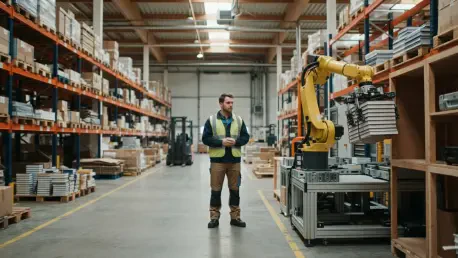

The educational publishing industry is currently grappling with a monumental shift as legacy distribution methods struggle to keep pace with the volatile demands of modern supply chains. At the heart of this evolution is Mirae N, a leading textbook publisher that has recently embarked on an ambitious artificial intelligence transformation at its primary logistics hub in Sejong. This initiative seeks to bridge the gap between traditional print operations and the digital speed of 2026 by integrating sophisticated robotics and machine learning frameworks. By moving away from a model that historically relied on grueling physical labor, the company is setting a new standard for how intellectual property is physically moved and managed across the continent. This project, which is receiving significant support through national industrial safety programs, represents a comprehensive overhaul of the logistics lifecycle, from autonomous book retrieval to the robotic palletizing of final shipments for schools and retailers throughout the region.
Addressing Traditional Warehouse Limitations
The historical reliance on human physical strength within the publishing sector has created significant bottlenecks that impede long-term scalability and operational flexibility. At the Sejong facility, the traditional logistics model required an exhaustive commitment of manual labor to manage the daily processing of nearly 13 tons of educational materials. This reliance on human effort meant that during periods of extreme demand, such as the start of a new academic year, the facility was forced to stretch its personnel to the breaking point to maintain delivery schedules. This approach not only introduced higher margins for human error in sorting and retrieval but also resulted in a work environment characterized by high physical stress. The implementation of artificial intelligence was therefore not merely a technological upgrade but a necessary response to the physical limitations of the legacy warehouse system, allowing the company to transition toward a more sustainable and high-capacity operational framework.
Overcoming Manual Labor Hurdles
Logistics operations at the Sejong warehouse have long been defined by the sheer physical grit required to manage a throughput of approximately 13 tons of books on a typical workday. Employees are frequently required to scale high-reach equipment or navigate shelves that tower nearly 10 meters into the air, manually pulling specific volumes based on dense shipping manifests. This environment is not only physically taxing but inherently prone to errors when workers must identify nearly identical book spines under the pressure of tight deadlines. In the past, a single staff member might lift and relocate over two tons of material during a standard shift, a metric that highlights the unsustainable nature of traditional manual sorting. These demands often result in high turnover rates and a greater risk of musculoskeletal injuries, forcing the organization to rethink its fundamental approach to workforce management and operational safety as automated solutions become increasingly accessible.
Strategic Framework for Automation
The urgency for this technological pivot becomes even more apparent during peak seasonal surges, such as the start of a new academic semester, when daily volume can skyrocket from 21,000 to over 33,000 books. This massive influx of orders puts an immense strain on the existing infrastructure, often requiring temporary labor or extensive overtime that can degrade accuracy and delivery speeds. To mitigate these risks, Mirae N secured a strategic partnership through the AX Sprint program, a government-backed initiative aimed at accelerating the deployment of AI-driven safety and productivity solutions. This collaboration with specialized AI provider Raon BizCom has allowed the company to develop a “smart” production site where machine learning algorithms autonomously govern equipment movements. By prioritizing industrial safety alongside raw output, the new system ensures that the facility remains highly competitive while shielding its human employees from the repetitive aspects of the supply chain.
The Mechanics of AI Integration
The transition to an AI-managed facility involves a sophisticated architectural shift where machine learning algorithms serve as the primary decision-makers for all physical movements. This integration is facilitated by the Warehouse Control System, which acts as the brains of the operation, interpreting real-time data from the broader Warehouse Management System to assign tasks and optimize routes. By utilizing complex neural networks, the system can predict peak traffic areas within the aisles and adjust robotic trajectories to ensure a constant, unimpeded flow of inventory. This level of synchronization is essential for maintaining the high-speed throughput required in 2026, where retailers and educational institutions expect next-day delivery of vast textbook orders. The synergy between autonomous hardware and predictive software represents a paradigm shift in how logistical challenges are solved, replacing reactive human problem-solving with proactive machine-driven optimization and strategic resource planning.
Robotics and Collaborative Systems
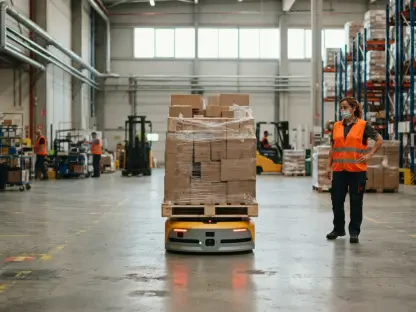
Central to this technological overhaul is the implementation of the Mobile Manipulator, commonly referred to as the MOMA, which functions as the primary physical engine of the automated warehouse. These advanced units are essentially high-torque robotic arms mounted onto autonomous driving bases, allowing them to traverse the facility floor without the need for fixed tracks or human guidance. Unlike the rigid automation of the past, the MOMA utilizes a machine-learning-based Warehouse Control System to calculate the most efficient navigation paths in real time based on current traffic and priority. Equipped with high-resolution AI vision cameras, these robots can distinguish between various book titles, shapes, and binding styles with a level of precision that exceeds human capability. This visual data is constantly cross-referenced with the centralized Warehouse Management System to verify that every item picked matches the digital order, eliminating the friction and cost of shipping errors.
Integration of Specialized Labor
The operational philosophy at Mirae N focuses on a sophisticated division of labor that leverages the unique strengths of both machine intelligence and human intuition rather than seeking total displacement. Robots are tasked with the heavy lifting and repetitive transport duties, specifically handling book bundles that weigh 10 kilograms or more, which significantly reduces the physical burden on the facility staff. Meanwhile, human workers are redeployed to manage more nuanced activities, such as picking individual copies of specialized materials or performing final quality checks that require a human touch. The AI serves as a central choreographer, synchronizing the movements of autonomous robots and human pickers to ensure that all disparate parts of a complex order arrive at the automated packing station at the exact same moment. This high level of coordination streamlines the boxing and bundling process, allowing for a continuous flow of outbound shipments during the busiest distribution cycles.
Strategic Implementation of Future Systems
The integration of autonomous systems at the Sejong plant ultimately demonstrated that modernizing a legacy industry required a balance between rapid technological adoption and consistent workforce development. By prioritizing the internalization of AI expertise, the organization ensured that its staff became the primary drivers of future innovation rather than passive observers of automation. Moving forward, other firms in the logistics and manufacturing sectors should look to implement digital twin simulations early in their transition to identify safety risks before deploying hardware. Stakeholders were encouraged to invest in modular robotic platforms that could be scaled according to seasonal demand, allowing for financial flexibility during market fluctuations. The project also highlighted the necessity of aligning automation goals with national safety standards to secure institutional support and mitigate long-term liability. These strategic steps established a foundation for an agile sector.