
The reduction of internal wiring looms represents a major step in solving the ‘Achilles’ heel’ of high-degree-of-freedom robotic arms. This technical breakthrough serves as the cornerstone for the second-generation Stretch robot, a machine designed by Boston Dynamics to transition from a sophisticated technical marvel into a dependable workforce staple within the global supply chain. While the initial prototype successfully demonstrated the feasibility of autonomous unloading, this refined model addresses the harsh realities of industrial environments where dust, vibration, and constant movement typically degrade sensitive electronic components. By leveraging over 100,000 hours of operational data gathered since its commercial launch in 2023, the engineering team has eliminated common failure points that previously led to costly downtime. The result is a platform that no longer feels like a laboratory experiment but rather a ruggedized piece of infrastructure capable of handling the high-velocity demands of modern commerce without constant human intervention or oversight.
Engineering for Industrial Endurance
Hardware Refinements: Mechanical Agility
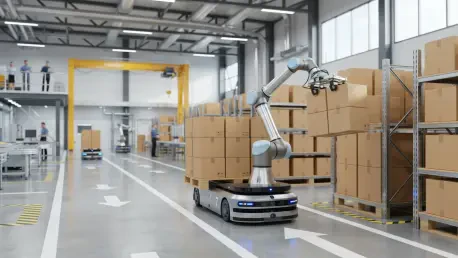
The mechanical capabilities of the second-generation Stretch have been fundamentally upgraded to ensure fluid, uninterrupted movement during the most complex unloading maneuvers. The robotic arm now features joints equipped with continuous 360-degree rotation, a design choice that effectively eliminates the need for the machine to “unwind” or reset its physical position while handling parcels in confined spaces. This lack of rotational limitation allows the robot to maintain a higher operational tempo, as it can transition between different picking angles without the mechanical hesitation that plagued earlier iterations. Such agility is particularly vital when navigating the irregular stacks of boxes found in the back of shipping containers, where every second saved contributes to the overall throughput of the facility. By streamlining these movements, the robot achieves a more natural, human-like flow that maximizes the efficiency of the workspace while reducing the physical strain on the internal motor assemblies and drive systems.
Beyond the arm’s dexterity, the vacuum suction system has been refined with advanced sensors and high-performance valves to allow for a more secure grip on a wide variety of packaging materials. This upgraded “hand” can now identify and adapt to everything from standard corrugated cardboard to the slick surfaces of polybags or irregularly shaped parcels weighing up to 50 pounds. The integration of high-resolution force sensors allows the robot to adjust its grip strength in real-time, preventing damage to fragile contents while ensuring that heavy items do not slip during high-speed transfers. This capability is supported by a sophisticated vision system that maps the environment in three dimensions, allowing the robot to make millisecond-level adjustments to its trajectory. These hardware improvements ensure that the machine remains productive even when faced with the chaotic and disorganized loading patterns common in international shipping, where boxes are rarely stacked with perfect geometric precision.
Maximizing Uptime: Maintenance Efficiency
The design philosophy for this latest update prioritizes the “duty cycle” and ease of maintenance to minimize the costly backlogs often caused by equipment downtime. The robot’s power management system now supports 16 hours of continuous operation, effectively allowing it to cover two full consecutive shifts on a single charge. This level of endurance is a critical factor for large-scale logistics hubs that operate around the clock and cannot afford to have units sidelined for frequent recharging. By extending the operational window, Boston Dynamics has made the Stretch a viable alternative to manual labor for the most grueling and repetitive tasks on the loading dock. Furthermore, the internal cooling systems have been hardened against the heat and humidity typical of non-climate-controlled warehouse environments, ensuring that the onboard processors and battery cells remain within optimal thermal ranges even during peak summer periods of high-intensity use.
For the technicians responsible for fleet management, the layout has been optimized with more accessible components and a simplified internal architecture that makes routine servicing significantly faster. The emergency-stop buttons have been lowered and reinforced to prevent accidental damage from low-hanging obstacles, while the outer panels now feature automotive-grade materials designed to withstand the inevitable scrapes and bumps of a busy loading dock. The 81% reduction in wiring complexity means that diagnostic procedures are much more straightforward, as there are fewer connectors and cables that can vibrate loose over time. These changes reflect a mature understanding of the total cost of ownership, where the value of a robot is determined as much by its reliability and serviceability as by its maximum picking speed. By focusing on these practical industrial requirements, the company has created a tool that fits seamlessly into existing maintenance workflows.
The Strategic Expansion of Autonomous Warehousing
Global Partnerships: Commercial Validation
Strategic collaborations with global logistics leaders like DHL and Maersk have already validated the platform’s performance in the field, with DHL planning to deploy over 1,000 additional units across its network. These robots are not merely undergoing trials; they are actively achieving peak unloading rates of 700 boxes per hour in live operational environments. This volume of work provides a massive influx of data that continues to train the machine learning models responsible for parcel recognition and path planning. As these fleets grow, the collective intelligence of the Stretch platform increases, allowing all units in the field to benefit from the edge cases encountered by their peers. This network effect is a key differentiator in the robotics market, as it allows for rapid iteration and the deployment of software updates that improve performance across diverse shipping scenarios without requiring physical hardware changes for every new challenge encountered.
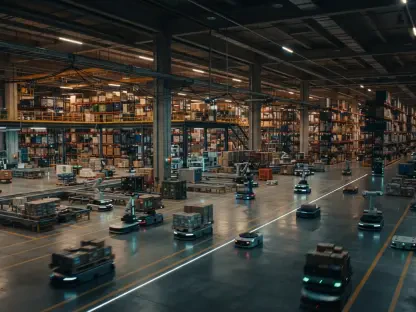
The expansion of the robot’s role within the warehouse signifies a broader shift toward comprehensive automation that goes beyond the simple movement of boxes from point A to point B. While unloading remains the primary use case, the versatility of the second-generation model allows it to be integrated into other tasks such as order fulfillment, picking, and sorting. Logistics companies are increasingly looking at these machines as mobile agents that can be redeployed to different areas of a facility depending on daily demand fluctuations. This flexibility is essential for justifying the significant capital expenditure required for large-scale robotic adoption. By proving that a single platform can handle multiple high-intensity roles, Boston Dynamics has positioned the Stretch as a foundational element of the modern warehouse, bridging the gap between fixed automation systems and the flexible, mobile workforce required for the future of global commerce.
The Robotics Roadmap: Integration Strategies
Hyundai Motor Group’s broader vision involves a multi-species robotic ecosystem where the Stretch works in tandem with the quadruped Spot and the upcoming humanoid Atlas. This strategy is currently being refined at the Robot Metaplant Application Center in Georgia, which serves as a sophisticated hub for testing how these different machines interact within a shared industrial space. The goal is to create a seamless flow of goods where autonomous systems manage every step from the initial unloading at the dock to the final assembly on the manufacturing floor. Plans are already in place to deploy humanoid units for parts sorting by 2028, with full-scale assembly tasks following by 2030. This roadmap suggests that the innovations found in the Stretch are merely the first stage of a much larger transformation in how industrial labor is structured, with a heavy emphasis on standardization and the use of automotive-grade components to ensure long-term durability.
To prepare for this shift, organizations focused on the integration of standardized data protocols and the modernization of physical infrastructure. The successful implementation of the Stretch required facilities to adopt more robust wireless networking and clear floor markings to facilitate smooth navigation. Decision-makers evaluated their current dock configurations to ensure that autonomous units could move without obstruction, which often necessitated a rethinking of traditional warehouse layouts. By prioritizing the reliability of hardware through reduced wiring and reinforced structures, engineers moved the industry closer to a model where robots are treated as essential utilities rather than experimental projects. This transition paved the way for more ambitious automation projects, as the proven uptime of these second-generation systems provided the confidence needed for further investment. Ultimately, the focus on practical durability established a new benchmark for how autonomous systems supported the global supply chain.