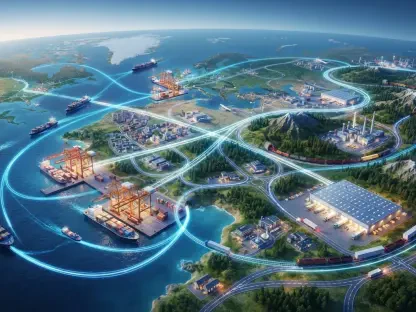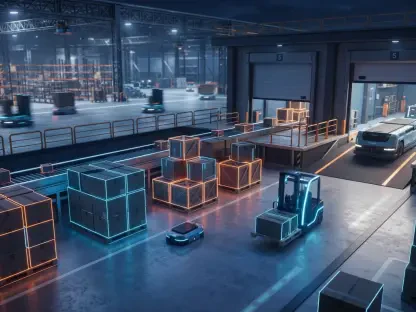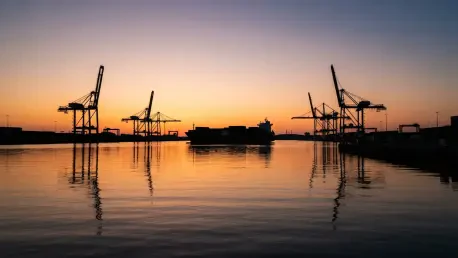

The terminal’s strategy centers on the concept of ‘reliable time,’ treating every vessel call and truck gate entry as a precision industrial process rather than a traditional port operation. Located in the heart of the Campania region, the Salerno Container Terminal (SCT) serves as a vital maritime gateway that connects the Mediterranean with the industrial heartlands of southern Italy. This facility, managed by the Gallozzi Group since its inception in 1952, has evolved into a sophisticated industrial system often described as a “factory of flows.” Unlike many logistics hubs that rely on massive land expansions, SCT thrives on a unique business model that prioritizes operational independence and high-density productivity. By serving as a neutral ground for various global shipping lines, the terminal has secured its position as a critical node for the regional economy, ensuring that the movement of goods remains steady despite the volatility inherent in global trade. The terminal’s identity as a private operator performing a public function allows it to maintain a strictly neutral stance, ensuring that all maritime carriers are treated with equal priority, creating a level playing field for cargo owners and local manufacturers.
Strategic Excellence and Operational Productivity
The Power of Independent Management: A Neutral Gateway
Maintaining strict independence is the hallmark of the SCT management philosophy, a strategy overseen by leadership that views the terminal as a neutral platform for global trade. In an industry where many major ports are increasingly influenced or owned by specific shipping alliances, SCT remains entirely independent under the Gallozzi Group. This neutrality ensures that no single carrier receives preferential treatment, which fosters a healthy competitive environment among all shipping lines serving the region. This competition is vital for driving down overall logistics costs and enhancing global market access for local manufacturers in southern Italy. Because the terminal does not have a captive audience provided by a parent shipping company, it must earn every single vessel call through superior performance and reliability. This performance-based culture aligns the terminal’s operational goals directly with the needs of the shippers, ensuring that the focus remains on speed, accuracy, and customer service. By operating as a private entity with a clear public mission, SCT serves as a stabilizing force in the Mediterranean logistics market.
The economic alignment between the terminal and the regional economy creates a symbiotic relationship that supports thousands of jobs across the Campania region and beyond. As a neutral gateway, SCT provides local businesses with the flexibility to choose the best shipping services for their specific needs, whether they are exporting agricultural goods or importing raw materials for industrial production. This accessibility is a key differentiator for southern Italian exporters who need to reach international markets in North America, Asia, and Europe without the hurdles of alliance-specific port constraints. The terminal’s leadership has successfully navigated global supply chain disruptions by doubling down on this commitment to independence, ensuring that regional trade remains fluid even when global carrier networks face instability. By prioritizing the needs of the local manufacturing base, the terminal has become more than just a place to move containers; it is a strategic asset that enhances the global competitiveness of the entire region. This focus on regional growth ensures that SCT remains a vital partner for the long-term economic development of southern Italy.
Innovative Solutions: Navigating Spatial and Technological Growth
Physical space is perhaps the most significant challenge facing SCT, which operates on a compact footprint of just 100,000 square meters between the sea and the city. To overcome this limitation, the terminal has mastered an “exercise in efficiency” that allows it to manage volumes that would typically require much larger facilities. In the most recent operational cycle, the terminal processed more than 430,000 TEUs, a record that highlights its status as one of the highest-density container operations in all of Europe. Since horizontal expansion is not a viable option, growth is achieved entirely through increasing the productivity per square meter of available yard space. This necessitates a highly disciplined approach to yard management, where every container move is calculated to minimize dwell time and prevent bottlenecks. The terminal has essentially become a high-velocity transit point rather than a storage facility, ensuring that cargo moves in and out with the precision of an assembly line. This spatial discipline has forced the terminal to innovate in ways that larger, less-constrained ports rarely do, setting a high standard for density.
To sustain this high-density model while preparing for volume increases, the terminal finalized plans for an inland terminal, which is set to become operational by the end of 2027. This off-site facility will alleviate the spatial pressure on the waterfront by providing additional room for container storage and value-added logistics services. By moving non-essential storage away from the high-value quay area, SCT can continue to optimize its ship-to-shore operations and maintain its industry-leading throughput speeds. This expansion represents a critical step in the terminal’s growth strategy, allowing it to scale its services without needing to reclaim additional land from the sea or the surrounding urban area. The integration of the inland terminal will create a more resilient logistics network, ensuring that the “factory of flows” can continue to expand its capacity while maintaining the surgical precision that has become its trademark in the Mediterranean. This approach to infrastructure highlights how geographical limitations can be transformed into operational strengths through strategic planning and investment.
The evolution of the Salerno Container Terminal was marked by a shift from traditional manual processes to a data-driven industrial system that prioritized regional resilience. Modernization at the terminal followed a pragmatic roadmap that prioritized building a robust digital foundation, including the deployment of a private 5G network by 2027 to facilitate real-time yard management. The successful electrification of quay cranes and the implementation of energy-efficient yard processes demonstrated that environmental stewardship went hand-in-hand with commercial profitability. Looking back, the terminal’s commitment to retaining local talent and fostering high-tech skills proved to be its greatest asset, transforming the facility into a modern industrial powerhouse. For other regional ports facing similar constraints, the SCT model suggested that investment in digital infrastructure and talent was the only sustainable path forward. These strategic steps ensured that the terminal remained an essential link between southern Italy and the global economy, providing actionable lessons in how to manage logistics volatility through excellence. By focusing on technological readiness, the terminal established a framework that supported the manufacturing base while securing its place in trade.