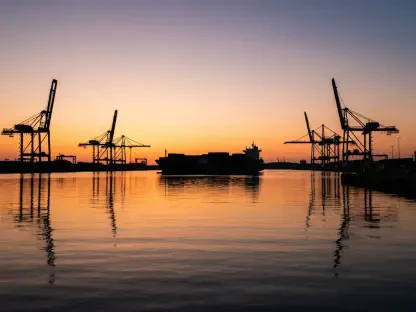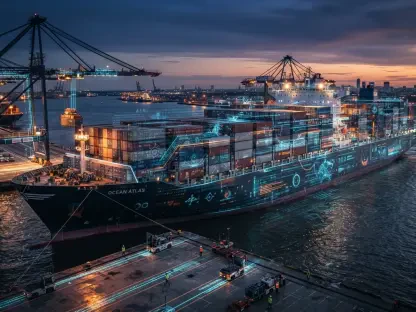

A potential blockade or failure of Djibouti’s port infrastructure would likely trigger a humanitarian and economic crisis of historic proportions for the Ethiopian people. This reality serves as the foundational anxiety for a nation that has seen its population surge past 130 million, making it the most populous landlocked country on the planet. The geographic paradox is striking: Ethiopia sits a mere 60 kilometers from the Red Sea, yet it remains functionally isolated from the maritime arteries that sustain global trade. For years, this isolation was managed as a logistical challenge, but in the current climate of 2026, it has evolved into a matter of national survival. The government in Addis Ababa increasingly views the lack of sovereign access to the sea as an artificial ceiling on its developmental aspirations. Without a dedicated outlet, the nation’s growth remains tethered to the political whims and stability of its neighbors, creating a precarious existence where one’s economic lifeblood is controlled by external actors. This situation is no longer a mere policy debate; it is an existential struggle that defines Ethiopia’s foreign policy and domestic security priorities. As regional tensions rise, the quest for a permanent, reliable, and sovereign gateway to the world’s oceans has become the central pillar of Ethiopian statecraft, representing a drive for autonomy that transcends mere commerce.
Economic Vulnerability: The High Cost of Dependency
The financial burden of being a landlocked state has become a staggering drain on Ethiopia’s wealth and future growth potential. Currently, the nation pays nearly $2 billion annually in port fees and logistics costs to its neighbors, primarily Djibouti. This massive outflow of capital depletes scarce foreign exchange reserves that could otherwise be invested in education, healthcare, or industrial modernization. For a developing economy with a burgeoning youth population, such a “geographic tax” is more than a line item on a budget; it is a systemic barrier to prosperity. The reliance on a single gateway means that Ethiopia’s entire trade architecture is built on a foundation of dependency, leaving it unable to negotiate competitive rates or diversify its transit options effectively. This economic constraint prevents the nation from achieving its goal of becoming a regional manufacturing hub, as the high cost of import and export makes its goods less competitive on the global stage.
Beyond the immediate financial costs, the strategic risk of total reliance on another nation’s infrastructure remains a constant and harrowing concern for policymakers. Because Djibouti handles nearly 95% of Ethiopia’s international trade, any domestic unrest, political shift, or technical failure within that small coastal state could effectively sever Ethiopia’s connection to the world economy overnight. This “single door” policy creates a profound vulnerability that hostile foreign interests could exploit to exert leverage over Ethiopian domestic decisions. The fear of economic suffocation is not theoretical; it is a lived reality for a state that must constantly manage its relations with transit neighbors to ensure that the flow of fuel, medicine, and food remains uninterrupted. This sense of being trapped within a geographic cage has reached a tipping point, driving the search for a more permanent and secure solution that does not leave the fate of millions in the hands of foreign port authorities and volatile regional politics.
Geopolitical Chess: The Militarization of a Global Corridor
The Red Sea has undergone a dramatic transformation, shifting from a vital global shipping lane into a hyper-militarized corridor where global and regional powers compete for dominance. This securitization is most evident in Djibouti, which has become a crowded hub for international military bases, hosting sophisticated facilities for the United States, China, France, and Japan. While these bases are ostensibly designed to combat piracy and protect international shipping, they also serve as outposts for superpower competition, effectively turning the region into a theater for proxy rivalries. For Ethiopia, this militarization is a double-edged sword. While it brings a degree of international oversight to the Bab el-Mandeb Strait, it also highlights Ethiopia’s conspicuous exclusion from the security frameworks governing its own backyard. The presence of foreign navies from thousands of miles away, while the region’s largest economy remains without a naval presence, is viewed in Addis Ababa as a geopolitical contradiction that undermines long-term stability.
This exclusion from maritime security councils has introduced a complex game of “geopolitical chess” that often leaves Ethiopia as a mere bystander in matters affecting its own regional security. Decisions regarding the governance of the Red Sea and the protection of trade routes are frequently made in forums where Ethiopia has no seat, despite the fact that its economic survival depends entirely on the safety of these waters. This lack of representation creates a sense of profound insecurity, as the nation’s primary trade route is policed by an ever-changing coalition of global powers and coastal neighbors whose interests may not always align with those of Ethiopia. The government has argued that a stable Horn of Africa is impossible as long as its most populous nation is denied a voice in maritime affairs. Consequently, the push for a naval capability is not merely about prestige but about securing the right to participate in the defense of the waters that carry its lifeblood, ensuring that Ethiopia is no longer a passive observer in its own strategic environment.
Strategic Encirclement: The Emergence of Hostile Alliances
A major concern for Ethiopian policymakers is the rapid emergence of a diplomatic and military “web of alliances” specifically designed to isolate the country and limit its regional influence. The formation of agreements between Egypt, Eritrea, and Somalia—often referred to as a strategy of encirclement—aims to codify the idea that Red Sea governance belongs exclusively to coastal states. By promoting this narrow definition of maritime rights, these regional adversaries seek to permanently lock Ethiopia out of any official role in the management of the corridor. This diplomatic movement is viewed by Addis Ababa as an attempt to institutionalize its landlocked status, transforming a geographic reality into a permanent political disadvantage. The “El Alamein Joint Declaration” served as a clear signal that Ethiopia’s neighbors are willing to coordinate their military and diplomatic efforts to ensure that the Horn of Africa’s largest economy remains confined within its current borders.
This strategic encirclement is closely tied to the long-standing and ongoing dispute over the Grand Ethiopian Renaissance Dam (GERD) and the management of the Nile waters. By aligning with Ethiopia’s coastal neighbors, Egypt has been perceived as weaponizing Ethiopia’s landlocked status to gain significant leverage in negotiations over water rights. From the perspective of the leadership in Addis Ababa, having the keys to the nation’s economic survival held by a coalition that includes its primary rival for regional influence represents an existential threat. This alignment creates a scenario where maritime access could be used as a bargaining chip to force concessions on other national interests, such as energy production or agricultural development. This hostile coalition has forced Ethiopia to adopt a more assertive and proactive foreign policy, as it recognizes that its ability to develop its resources and sustain its population is being directly challenged by a coordinated effort to keep it geographically and diplomatically contained.
A Legitimate Quest: Sovereignty and the Right to Breathe
The pursuit of a sovereign naval gateway is framed by Ethiopian leadership not as an expansionist or imperialist ambition, but as a fundamental “right to breathe” for a nation in distress. Using the metaphor of a “drowning person,” the government has characterized its search for a port as an instinctive and necessary reaction to a state of permanent anxiety. The argument is simple: a nation of 130 million people cannot be expected to remain passive while its economic future is entirely dependent on the goodwill of others. This quest for maritime access is presented as a legitimate reaction to the artificial suffocation imposed by current regional arrangements. By framing the issue in terms of survival, Ethiopia is signaling to the international community that the status quo is no longer an option and that the pursuit of a port will remain a top priority regardless of the diplomatic friction it may cause with its coastal neighbors.
Furthermore, Ethiopia has pointed to the inherent double standard regarding naval presence in the Horn of Africa to justify its own aspirations. If distant global powers can establish military bases and station navies in the Red Sea to safeguard their commercial interests, the government argues that a regional neighbor with a massive stake in the corridor should be allowed the same opportunity. The development of a naval force is seen as a prerequisite for protecting Ethiopian-flagged vessels and ensuring that the country can respond to asymmetric threats or regional instability that might threaten its trade routes. Instead of viewing Ethiopia’s naval ambitions as a threat to peace, Addis Ababa maintains that a strong Ethiopian maritime presence would actually contribute to regional security by providing a more balanced and locally-rooted security framework. This perspective suggests that long-term peace in the Horn of Africa can only be achieved if Ethiopia is integrated into the maritime economy, rather than being forced to remain in a geographic cage at the mercy of others.
Navigating the Future: Solutions for Regional Stability
The analysis of the current regional dynamics confirmed that the survival of Ethiopia as a stable state was inextricably linked to its ability to secure reliable maritime access. Experts realized that the continued isolation of the region’s largest economy created a permanent source of friction that threatened to destabilize the entire Horn of Africa. It was determined that the most viable path forward involved a transition from zero-sum competition to a framework of mutual economic integration. International observers noted that while Ethiopia preferred diplomatic and cooperative solutions, the nation’s leadership was prepared to take more assertive measures if its “right to breathe” continued to be denied. The findings suggested that a regional settlement, facilitated by the African Union and international partners, was necessary to move beyond legal technicalities and address the underlying political anxieties of both landlocked and coastal states.
Past diplomatic failures highlighted the urgent need for a new maritime governance structure that recognized the unique needs of a landlocked giant. The international community observed that the exclusion of Ethiopia from Red Sea security protocols had only served to increase tensions and foster the development of hostile alliances. It was concluded that the neutralization of external interference was essential to prevent the Horn of Africa from becoming a permanent theater for proxy wars. The actionable next steps identified by the regional consensus involved the creation of joint-port management agreements and sovereign logistics corridors that would guarantee Ethiopia’s access while respecting the territorial integrity of its neighbors. This retrospective look at the crisis indicated that the only way to prevent a catastrophic regional conflict was to ensure that Ethiopia’s maritime needs were addressed through a stable, inclusive, and legally binding framework that provided the nation with the economic security it required to sustain its people.