
The persistent rhythm of global trade relies on the seamless movement of goods through coastal gateways, yet the United Kingdom currently stands at a critical juncture where manual operations must reconcile with the relentless speed of digital innovation to remain relevant on the world stage. Maritime activities facilitate the vast majority of national trade, serving as a primary backbone for economic stability and global supply chain connectivity. While the sector remains robust, the pressure to enhance efficiency through modernization has never been more urgent.
Existing port infrastructure across the country varies significantly, ranging from massive deep-sea container hubs to specialized freeports and smaller regional terminals. Each facility faces unique operational challenges, but a common thread is the increasing necessity to handle larger volumes with greater precision. However, many sites are categorized as brownfield locations, meaning they possess established physical layouts that complicate the integration of new technologies compared to the greenfield developments seen in competing international regions.
A noticeable technological gap persists between domestic facilities and the highly automated hubs found in Northern Europe and Asia. While global leaders have already operationalized fully autonomous terminals, many British ports are still navigating the transition from manual to semi-automated systems. Bridging this divide requires a comprehensive shift in how terminal operating systems are managed, specifically by addressing the physical constraints of legacy infrastructure that often hinder the adoption of modern robotics.
Steering Toward Efficiency: Emerging Trends and Performance Projections
The Rise of Mixed-Mode Automation and Retrofitting Excellence
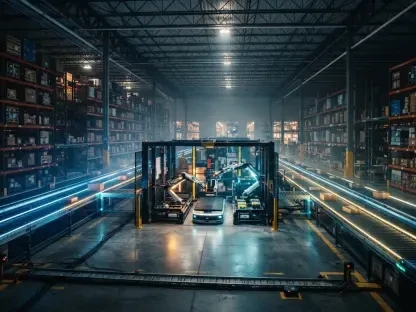
The industry is moving toward a model of mixed-mode automation, where autonomous machinery and human-operated vehicles coexist within the same terminal space. This transition represents a shift from isolated pilot projects to permanent, large-scale deployments of connected and automated mobility solutions. By allowing for a gradual integration of technology, port operators can minimize service disruptions while slowly scaling up their autonomous capabilities.
Engineering and software firms are carving out a competitive advantage by focusing on retrofitting excellence rather than just new builds. Since most domestic ports cannot be rebuilt from scratch, the ability to apply artificial intelligence and advanced sensor suites to existing cranes and tractors is invaluable. This approach leverages local expertise in high-tech monitoring to breathe new life into older assets, turning historical constraints into a springboard for innovation.
Benchmarking Progress through Data and Growth Forecasts
Recent domestic trials at the Port of Felixstowe, Port of Tyne, and Belfast Harbour have provided essential data points regarding the efficacy of autonomous systems. For instance, the recent $5.1 million investment in electric autonomous terminal tractors for Teesport modernization demonstrates a clear commitment to sustainable horizontal transport. These successes indicate that the maritime sector is moving beyond the experimental phase and toward standardized operational use.
Investment in these technologies is directly linked to the UK long-term standing in the global maritime competitiveness index. Projections suggest that widespread adoption of automated container handling could lead to substantial capacity increases without the need for physical expansion. As productivity gains are realized, the correlation between high-tech investment and market share becomes increasingly evident to stakeholders and international trade partners.
Navigating the Friction: Overcoming Technical and Structural Barriers
Integrating diverse terminal operating systems within pre-existing layouts presents a formidable technical hurdle. The complexity of making different software platforms communicate in real-time requires significant digital architecture upgrades. Furthermore, the high capital expenditure associated with full-scale automation often makes it difficult for operators to prove an immediate return on investment to boards focused on short-term margins.
Beyond the hardware, a significant skills gap remains a structural barrier that must be addressed through targeted training. Shifting the maritime workforce from manual labor toward high-tech roles in system monitoring and maintenance is a complex sociological and educational task. Additionally, upgrading active ports carries the inherent risk of disrupting live supply chains, requiring meticulous logistical planning to ensure that the flow of goods remains uninterrupted.
Governance and Standards: The Evolving Regulatory Landscape for Port Automation
Government-industry bodies like Zenzic and the UK Port Automation Group are playing a pivotal role in establishing national standards for these new technologies. By creating a unified framework for automation, these organizations help reduce the fragmentation that often stalls progress in the maritime sector. This centralized coordination ensures that different ports are not developing incompatible systems in isolation.
The designation of Freeports and special economic zones has further accelerated the adoption of automated solutions by providing regulatory flexibility and financial incentives. These zones serve as testing grounds for safety regulations and liability frameworks that govern autonomous vehicles in industrial spaces. Moreover, aligning these initiatives with national decarbonization targets ensures that automation serves environmental mandates as much as economic ones.
The Horizon of Innovation: Mapping the Future of British Maritime Trade
Looking ahead, 5G-enabled port management is set to become a primary disruptor in maritime logistics, providing the low-latency connectivity required for truly autonomous chains. This digital evolution extends beyond the port walls, integrating with broader ecosystems like the Digital Trade Testbed to create a seamless data flow from sea to land. Such connectivity will likely redefine the speed at which international trade is processed from 2026 to 2030.
The UK is also positioned to become a global exporter of specialized maritime AI and consultancy services. As other nations look to modernize their own brownfield infrastructure, the lessons learned in British ports will have high market value. However, the future remains influenced by shifting global trade routes and economic conditions, which will dictate the pace of future infrastructure investments.
Charting a Productive Course: Final Perspectives on the Automation Mandate
Stakeholders recognized that moving beyond localized proof of concept trials was essential to maintaining national supply-chain resilience. The industry prioritized cross-sector collaboration between academia, government, and private leaders to streamline the transition. These efforts effectively bridged the gap between legacy operations and the digital future of maritime trade.
Investments in automation proved to be a definitive solution for long-term productivity and global influence. Leadership focused on scaling integrated systems that supported both environmental goals and economic growth. The transition ultimately ensured that British ports remained competitive in an increasingly automated global marketplace.
New insights suggested that the success of the maritime sector depended on a continuous evolution of high-tech monitoring roles. By embracing this mandate, the industry secured its role as a leader in specialized maritime engineering. The strategy transformed logistical challenges into a sustainable framework for future trade excellence.