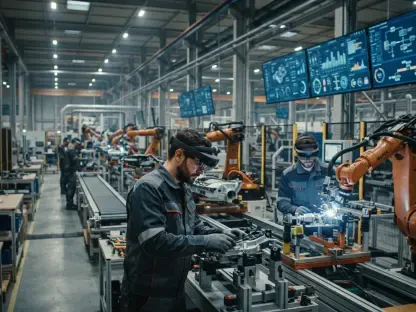

The rapid reconfiguration of global electronics manufacturing has reached a significant milestone as Apple integrates American industrial capabilities directly into its flagship product cycle for the iPhone 18 and the new Duo. This transition marks a fundamental change in how high-volume consumer electronics are brought to market, moving away from a model defined by distant logistics toward a more integrated, local approach. By prioritizing domestic facilities, the company aims to ensure that its most sophisticated hardware features are backed by the stability and innovation of the United States industrial sector.
Strengthening the American Core: Apple’s Strategic Domestic Pivot
Apple is fundamentally reshaping its global operations by deepening its roots within the United States industrial landscape. As the tech giant prepares for the launch of the iPhone 18 Pro and the innovative iPhone Duo, it has unveiled a massive strategic expansion of its domestic supply chain. This move is part of a broader four-year, $600 billion commitment to American industry, signaling a departure from total reliance on overseas manufacturing. By securing high-tech components from Pennsylvania to Arizona, the company is reinforcing a domestic ecosystem that blends premium engineering with local economic revitalization.
From Global Dependency to Onshoring: The Evolution of Apple’s Logistics
Historically, the tech industry has relied on complex, cross-border supply chains centered largely in East Asia to achieve scale and cost-efficiency. However, the last decade has seen a shift in this paradigm, driven by the need for greater supply chain resilience and a desire to mitigate geopolitical risks. The “onshoring” strategy represents a sophisticated evolution of this trend. By moving high-tech production closer to design headquarters, the company can maintain tighter quality control and foster deeper technological collaborations. It is a calculated effort to safeguard the future against global volatility while capitalizing on American industrial innovation.
The Pillars of Domestic Innovation for iPhone 18 and Duo
Pennsylvania Titanium and the Quest for Sustainable Durability
One of the most significant developments in this expansion is the $100 million agreement with the Perryman Company. Based in Pennsylvania, Perryman is tasked with producing specialized titanium for the iPhone Duo’s casing. What sets this partnership apart is the focus on sustainability; the titanium will consist of at least 80% recycled material. This initiative addresses the challenge of maintaining the premium, rugged feel consumers expect while meeting aggressive environmental targets. The integration of recycled titanium demonstrates that domestic manufacturing can be both technologically advanced and ecologically responsible.
Advanced Optics and the Delaware-Based Precision of Qnity Electronics
As mobile photography remains a primary driver of consumer upgrades, the alliance with Delaware’s Qnity Electronics has been deepened to secure the future of the iPhone 18 Pro. Qnity specializes in advanced optical films essential for the variable aperture camera system of the 48-megapixel Fusion Main camera. This component is critical for light management and image clarity, requiring extreme precision. By sourcing these films domestically, the flagship photography features are underpinned by American-made components, highlighting a trend where “Made in the USA” is synonymous with the most complex aspects of consumer electronics.
High-Tech Components and the Scale of the American Manufacturing Program
The scope of the domestic footprint now extends to nearly 100 different components, ranging from wireless communication hardware to vital microchips. This is largely facilitated through the American Manufacturing Program, which supports over 450,000 jobs across all 50 states. Beyond assembly, this program focuses on high-value manufacturing, such as Broadcom’s $1.5 billion modernization of its Colorado facility for radio frequency components. These investments dismantle the misconception that domestic manufacturing is limited to low-tech assembly, proving that the U.S. is becoming a hub for sophisticated mobile hardware.
The Future Landscape of Domestic Tech Production
The trajectory of these investments suggests a permanent shift toward a more localized high-tech economy. Future trends indicate that silicon packaging and glass manufacturing will be the next frontiers of this expansion. For instance, the plan to centralize all iPhone and Apple Watch cover glass production in Kentucky by the end of 2026, alongside Amkor Technology’s new silicon packaging facility in Arizona, points to a future where sensitive parts never leave U.S. soil. As regulations favor domestic production, other tech leaders are expected to follow this blueprint, leading to a massive re-industrialization of the sector.
Strategic Takeaways for the Global Tech Ecosystem
The expansion of the U.S. supply chain offers several key insights for industry observers. First, long-term capital investments in local partners can mitigate the risks of global logistics disruptions. Second, integrating sustainability into the supply chain—as seen with recycled titanium—is no longer optional but a core competitive advantage. For professionals in the manufacturing sector, the shift toward advanced “onshoring” highlights the growing demand for specialized skills in materials science and precision engineering. Companies looking to remain relevant should focus on technological collaborations that offer unique, high-value components.
Conclusion: A New Chapter for American Industry
The strategic pivot toward a domestic supply chain for the iPhone 18 and Duo represented a landmark moment in modern manufacturing. Stakeholders realized that high-tech production flourished within American borders when supported by multi-billion dollar commitments. The decision to integrate American-made titanium and advanced optical films successfully diversified the global supply chain while reinforcing economic growth. Professionals observed that these partnerships served as a definitive model for balancing international reach with a localized industrial base. Actionable steps for the industry involved investing in advanced material recycling and securing local semiconductor packaging capabilities to ensure future hardware stability.