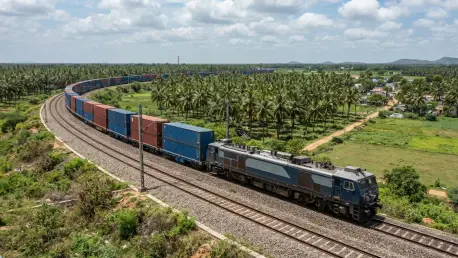

DP World’s September 2026 operational expansion leverages the Dedicated Freight Corridor to bypass the delays typically caused by freight sharing tracks with passenger trains. This strategic shift represents a pivotal moment for India’s internal commerce, as the nation seeks to modernize its aging transport networks. For decades, the movement of goods from major ports to industrial hubs was hampered by congestion and the prioritization of passenger rail, leading to unpredictable delivery schedules. By introducing these DFC-enabled services, the company is effectively bypassing the traditional bottlenecks that have long stifled the speed of industrial growth. This initiative connects the Jawaharlal Nehru Port Authority with vital inland container depots, creating a streamlined flow of goods that supports the broader goal of reducing national logistics expenditures. As global companies increasingly look to India as a manufacturing powerhouse, the necessity for a high-capacity rail backbone has never been more critical than it is today in 2026.
Strengthening Trade Links: Geographic and Industrial Reach
The geographic scope of this expansion centers on the National Capital Region, a massive economic engine that demands a constant supply of raw materials and efficient export routes. By linking the Jawaharlal Nehru Port Authority directly to terminals in Pali, Rewari, and Panipat, DP World is providing a lifeline to the automotive and textile industries concentrated in Northern India. These nodes are not merely stopping points; they serve as critical collection and distribution centers that allow manufacturers to move volume without the logistical headaches associated with long-haul trucking. This corridor facilitates a more rapid rotation of inventory, ensuring that finished goods reach international markets with minimal dwell time. For businesses operating in the NCR, the availability of a dedicated rail link means they can now plan their production cycles with greater precision, knowing that the transit times from the port are no longer subject to the whims of road traffic or seasonal disruptions.
Parallel to the northern expansion, the integration of the Sachana inland container depot in Gujarat marks a significant deepening of the logistics footprint in Western India. Gujarat is home to some of the most advanced chemical, pharmaceutical, and engineering clusters in the region, all of which rely heavily on timely access to maritime gateways. The new rail service transforms the way these industries interact with the port at JNPA by offering a high-capacity “conveyor belt” for containerized cargo. This specific route effectively decongests the highway networks that connect the industrial zones of Ahmedabad to the coast, providing a safer and more efficient alternative for transporting high-value goods. By establishing this direct rail connection, DP World is addressing the specific needs of regional exporters who have previously struggled with the volatility of road freight pricing. This development ensures that the industrial heartland of Gujarat remains competitive on a global scale by providing the infrastructure necessary for seamless multimodal logistics.
Advancing Efficiency: Technology and National Policy Integration
The core technical innovation driving this logistics evolution is the implementation of double-stack rail technology on the Dedicated Freight Corridor infrastructure. By stacking two layers of containers on a single wagon, DP World is able to effectively double the freight capacity of every train movement without a corresponding increase in operational overhead or energy consumption. This leap in efficiency is made possible by the unique engineering of the DFC, which features higher overhead clearances and heavier rail specifications than the standard Indian railway network. For logistics managers, this means a significant reduction in the cost per unit of cargo transported, as the economies of scale provided by double-stacking are passed down through the supply chain. Furthermore, the exclusive nature of the DFC ensures that these heavy-haul trains can operate at higher average speeds, maintaining a consistent tempo that was previously impossible when freight trains were forced to wait in sidings for passenger expresses to pass.
The expansion of these double-stack services is meticulously aligned with the government’s PM GatiShakti National Master Plan and the National Logistics Policy. These frameworks were established to break down the historical silos that separated different modes of transportation, fostering a truly multimodal ecosystem where sea, rail, and road work in concert. DP World’s investment in DFC-enabled rail services serves as a physical manifestation of these policy goals, providing the connective tissue that links maritime gateways to the deep interior of the country. By synchronizing terminal operations with the high-speed capabilities of the freight corridor, the initiative helps reduce the overall logistics cost as a percentage of the Gross Domestic Product. This reduction is a key metric for national competitiveness, as lower transport costs translate directly into more affordable goods for domestic consumers and more competitive pricing for international exports. The synergy between private sector investment and public infrastructure policy is thus creating a more resilient trade environment.
The successful rollout of these rail services provided a clear blueprint for the future of multimodal logistics across the subcontinent. Stakeholders recognized that the integration of high-capacity rail with modern port facilities was no longer an optional upgrade but a fundamental requirement for industrial survival. Moving forward, the industry prioritized the adoption of digital twin technologies to monitor container health in real-time and automated terminal handling to further reduce the time spent at interchange points. Businesses were encouraged to reevaluate their supply chain geographic footprints, placing greater emphasis on proximity to inland container depots that offered DFC access. This transition allowed for a more decentralized industrial growth pattern, as manufacturers no longer felt tethered to coastal locations to ensure reliable export timelines. By embracing rail-based solutions, the sector moved toward a model that balanced high-volume throughput with environmental stewardship, creating a framework for more resilient operations.