
Efficiency measures like route optimization and eco-driving training have become the primary methods for reducing emissions while the industry waits for affordable electric hardware. This current reality, underscored by the 2026 Green Compact survey from the International Road Transport Union and Trimble, highlights a jarring disconnect between societal environmental aspirations and the harsh financial landscape of global logistics. As the sector navigates through 2026, the initial enthusiasm for rapid electrification has encountered a formidable obstacle: the sheer cost of investment. While over 1,000 transport operators across 36 countries express a willingness to transition, the economic architecture to support such a massive shift remains fundamentally broken. Infrastructure gaps previously held the top spot as the most significant barrier, but the focus has now shifted toward the immediate capital required to replace aging fleets. This shift signals a new era of economic pragmatism where sustainability depends on funding.
The Financial Reality: Fleet Modernization Costs
The financial hurdle is most evident when comparing the price tag of a standard battery-electric truck to its traditional diesel counterpart, with the former often costing between two and three times as much. For many small and medium-sized enterprises that form the backbone of the haulage industry, this price disparity represents an insurmountable barrier to entry. In Western Europe, 66% of hauliers now cite vehicle pricing as their primary concern, a figure that rises to a staggering 78% in Eastern European markets. This surge in concern reflects a transition from the early adopter phase, where subsidies and pilot programs masked the true cost, to a broader market reality where capital expenditure is king. Without a significant reduction in technology costs or a massive influx of direct subsidies, the average operator simply cannot justify the return on investment. The economic pragmatism required to stay afloat in a low-margin industry is currently at odds with the aggressive timelines set by goals.
Beyond the initial purchase price, the industry faces a systemic refusal from the broader supply chain to share the burden of green logistics. Data from the 2026 survey reveals that roughly 71% of operators report their customers are unwilling to pay the additional premiums associated with low-emission transport services. This creates a financial stalemate where the transport provider is expected to bear the risk and the cost while the client reaps the reputational benefits of a green supply chain. This lack of financial cooperation is forcing many firms to delay fleet renewal indefinitely. When the market demands sustainability but refuses to fund the necessary upgrades, the result is a stagnation that threatens long-term decarbonization targets. Consequently, the conversation is shifting from how to build better trucks to how to restructure commercial contracts. Until there is a more equitable distribution of costs, the transition will likely remain restricted to a few high-profile pilot projects.
Infrastructure Limitations: Energy Supply Barriers
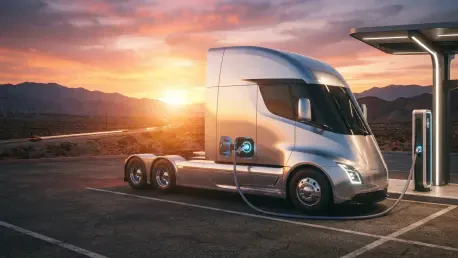
While capital costs dominate the conversation, the physical infrastructure required to support a fully electric fleet is still in its infancy. Current estimates for Europe show a total of 1,225 public charging stations capable of servicing heavy-duty vehicles, a number that is drastically lower than the 50,000 high-power points deemed necessary for widespread adoption. This infrastructure gap creates a range anxiety that is grounded in logistical reality rather than psychological fear. Operators cannot commit to long-haul electric routes if they cannot guarantee their drivers will find a functional, high-speed charger. The slow rollout of public charging networks is compounded by the fact that most existing stations are designed for passenger cars and lack the space or power capacity for 40-tonne trucks. This bottleneck is preventing the expansion of electric transport beyond regional hubs. Until the public sector accelerates charging corridors, the utility of zero-emission trucks will remain limited.
The challenges extend far beyond the highway and into the very depots where trucks are housed overnight. For firms looking to install private charging infrastructure, the wait times for a sufficient grid connection have become a significant operational hurdle, often stretching from one to two years. This delay is indicative of a broader lack of cross-sector coordination between transport authorities and energy providers. The electrical grid in many regions was not designed to handle the massive localized loads required by a fleet of charging trucks. Furthermore, the rising cost of industrial electricity and the unpredictability of energy supply add layers of risk to an already complex transition. Moving from liquid fuels to a purely electrical model requires a total reimagining of how energy is managed within a logistics business. Without clear policies to prioritize grid upgrades for industrial zones, the physical ability to charge vehicles will remain as much of a constraint as the cost of the vehicles themselves.
Legislative Pressure: The Threat of Market Consolidation
Legislative bodies are increasingly relying on financial penalties to drive change, but these sticks are often making the industry less competitive rather than cleaner. For instance, the implementation of CO2-based road tolls in 11 EU countries has already caused operating costs to skyrocket. In Germany, the new toll structure has resulted in an 83% increase in costs for standard Euro VI diesel trucks, placing an immense strain on profit margins. Looking ahead to 2028, the introduction of the ETS2 carbon market is expected to price carbon at approximately €60 per tonne, which would add another 5.5% to the total cost of ownership for a typical long-haul vehicle. While electric vehicles currently benefit from temporary exemptions, such as the German toll-free period lasting until 2031, many operators view these as temporary lifelines rather than long-term economic solutions. The result is a pincer movement where firms are penalized for using traditional fuels but cannot afford alternatives.
This high-pressure environment is creating a widening disparity between large-scale logistics giants and smaller transport operators. Companies with annual revenues exceeding €100 million are far more likely to invest in battery-electric technology, with 87% moving forward compared to just 26% of smaller firms. This gap suggests that the green transition could inadvertently trigger a massive market consolidation, where only the most well-capitalized players can survive the regulatory shift. Smaller hauliers, who lack the capital to invest in six-figure vehicle upgrades and private charging infrastructure, find themselves at a severe disadvantage. Furthermore, electrification currently favors regional operations over long-haul transport due to battery limitations, leaving long-distance carriers with fewer viable options. If the financial architecture does not account for the needs of the entire transport ecosystem, the industry risks losing the flexibility provided by smaller operators, ultimately driving up prices.
Strategic Alternatives: Bridging the Gap through Efficiency
In response to these economic and logistical hurdles, the transport industry is turning toward more immediate and pragmatic solutions to lower their environmental impact. Hydrotreated Vegetable Oil has emerged as the leading bridge fuel, with its usage in Western Europe expected to nearly double from 29% to 54% over the next five years. The primary advantage of HVO lies in its drop-in nature, allowing it to be used in existing diesel engines without requiring any hardware modifications or new infrastructure. This allows firms to achieve significant emission reductions immediately without the massive capital expenditure of a new fleet. Beyond alternative fuels, operators are maximizing efficiency through route optimization software and specialized driver training programs. By reducing empty miles and improving fuel economy, these measures provide a dual benefit of lowering emissions and cutting operational costs. This trend underscores a strategic shift toward incremental improvements.
The road transport sector recognized that the transition to green energy was not merely a technological challenge but a fundamental commercial shift. Stakeholders determined that the burden of decarbonization could no longer rest solely on the shoulders of the transport operators. Moving forward, the focus shifted toward creating a shared-responsibility model where customers, governments, and energy providers all contributed to the financial and physical requirements of a sustainable fleet. Policy makers began prioritizing direct subsidies and tax incentives over punitive measures to ensure that small and medium-sized firms remained competitive. Additionally, the rapid acceleration of grid upgrades and the standardization of high-power charging protocols became central to national infrastructure strategies. The industry learned that commercial viability was the only true catalyst for environmental progress. By aligning economic incentives with ecological goals, the sector started to move beyond the 2026 stalemate.