
The persistent reliance on manual line-of-sight technologies and human entry continues to introduce data latency and inaccuracies that compromise factory floor visibility. As the industrial landscape moves deeper into the digital age, the concept of connected manufacturing has transitioned from a boardroom aspiration to an operational necessity for survival in a competitive market. Achieving this state requires a seamless orchestration of robotic systems, cloud-based data streams, and human expertise within a unified architecture. Manufacturers are currently grappling with the reality that having massive amounts of data is not the same as having actionable intelligence. While leadership teams often envision a transparent ecosystem where every movement is tracked and every bottleneck is predicted, the practical application of these technologies frequently hits a ceiling due to legacy infrastructures and disconnected workflows. Bridging this gap is the defining challenge for production facilities looking to optimize their performance and remain competitive in a high-speed global market that demands precision and agility above all else.
Breaking Structural Barriers: The Data Silo Challenge
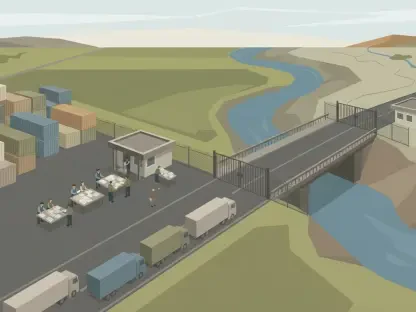
One of the primary obstacles to achieving total visibility is the persistence of data silos where information remains trapped within independent platforms. Many organizations operate using Enterprise Resource Planning systems that are fundamentally disconnected from their Manufacturing Execution Systems, creating a digital wall between administrative planning and the actual factory floor. When these systems fail to communicate in real time, management is left with a fractured view of the supply chain, making it difficult to coordinate complex activities across different departments. This fragmentation prevents the creation of a single source of truth, forcing teams to rely on outdated spreadsheets or verbal updates that are often hours or even days behind reality. To move past this, facilities must transition toward an integrated data model that allows for bi-directional communication, ensuring that a change in production speed is immediately reflected in procurement and logistics planning schedules, thereby reducing waste and improving the overall flow of materials through the plant.
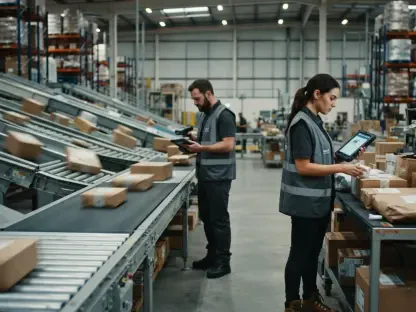
This fragmentation is particularly evident in warehouse environments where a variety of specialized tools, such as mobile scanners, forklifts, and conveyor systems, generate vast amounts of data that never converge into a usable format. While individual pieces of hardware perform their functions efficiently, they often lack a shared communicative framework that would allow them to function as a singular, intelligent entity. Although industry standards like GS1 and RAIN RFID are helping to expand data-capture capabilities, the real challenge lies in integrating these disparate streams into a cohesive intelligence layer that provides contextual information. Without this synthesis, the wealth of data generated by modern sensors remains underutilized, providing only snapshots of performance rather than a continuous narrative of the manufacturing lifecycle. Resolving these discrepancies requires a robust middleware solution capable of normalizing data from different sources into a universal format for analysis, which allows stakeholders to identify hidden inefficiencies that occur during the transitions between automated zones.
Redefining Human Workflows: The Shift toward Augmented Automation
The continued reliance on manual data collection remains a significant liability for modern manufacturers, as human entry often introduces latency and errors that ripple through the entire production cycle. Many facilities still depend on line-of-sight technologies that require physical intervention, such as manual barcode scanning at every station, which inherently slows down the movement of goods and compromises the accuracy of real-time monitoring. To address this bottleneck, the industry is rapidly shifting toward automated data capture through the Internet of Things and advanced vision systems that record events the moment they occur. By automating the identification of raw materials and finished goods, companies can eliminate the risk of “fat-finger” errors and ensure that the digital twin of the factory floor is always an exact reflection of the physical reality. This transition allows supervisors to focus on optimizing workflows rather than spending their shifts correcting discrepancies in inventory records or shipment logs, leading to more predictable output.
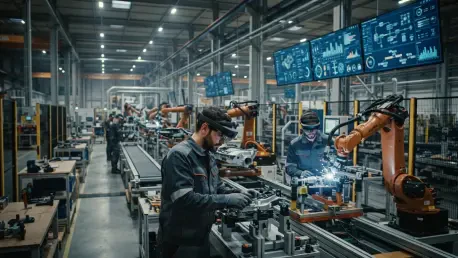
However, the goal of modern connectivity is not to eliminate the human element entirely but to embrace augmented automation that supports the workforce. Certain segments of the supply chain, particularly those involving complex assembly or last-mile logistics, still benefit greatly from human oversight and intuition. The strategic focus has therefore shifted toward empowering workers with wearable devices, head-mounted displays, and AI-driven process controls that provide real-time guidance without requiring the worker to step away from their task. By using technology to enhance rather than replace human labor, manufacturers can optimize their limited workforce while ensuring that the data feeding their systems is consistent and reliable. This approach creates a symbiotic relationship where workers are alerted to potential errors before they happen, such as a wrong part being picked from a bin, thereby maintaining high-quality standards without sacrificing the throughput that is critical in high-demand environments where every second of labor counts toward the bottom line.
Advanced Asset Intelligence: Tracking Conditions and Integrity
Achieving total visibility also requires expanding the scope of tracking beyond high-value assets to include raw materials and returnable transport items that were previously ignored. Modern sensors must now provide more than just simple location data; they are increasingly required to monitor environmental conditions such as temperature, humidity, and physical shock during transit. This level of granular detail is essential for quality assurance, particularly in the pharmaceutical and food sectors, where a minor temperature deviation can result in the loss of an entire shipment. By digitizing low-value assets like pallets and crates using passive RFID tags, manufacturers can also tackle the significant financial losses associated with missing equipment. Implementing a comprehensive tracking system ensures that returnable items are cycled back into the production loop efficiently, reducing the need for emergency capital expenditures to replace lost containers and improving the overall sustainability and predictability of the logistics network.
The success of future technologies like Artificial Intelligence depends heavily on the integrity of the underlying data gathered from these tracking systems. AI is only effective when it consumes accurate, high-fidelity, real-time information regarding inventory levels, machine health, and worker workflows. By establishing a robust data infrastructure today, manufacturers create a vital feedback loop where automated collection fuels intelligent insights, which in turn drive further efficiencies. This foundation allows for sophisticated forecasting and enables systems to independently determine the most efficient actions for frontline workers to take, moving the industry toward agentic AI capabilities. When data integrity is prioritized, the manufacturing environment becomes predictive rather than reactive, allowing for the preemptive maintenance of machinery and the dynamic rescheduling of labor based on real-time demand shifts. This proactive stance is what ultimately separates market leaders from those struggling with traditional production lag and frequent inventory shortages.
Practical Implementation: Strategies for a Connected Future
To transition from fragmented operations to a state of total visibility, manufacturers must adopt a unified technological approach that combines robust hardware with sophisticated software integration. The partnership between hardware providers like Zebra Technologies and integration specialists like Lyngsoe serves as a primary model for this strategy, focusing on architecting data flows that connect disparate information sets into a single operational view. This collaborative method emphasizes the importance of building an integrated data infrastructure rather than deploying isolated gadgets that solve only a fraction of the problem. By marrying RFID readers, mobile data capture units, and fixed industrial scanners with a centralized management platform, organizations can identify bottlenecks at every junction, from the receiving dock to the final distribution point. This connectivity allows for a faster response to operational exceptions and provides the high-fidelity visibility needed to support long-term strategic forecasting and supply chain resilience.
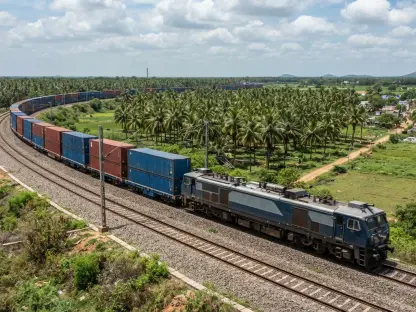
Manufacturers who successfully implemented these strategies achieved significant improvements in operational transparency and resource utilization across their facilities. The move toward digitizing physical assets through a combination of cellular, Wi-Fi, and passive RFID technologies addressed the long-standing problem of asset loss and inventory inaccuracies. These organizations established a clear path forward by prioritizing data integrity, which ensured that every automated insight was grounded in factual, real-time evidence. The focus remained on augmenting the workforce with intelligent tools, which ultimately reduced human error and allowed for a more agile response to market fluctuations. By dismantling the silos between ERP and MES platforms, leaders created a single source of truth that facilitated better decision-making across the entire enterprise. These steps paved the way for a more resilient supply chain, proving that the integration of hardware and software was the definitive solution for achieving total industrial visibility and maintaining a competitive edge.