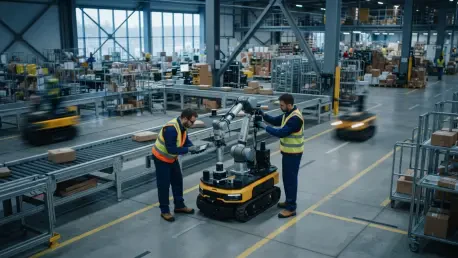

A phased approach to implementation ensures that any large-scale deployment of robotic foundation models is preceded by thorough testing in complex, high-volume sorting environments. This strategy underpins the recent collaboration between X Square Robot and Pos Malaysia Berhad, a partnership formalized in late 2026 in Shenzhen. By integrating embodied artificial intelligence into one of the region’s most extensive postal networks, the initiative aims to address the limitations of traditional, rigid automation. Unlike previous iterations of logistics technology, this partnership focuses on general-purpose AI that can perceive and interact with its surroundings. The Memorandum of Collaboration establishes a clear path for exploring how these advanced systems can manage the immense variability of modern parcel delivery. As global e-commerce volumes continue to surge, the ability to adapt to diverse package dimensions and unpredictable workflows has become a critical necessity for maintaining operational resilience across the entire supply chain.
Strategic Alliance for Operational Testing
The collaborative framework established by these two entities leverages distinct yet complementary assets to push the boundaries of current logistics capabilities. X Square Robot provides the technological core, specifically the robotic hardware and specialized foundation models designed for physical tasks, while Pos Malaysia offers a massive real-world laboratory. With a history spanning over two centuries, the national postal service maintains more than 3,000 service touchpoints and delivers to over 11 million addresses nationwide. This extensive infrastructure provides a unique testing ground where AI can be refined under the pressure of actual consumer demand and high-volume operations. The exploratory nature of this venture allows for a deep dive into parcel handling and sorting optimization without the immediate risks of a full-scale commercial rollout. By utilizing this vast ecosystem, the partnership ensures that the developed solutions are grounded in the practical realities of a functioning national delivery service.
Maintaining a focus on gradual integration, the agreement stipulates that any wide-scale deployment will follow successful evaluations in these dynamic environments. This cautious yet forward-thinking approach minimizes disruption to existing services while allowing for the identification of specific use cases where AI adds the most value. Initial phases focus on the most labor-intensive aspects of the logistics chain, such as sorting centers where packages arrive in various states of organization. Through this partnership, the organizations are analyzing how intelligent systems can seamlessly integrate with human workers to enhance throughput. The data gathered during these pilot programs will inform the creation of specialized subsequent agreements for commercial implementation. This methodological rigor ensures that the transition to an AI-enhanced infrastructure is both stable and scalable, setting a precedent for how heritage organizations can systematically adopt disruptive technologies to improve their core service offerings.
Technological Shift Toward Adaptive Intelligence
Central to this transformation is the concept of embodied artificial intelligence, which represents a fundamental departure from the fixed robotics typically found in manufacturing. Standard automation is often restricted to pre-programmed paths and struggles with items that deviate from a uniform shape or size. In contrast, embodied AI integrates advanced perception with real-time reasoning and physical dexterity. X Square Robot utilizes its proprietary “WALL” family of foundation models to give machines the ability to understand their physical context and adapt to changing variables. This means that a robot is no longer just a tool following a script, but an intelligent agent capable of recognizing a fragile package or navigating an unexpected obstacle on a sorting floor. By bringing intelligence into a physical form, the partnership aims to solve the last-mile preparation challenges that have long plagued the logistics industry. This shift allows for the processing of irregular shipments with the same efficiency as standard boxes.
The findings derived from this partnership suggested that the successful integration of embodied AI required a deep alignment between technological potential and operational reality. Stakeholders recognized that simply deploying robots was insufficient; instead, the focus remained on creating adaptive systems that could learn from their environment. Industry leaders advised that other logistics providers should prioritize building robust data infrastructures now to support future AI models. The initiative proved that legacy carriers could maintain their relevance by serving as active testing grounds for emerging tech rather than passive consumers of finished products. Moving forward, the industry was encouraged to emphasize the standardization of robotic communication protocols to ensure seamless interoperability across different vendors. These steps provided a clear roadmap for scaling intelligence within the physical world, ensuring that postal services stayed ahead of the e-commerce curve as they matured into a fully automated future.