
The integration of sophisticated artificial intelligence into the physical reality of global logistics has fundamentally altered how distribution centers manage the constant ebb and flow of international commerce. This review explores the rapid evolution of technology within the logistics sector, emphasizing the transition from mechanical automation to intelligent coordination. By analyzing current capabilities and performance metrics, a clearer picture of the technological impact on operational consistency and customer value emerges.
The Evolution of Intelligent Human-Robot Collaboration
The industry has moved beyond the era of fixed automation, where machines followed rigid, pre-programmed paths with no capacity for environmental adaptation. Today, the focus is on adaptive platforms that utilize physical AI to bridge the gap between high-level digital data and the complex execution required on the warehouse floor. This transition allows for a more responsive infrastructure that can withstand the volatility of labor and supply chain disruptions.
Physical AI acts as the sensory nervous system for these platforms, enabling them to interpret the physical world in real-time. This intelligence is crucial for transforming warehouses from static storage sites into dynamic hubs capable of intelligent coordination. By shifting the reliance from manual oversight to data-driven execution, logistics providers can now achieve a level of precision that was previously unattainable with conventional robotics.
Critical Pillars of Collaborative Robotic Platforms
Physical AI and Real-Time Environmental Perception
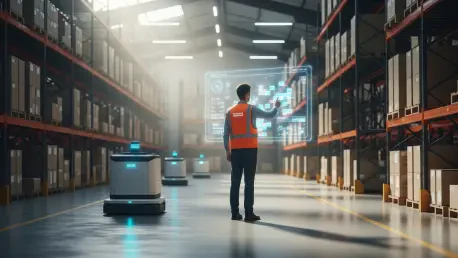
The effectiveness of modern warehouse robotics hinges on the ability to process a continuous stream of sensory data to facilitate immediate operational adjustments. Through the integration of advanced sensors and machine learning, these systems create a living map of the facility that updates as conditions change. This environmental awareness is essential for safe navigation in shared spaces where human associates and mobile robots must operate in close proximity.
Rather than following a set path, robots now use this real-time perception to circumvent obstacles and identify the most efficient routes dynamically. This capability ensures that safety protocols are not just static rules but adaptive behaviors that respond to the current state of the facility. The result is a significant reduction in downtime caused by environmental obstructions and a more fluid movement of goods throughout the warehouse.
Dynamic Task Allocation and Orchestration
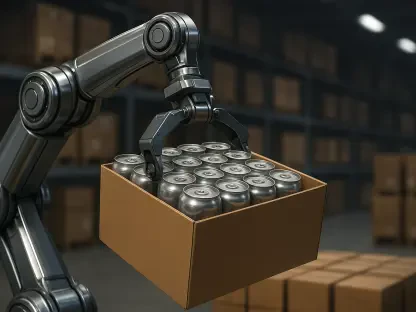
At the heart of high-performance robotics is the orchestration algorithm that assigns work to both human associates and autonomous mobile robots. This dynamic task allocation replaces manual staging and verbal instructions with data-driven insights, ensuring that every resource is utilized effectively. By analyzing current workflows, the system determines which entity is best suited for a specific task, thereby minimizing idle time and maximizing throughput.
This coordination fosters a collaborative environment where technology and human expertise work in tandem rather than in isolation. Orchestration ensures that robots handle the repetitive, high-volume movements while humans focus on tasks requiring manual dexterity or complex decision-making. This synergy is particularly effective in environments with fluctuating volumes, where the ability to reallocate labor on the fly provides a distinct competitive advantage.
Innovations in Intelligent Coordination and Visibility
Recent trends indicate a shift away from simple task automation toward a holistic model of intelligent coordination. Cloud-based warehouse execution systems now offer unprecedented levels of operational visibility, allowing managers to monitor performance metrics across multiple facilities from a single interface. These platforms aggregate data from every bot and associate, providing a comprehensive view of the supply chain that supports faster, more informed decision-making.
Furthermore, the emergence of software-agnostic platforms has revolutionized how logistics providers approach hardware investments. By decoupling the intelligence from the physical robot, companies can evolve their software capabilities alongside changing business requirements without the need for frequent hardware overhauls. This flexibility ensures that the technological infrastructure remains resilient and capable of integrating future breakthroughs in autonomous systems.
Practical Applications in High-Volume Logistics
The transload environment, characterized by high-pressure inbound receiving and outbound shipping, serves as the ultimate testing ground for these AI-driven solutions. In these settings, the ability to rapidly stage and move freight determines the overall efficiency of the distribution center. The strategic partnership between Yusen Logistics and Destro AI has demonstrated how targeted automation can optimize cart movements and streamline these critical workflows.
By implementing AI-powered workflow verification, facilities have seen a measurable reduction in staging errors and an increase in overall reliability. These practical applications show that when AI is applied to specific bottlenecks, such as the transition from receiving docks to outbound lanes, the impact on throughput is immediate. This approach reflects a broader industry movement toward using technology to enhance, rather than replace, existing logistical frameworks.
Operational Challenges and Adoption Barriers
Despite the clear benefits, integrating AI platforms with legacy warehouse management systems remains a significant technical challenge. Most older infrastructures were not designed for the high-frequency data exchanges required by real-time orchestration, leading to potential bottlenecks during implementation. Overcoming these hurdles requires a robust technical strategy that prioritizes interoperability and data synchronization between disparate software environments.
Beyond technical issues, the psychological transition for warehouse associates poses a barrier to seamless adoption. Employees must adapt to working alongside autonomous machines, which necessitates comprehensive training and a cultural shift toward technology-aided labor. Ensuring consistent safety and managing the learning curve are critical for maintaining productivity during the initial stages of deployment in large-scale facilities.
Future Trajectory of Autonomous Logistics Systems
The next stage of autonomous logistics will likely see AI coordination expand into heavy-duty pallet movement and complex freight handling. Breakthroughs in machine learning are expected to allow robots to handle non-uniform items that were previously too difficult for automated systems to grasp or balance. This evolution will further reduce the manual burden on associates and allow for end-to-end supply chain resilience.
Long-term shifts in the global logistics labor market will favor organizations that treat AI coordination as a core competency. As machines take over more physical tasks, the role of the warehouse associate will evolve toward technical oversight and system management. This transition will require a new set of skills, placing a premium on workers who can navigate the intersection of physical labor and digital intelligence.
Final Assessment and Industry Impact
The adoption of AI-driven robotics successfully addressed the systemic inefficiencies that once hindered high-volume logistics operations. This technology functioned as a vital stabilizer for supply chains, providing a higher standard of safety and consistency than traditional manual methods. The implementation of intelligent platforms proved that the future of logistics belonged to those who integrated sophisticated hardware with adaptive software.
Enterprises realized that staying competitive required a commitment to working smarter through the strategic expansion of these robotic systems. Future investments were directed toward multi-modal freight handling and the specialized upskilling of the workforce to manage intelligent environments. Ultimately, the partnership between human expertise and machine precision established a new benchmark for reliability in the global logistics sector.