
A comprehensive strategic mission across major Asian logistics hubs indicates that global ocean vessel utilization has reached a critical threshold of 95 percent as 2027 approaches. This intensive assessment, spearheaded by the senior leadership team during their recent visit to China, suggests that the international logistics sector is entering a period of significant volatility. As 2026 draws to a close, the freight industry is bracing for a series of fundamental shifts triggered by geopolitical factors and a notably early Chinese New Year. By engaging directly with primary air carriers and maritime conglomerates, the mission sought to uncover the underlying realities of supply chain pressures that often remain obscured by top-line industry data.
The resulting intelligence highlights a landscape where traditional planning buffers have vanished, requiring a paradigm shift in how shippers manage their global inventories. This deep dive into the Asian market serves as a vital foundation for navigating the complex trade routes and capacity constraints expected in the coming months. The findings suggest that the first quarter of the new year will be characterized by intense pressure on both capacity and pricing, as the holiday falling eleven days earlier than usual creates a compressed shipping window. Manufacturers are already rushing to move inventories before the mass factory closures associated with the seasonal festivities across the region.
Ocean Freight Market Dynamics
Capacity Constraints and Pricing Trends
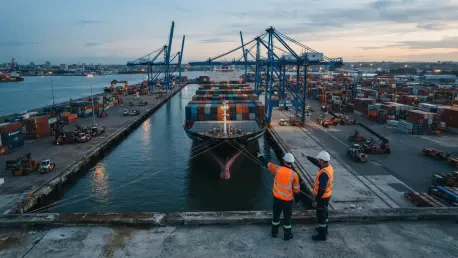
The current state of the ocean freight sector reflects a paradoxical environment where demand remains unexpectedly robust despite a period that typically experiences seasonal cooling. Vessel utilization rates have surged to nearly 95 percent across almost every major carrier network, leaving virtually no margin for operational delays or unexpected cargo surges. While headline figures suggest a 12 percent increase in scheduled capacity between the Far East and Europe compared to the previous year, this additional space is being rapidly absorbed by a frantic market. Consequently, shipping lines have gained the leverage to implement aggressive peak season surcharges starting in December and continuing through January.
These elevated rates are expected to remain firmly in place as carriers capitalize on the extremely high load factors seen at major Chinese ports. For businesses reliant on maritime transport, this environment necessitates immediate action to secure space, as the availability of reliable slots on time-sensitive sailings has become a premium commodity. The compression of the shipping window has effectively evaporated the traditional buffer period that logistics managers once relied upon for peak season planning. Shippers who delay their bookings risk being excluded from essential sailings, as carriers prioritize long-term partners and high-yield cargo during this intense period of demand.
Infrastructure Shifts: The Suez Canal
A critical factor for the 2027 maritime outlook involves the potential restoration of widespread transits through the Suez Canal. While security concerns have dictated the use of longer routes around the Cape of Good Hope, there are emerging signs that carriers are preparing for a return to the canal on selected service loops. This transition, however, carries its own set of logistical challenges that could disrupt global schedules in the short term. The most pressing concern is the risk of vessel bunching, which occurs when ships that were previously staggered arrive at destination ports simultaneously. This sudden influx of cargo could lead to localized congestion at major container terminals.
Looking further into the second quarter of 2027, the combination of restored Suez transits and the delivery of a new generation of large-scale container vessels is projected to inject significant supply into the global market. This influx of tonnage, coupled with the return to more efficient shipping lanes, should eventually alleviate the intense pricing pressures witnessed during the early part of the year. As the supply-demand balance begins to stabilize, shippers may find more opportunities for cost-effective routing and improved service reliability. However, the path to this equilibrium remains fraught with uncertainty regarding the pace at which carriers will phase in new capacity and rotations.
Air Freight Market Strength
Demand Drivers and Pricing Resilience
The air freight market is showing remarkable strength, with rates hitting their highest points of the year and marking a 25 percent increase over the previous cycle. Notably, these prices have decoupled from jet fuel costs; even as fuel prices decline, cargo rates continue to climb due to pure market demand. This firmness in pricing is projected to last through the Chinese New Year, with very little seasonal easing expected in the interim. Major airline hubs in Hong Kong and Shanghai are already seeing high volumes of cargo, and carriers have expressed confidence in their ability to maintain current rate levels through the upcoming peak, driven by a surge in high-value electronics.
For international traders, this means that air freight should no longer be viewed as a fallback option but as a strategic component of the supply chain that requires advance commitment. The lack of traditional seasonal relief underscores the importance of securing blocked space agreements or long-term capacity allocations to mitigate the impact of volatile spot market prices. Shippers who miss their maritime windows are forced to convert ocean cargo to air to meet critical deadlines, further straining the available belly space and freighter capacity. This transition creates a surge in volume that absorbs remaining seasonal capacity, making proactive planning essential for maintaining consistent cargo flow.
Strategic Partnerships and Consolidation
In a constrained air market, success is driven by the depth of relationships with airline partners and the ability to aggregate substantial cargo volumes to secure priority access. By leveraging extensive global networks, forwarders can negotiate better departure schedules and more reliable capacity allocations even during peak shortages. This group-level strategy allows for more scalable consolidation services, ensuring that customers with time-critical requirements maintain a competitive edge. The transition toward a more relationship-driven model represents a departure from the purely transactional nature of the past, as airlines prioritize volume consistency from their most trusted primary partners.
The development of scalable consolidation services provides a vital buffer for customers with complex or time-critical logistics requirements across various industry sectors. By combining smaller shipments into larger, more manageable units, providers can maximize the utility of available carrier space while maintaining competitive pricing structures. This approach not only ensures more efficient use of aircraft capacity but also allows for better tracking and management of the supply chain from origin to destination. As the industry moves into 2027, the ability to offer these sustainable, scheduled volumes will be a key differentiator, providing the stability and reliability that global shippers require.
Global Logistics Strategy
Institutional Directives for 2027
The strategic vision for the coming year emphasizes the necessity of direct engagement with origin-side realities to deliver meaningful benefits to clients. By synchronizing air and ocean freight strategies on the ground in major Asian hubs, leadership can ensure a more integrated approach to multimodal transportation. This level of coordination is designed to address the gap between theoretical market data and the actual conditions found at ports and airports during high-pressure periods. When leadership is present at the source, they can identify potential bottlenecks before they manifest in delayed shipments, allowing for the implementation of immediate and effective contingency plans.
Transitioning away from ad-hoc shipping models toward a framework of sustainable, scheduled volumes is a core directive for the upcoming year. This shift involves a disciplined approach to cargo planning, where the focus is on maximizing the utility of available carrier capacity through consistent and predictable shipping patterns. By moving away from reactive booking practices, businesses can achieve greater stability in their logistics costs and improve the reliability of their delivery timelines. This model relies on a deep understanding of production cycles and consumer demand, allowing for the creation of a more efficient supply chain that is better equipped to handle seasonal volatility.
Navigating Anticipated Market Disruptions
Navigating the anticipated disruptions of 2027 required a shift from reactive logistics management to a mindset of proactive anticipation. Stakeholders focused on establishing robust multimodal contingencies that allowed for flexibility when primary shipping routes faced unexpected constraints. This involved a thorough audit of supply chain vulnerabilities and the identification of alternative ports and carriers that could be activated on short notice. Securing early commitments for space and equipment became a critical requirement for maintaining operational continuity during peak periods. Additionally, leveraging advanced data analytics provided the early warning signals needed to adjust strategies.
The comprehensive strategic mission to Asia provided the essential intelligence needed to formulate a resilient response to the market conditions predicted for 2027. By analyzing the interplay between high vessel utilization and soaring air freight rates, leadership identified the critical pressure points that would define the logistics landscape. The resulting strategy focused on strengthening origin-side relationships and prioritizing group-level consolidation to ensure that clients maintained access to reliable capacity. Ultimately, the mission successfully laid the groundwork for a more disciplined and informed approach to global logistics and supply chain stability for the year ahead.