
Recent data from Kpler reveals a staggering 63 percent year-on-year decline in Russian and Ukrainian grain and oilseed exports from Black Sea ports during the third quarter. This massive contraction highlights a profound structural transformation within the global grain trade, as traditional maritime arteries face unprecedented geopolitical and environmental pressures. In 2026, the industry is no longer simply reacting to temporary disruptions; it is fundamentally reorganizing supply chains to survive a more volatile reality. This transition involves more than just finding new paths on a map; it represents a rigorous test of the resilience and commercial viability of alternative routes that affect everyone from massive terminal operators to local millers. As shipping lanes in the Panama Canal and the Black Sea become increasingly difficult to navigate, the global market is forced to evaluate whether its infrastructure can sustain the high volume of trade required to maintain international food security in this new era.
Resilience: The Commercial Test of Alternative Routes
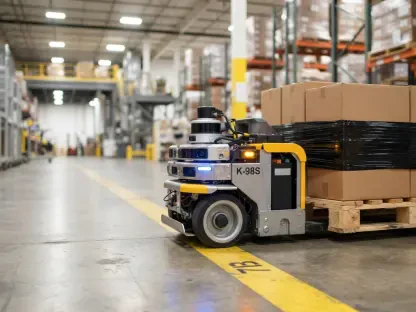
The ongoing crisis in the Black Sea has acted as a primary catalyst for a significant upheaval in traditional logistics, forcing exporters to seek out less efficient but safer paths. In response to restricted access, the industry has demonstrated a high degree of adaptability by expanding shipments through Baltic ports and maximizing the throughput of European rail and river networks. However, these alternatives are rarely a one-to-one replacement for the massive capacity lost at deep-water terminals. While smaller ports and river barges can handle a portion of the volume, they often struggle with the economies of scale that were once the hallmark of global grain movements. The transition has proven that while it is technically possible to move grain across borders via rail, the associated costs and slower turnaround times can make these routes commercially challenging for many traders who operate on thin margins.
A critical takeaway from these recent shifts is that a supply chain is only as strong as its most congested link, which is often located far from the actual port. While it might be physically possible to redirect grain through secondary channels, the true commercial test often reveals significant bottlenecks in the supporting infrastructure. For instance, a port terminal with ample storage space is of limited use if the rail lines feeding it are currently congested or if the border crossings lack the necessary equipment to handle an increased volume of railcars. Consequently, the industry is shifting its focus toward integrated system capacity as the true metric of success. This requires closer cooperation between private exporters and state-run rail authorities to ensure that the entire journey from the silo to the ship is synchronized. Without this level of coordination, the physical availability of grain does not translate into reliable market delivery.
Economic Pressures: The Growing Dilemma for Producers
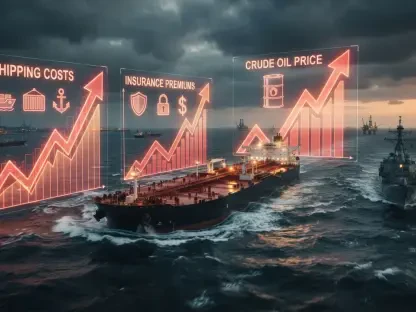
Logistical disruptions have created an uneven distribution of costs across the entire agricultural value chain, impacting the financial stability of producers. Rather than simply passing higher freight expenses on to the final buyer, competitive pressures at the destination often force sellers to lower their prices at the origin. This means that exporters frequently absorb the extra costs of longer or more complex routes just to remain competitive against other global suppliers who might have easier access to the market. By lowering the Free on Board prices to offset expensive shipping, the industry is essentially shifting the financial weight upstream. This trend has significant implications for the long-term viability of farming in regions that are heavily dependent on these disrupted corridors, as profit margins for individual growers begin to vanish under the pressure of global logistics.
This economic shift creates a difficult dilemma for farmers, particularly those operating in high-risk zones or landlocked regions with limited transport options. When the high cost of transport reduces the prices paid at the farm gate below the actual cost of production, farmers may choose to keep their grain in storage rather than sell it at a loss. In more extreme cases, this financial strain leads to a reduction in future plantings and a decrease in spending on essential inputs like high-quality seeds and fertilizers. These logistical challenges today can easily translate into global supply shortages in the coming years, as reduced investment at the farm level impacts subsequent harvest yields. For global millers and processors, this means that even if a transport route is technically open, the volume of grain available may decrease if producers can no longer afford to grow it.
Maritime Chokepoints: The Shift in Operational Coverage
While the Black Sea remains a major flashpoint, other critical global chokepoints like the Panama Canal are also facing severe operational restrictions due to changing environmental factors. For the processing and milling industries, the most significant risk in this current environment is not just the fluctuating price of grain, but the total unpredictability of its arrival. Unreliable delivery windows wreak havoc on production schedules, as mills require a steady flow of specific grain types to maintain quality and consistency. When shipments are delayed by weeks due to canal transit restrictions or rerouted around entire continents, companies are forced to tie up massive amounts of working capital in larger safety stocks. This shift from efficient scheduling to defensive inventory management represents a major change in how the global food supply chain operates on a daily basis.
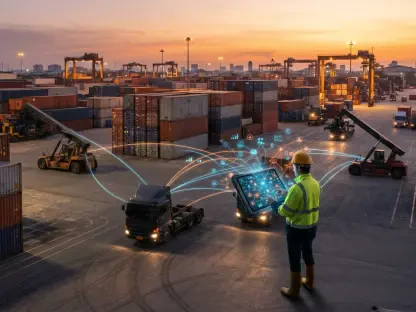
To manage this pervasive uncertainty, sophisticated procurement teams are now distinguishing between contractual coverage and operational coverage in their planning. Having a signed purchase agreement is no longer considered sufficient security; buyers must now have real-time visibility to ensure the grain is physically moving toward its final destination. This delivery variability has transformed logistics from a background administrative function into a primary business risk that requires constant strategic oversight. Companies are investing more in tracking technology and logistics personnel to monitor every stage of the transit process. By prioritizing operational certainty over the theoretical promise of a contract, these firms are better prepared to handle sudden closures or delays at major maritime chokepoints. This proactive approach allows them to secure alternative supplies before a local delay turns into a production crisis.
Strategic Procurement: The Decoupling of Global Markets
True resilience in the modern grain market requires millers and processors to look far beyond simple supplier diversification. Companies are now seeking total visibility into their entire supply chains to identify shared dependencies that might not be obvious at first glance, such as a single railway line or a specific maritime passage used by multiple origins. Additionally, proactive millers are conducting extensive technical trials on grain from non-traditional origins to ensure that alternative sources can meet strict quality and protein requirements. This technical readiness is essential, as switching to a new wheat origin during a crisis is only helpful if the grain can actually produce the specific flour types required by the end customer. By doing this homework in advance, the most successful firms have created a buffer against the sudden loss of a primary supply route.
The industry also observed a growing decoupling between the prices on futures markets and the physical reality of the local grain trade. Benchmark prices on global exchanges can be misleading, as they may decline due to broader financial trends even while the local basis and freight costs are rising sharply because of regional logistics crises. Consequently, purchasing decisions are increasingly driven by localized physical logistics data rather than just general market sentiment. Securing a reliable supply route has become a necessary form of insurance, and many buyers are now willing to pay a premium for grain that is already positioned in a safe location. The global trade successfully transitioned toward a just-in-case model, prioritizing the reliability of the delivery window over the absolute lowest price. This strategic shift recognized that the cost of a total production halt far outweighed minor fluctuations in the initial price of the raw grain.