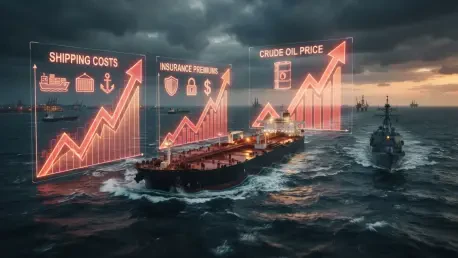

The dramatic spike in Very Large Crude Carrier rates from three dollars to over thirty-seven dollars per barrel has disrupted traditional energy trade economics. While the global market typically fixates on the fluctuations of Brent or West Texas Intermediate benchmarks, a more insidious transformation is occurring within the logistical framework that supports the modern energy sector. Recent data suggests that the hidden costs associated with transporting crude oil—specifically tanker freight and marine insurance—now constitute a staggering thirty percent of the total delivered price, a massive leap from the five percent margin observed at the start of the current year. This shift indicates that the geopolitical landscape is no longer just influencing the extraction of resources but is fundamentally altering the feasibility of moving them across oceans. As maritime routes become increasingly precarious due to regional instabilities, the premium for security and transit is becoming a dominant factor in the ultimate cost of energy for every major economy.
Logistics Analysis: The Surge in Tanker Freight Rates
A meticulous breakdown of the figures from the November 2026 OPEC report reveals a staggering trajectory for combined logistics costs, which climbed from a modest $3.24 per barrel in January to over $49.40 by October. This nearly twelve-fold increase in Very Large Crude Carrier freight rates illustrates a market under extreme duress, where the physical scarcity of hulls is compounded by the high risks associated with key transit chokepoints. Even more jarring is the explosion in marine insurance premiums, which jumped from a negligible $0.06 to $12.29 per barrel. This more than 200-fold increase reflects a total recalibration of risk by global underwriters who are now pricing in the high probability of maritime incidents, vessel seizures, or direct interference in commercial shipping lanes. Consequently, the operational expenses for shipping companies have reached levels where passing the burden to the consumer is the only viable path for maintaining a functional fleet during these periods of volatility.
Logistics Analysis: Extraordinary Spikes in Marine Insurance
The surge in transportation expenses is not merely a temporary anomaly but a structural shift driven by the necessity of heightened security in conflict-prone environments. Shipping firms are increasingly forced to divert vessels through longer, safer routes, which inherently raises fuel consumption and labor costs while simultaneously tightening the global supply of available tankers. This decrease in effective capacity allows carriers to command record-high premiums, further inflating the final price of crude at the refinery gate. Unlike the price of the commodity itself, which can be influenced by production quotas, these logistical overheads are largely immune to typical market corrections and depend heavily on the restoration of maritime safety. As insurance providers continue to tighten their terms and broaden the definitions of high-risk zones, the financial barrier to entry for international energy trade rises, creating a persistent inflationary pressure that ensures high costs even if raw crude prices stabilize.
Economic Consequences: Regional Pressure and Sectoral Risks
The implications of these soaring logistics costs are particularly severe for major Asian economies that depend heavily on Middle Eastern crude imports, such as China, India, Japan, South Korea, and the Philippines. These nations are finding that their traditional energy strategies are being undermined by the sheer expense of securing the supply chain. For a refiner in East Asia, the cost of the oil itself is now often secondary to the cost of ensuring it arrives safely, leading to a significant strain on national trade balances and industrial productivity. As these costs permeate the manufacturing sector, the price of exported goods begins to rise, potentially cooling global demand and triggering a cycle of economic deceleration. Furthermore, the increased burden on foreign exchange reserves to pay for these logistics-heavy imports is forcing central banks to adjust their monetary policies, demonstrating how a disruption in maritime insurance can quickly evolve into a broader financial crisis for energy-dependent nations.
Economic Consequences: Strategic Resilience and Future Solutions
In response to these escalating pressures, several nations and industrial conglomerates moved to diversify their energy procurement strategies and invest in more localized supply chains. This shift involved the expansion of strategic petroleum reserves closer to consumption hubs and the acceleration of alternative energy projects that bypassed the need for vulnerable maritime routes. Some governments also established state-backed insurance pools to mitigate the extreme premiums demanded by private underwriters, effectively subsidizing the safety of their energy imports to prevent complete economic stagnation. These actions demonstrated a growing recognition that traditional market mechanisms were insufficient to handle the scale of logistical disruption experienced throughout the year. Businesses that prioritized flexibility and digital logistics tracking managed to weather the storm more effectively than those tethered to legacy shipping contracts, providing a clear blueprint for navigating future disruptions in the global network.