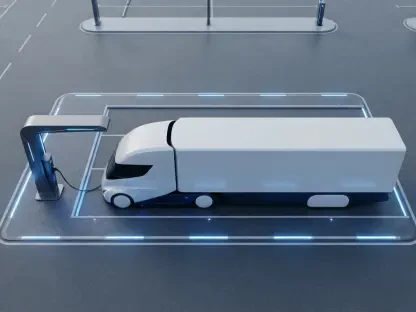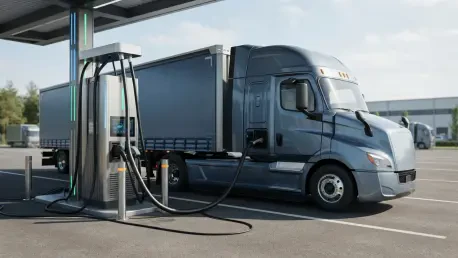

One of the most significant barriers to modernizing European freight is the massive demand that megawatt-level charging places on an already strained electrical infrastructure. As the industry moves through 2026, the European transportation sector finds itself at a defining moment, caught between the financial instability of fluctuating diesel prices and the non-negotiable climate targets set by the union. While automotive engineering has successfully produced high-performance electric semi-trucks capable of handling heavy payloads, the lack of a coherent deployment strategy has left many fleets idling in a state of transition. The issue is no longer about whether the technology works, but whether the surrounding ecosystem can support it. Currently, industry leaders within the EV100 coalition are voicing concerns that the “alarming delay” in infrastructure development is undermining the transition. Without a reliable network, even the most advanced electric trucks are restricted to short routes.
Adopting a Systems-Thinking Approach from Global Leaders
To overcome the current stagnation, European policymakers and logistics firms must look toward the successful paradigms established by global leaders, particularly in regions where electric trucking has already moved past the pilot phase. In the current landscape of 2026, China hosts the vast majority of the world’s electric heavy-duty vehicles, and their success is rooted in a fundamental conceptual difference. While Europe has historically treated electric trucking as a simple vehicle replacement program—exchanging a diesel engine for a battery—the Chinese model treats it as a holistic, integrated freight system. This perspective integrates the vehicle manufacturing, energy grid capacity, and dedicated logistics corridors into a single, cohesive operational strategy. By ensuring that the energy infrastructure evolves in lockstep with the fleet, they have provided the stability that private operators require to commit to large-scale electrification without fearing stranded assets or downtime.
Shifting toward this system-wide strategy allows Europe to create a “turnkey” environment that reduces the perceived risks for logistics companies. This involves moving away from the reactive model, where chargers are only installed after a certain number of trucks are sold, toward a proactive model where the infrastructure itself enables demand. When the power grid, high-capacity charging hubs, and vehicle availability are perfectly synchronized, the financial and operational barriers to switching to electric heavy-duty vehicles are significantly diminished. This approach also fosters a more collaborative environment between vehicle manufacturers and energy providers, ensuring that technical standards for charging interfaces and grid communication are harmonized across the continent. Such a transformation requires a departure from traditional market-led expansion, replacing it with a structured, data-driven planning process that identifies the most critical nodes in the transport network for immediate upgrade.
Strategic Planning to Mitigate Power Grid Constraints
One of the most daunting technical challenges for widespread electrification is the immense pressure that heavy-duty trucks place on local power grids. Charging a fleet of trucks equipped with megawatt-hour batteries requires massive amounts of electricity, which can easily overwhelm existing substations if not managed correctly. To mitigate this, European logistics providers are increasingly exploring “route stuffing,” a strategic management technique where truck departures along major corridors are spaced at regular, predictable intervals throughout the day. By avoiding the natural tendency for fleets to depart or charge in large, synchronized groups, operators can effectively smooth out peak power demand. This coordination makes the transition more manageable for utility providers, as it reduces the need for massive, immediate capital investments in grid reinforcement. Furthermore, it ensures that the existing energy capacity is used more efficiently, allowing more trucks to be serviced without brownouts.
Beyond simple scheduling, focusing on “looped chain staging” provides a structured way to electrify the most carbon-intensive freight paths first. This strategy targets high-traffic corridors, such as those connecting major maritime ports to inland distribution centers, where trucks travel on predictable, repeating routes. By prioritizing these specific loops for comprehensive grid upgrades and transformer installations, regional authorities can ensure that every euro invested in infrastructure provides the maximum possible impact on emission reductions. This targeted approach prevents the fragmentation of resources that occurs when charging stations are scattered randomly across the landscape. Instead, it builds a robust backbone of reliable energy nodes that can support continuous operation for long-haul carriers. As these looped chains become established, they serve as the foundation for a broader, interconnected network that will eventually cover the entire continent, ensuring that no region is left behind.
Innovative Energy Solutions Through Battery Swapping
While megawatt-level charging remains a critical goal for the industry, its rollout is often slowed by extensive bureaucratic red tape and the multi-year lead times required for high-voltage grid connections. In this context, battery swapping has emerged as a highly pragmatic alternative that addresses both the time constraints of drivers and the limitations of the grid. The “Swaptopus” joint venture between Octopus Energy and CATL exemplifies this shift, providing automated stations where a depleted battery can be swapped for a fully charged one in less than five minutes. This technology essentially functions as a massive grid buffer; the swapping stations can charge depleted batteries during off-peak hours when renewable energy is abundant and electricity is cheaper. This decoupling of the charging process from the vehicle’s arrival time allows for a much more stable interaction with the electrical grid, preventing the massive spikes in demand that typically occur when a heavy-duty truck plugs in.
The “swap-and-go” model effectively mimics the speed and convenience of traditional diesel refueling, which is an essential requirement for maintaining the operational efficiency of long-haul logistics. For many carriers, the time lost during conventional high-speed charging represents a significant economic burden that can make electric trucks less competitive than their internal combustion counterparts. By establishing a dense network of automated swapping hubs along the primary trade routes of Europe, the industry can bypass these wait times entirely. This creates a resilient energy ecosystem where the infrastructure is flexible enough to adapt to the real-world needs of the fleet without requiring immediate, massive upgrades at every individual parking spot. Moreover, battery swapping allows for better maintenance and lifecycle management of the batteries themselves, as they are charged in a controlled environment that can optimize for longevity and safety, ultimately lowering the total cost of ownership.
Bridging Fragmented Policies and National Standards
A significant obstacle to creating a unified European electric trucking network is the persistent fragmentation of technical and regulatory standards across the 27 member states. Each nation currently maintains its own set of grid priorities, permitting processes, and tolling structures, creating a “patchwork” environment that complicates cross-border transport. For a logistics company based in Germany to operate an electric fleet into Spain or Italy, they must navigate a complex landscape of varying charger availability and different payment systems. To accelerate progress, the European Commission must take a more active role in facilitating the physical integration of these corridors. This means ensuring that a truck can travel from the Port of Rotterdam to Rome with the same operational ease as a diesel vehicle. Harmonizing the technical requirements for megawatt charging systems and battery swapping stations is crucial to prevent the creation of “digital borders” that could stifle the growth of freight.
Developing a coherent policy framework also requires a fundamental shift in how tolling and road access are handled across the continent. Transitioning to carbon dioxide-based tolls can provide a powerful financial incentive for operators to invest in zero-emission vehicles, but these incentives must be applied consistently across all borders to be effective. Furthermore, governments must move toward a “planning-led” approach, where utility providers and transport ministries collaborate to build out energy infrastructure before the market reaches a tipping point. Providing this level of regulatory and infrastructural certainty is vital for encouraging long-term private investment in large electric fleets. When operators know that the energy will be available and the costs are predictable, the transition moves from a risky experiment to a standard business decision. This coordination is the only way to transform the continent’s fragmented logistics backbone into a sustainable, competitive, and truly unified network.
Tailoring Infrastructure to Diverse Freight Use Cases
The transition to electric heavy-duty trucking is not a uniform process, as different segments of the logistics industry have vastly different operational requirements and energy needs. For instance, local delivery vans and school buses often have long overnight dwell times and very predictable, short-range routes. These vehicles can be supported by lower-power, cost-effective charging solutions that do not require massive grid upgrades or megawatt chargers. In contrast, regional freight operators who run multiple shifts per day might require a more complex mix of overnight charging and medium-power “top-up” stations located at strategic distribution centers. Understanding these nuances is key to avoiding wasted capital on over-engineered solutions for simple use cases. By tailoring the infrastructure to the specific demands of each sector, policymakers can ensure that resources are directed toward the most challenging areas, such as long-haul heavy freight, where megawatt charging and battery swapping are most needed.
The successful modernization of the European freight network required a departure from the reactive policies of the early decade, moving instead toward a unified and highly integrated infrastructure model. By prioritizing the synchronization of the power grid with logistics scheduling, authorities managed to resolve the bottleneck that once threatened the viability of zero-emission heavy-duty transport. The implementation of technologies like battery swapping and megawatt charging hubs along key corridors provided the necessary operational speed to replace diesel legacy systems effectively. Strategic investments into high-traffic routes between major maritime ports and inland logistics centers demonstrated that a targeted, data-driven approach yielded the highest environmental and economic returns. This shift transformed the continent’s logistics backbone into a sustainable, competitive powerhouse that insulated the economy from global energy shocks while setting a new global standard for freight decarbonization.