
Successfully navigating the volatile semiconductor market now requires real-time data regarding supplier production schedules and the political stability of transport routes. The global semiconductor landscape is currently undergoing a fundamental restructuring that is fundamentally altering how electronics are manufactured worldwide. These tiny components, often called “chips,” serve as the essential nervous system for everything from smartphones and medical devices to automotive systems and critical infrastructure. As the industry moves away from a model prioritized strictly on cost efficiency, it is embracing a new era defined by regionalization, strategic security, and long-term resilience. This transformation forces a total reimagining of how products are designed, sourced, and delivered to the global market. The complexity of chip production is rooted in an extreme level of international specialization, where a single component travels through many borders.
Geopolitical Shifts and Regional Production
Strategic Assets: Defining National Sovereignty
Semiconductors have evolved from being viewed as simple commercial goods to being treated as essential national assets linked to economic stability and sovereignty. Governments now recognize that chip access is a matter of national security, leading to a wave of statecraft involving export restrictions, tariffs, and trade policies. This shift is driving a pivot toward “friend-shoring,” where manufacturers prioritize sourcing from politically stable allies rather than the most cost-effective global hubs. By viewing these components through a lens of national defense rather than mere electronics procurement, nations have started to implement strict oversight on where high-end logic chips are designed and manufactured. This change in perspective has disrupted the traditional silicon ecosystem, forcing companies to reconsider their reliance on regions that might face sudden trade embargoes. This shift is not merely about logistics; it is a fundamental change in philosophy.
Strategic Assets: Impact on Global Corporate Strategy
The ripple effects of these strategic classifications are felt most acutely by global corporations that previously operated with borderless supply chains. In the current environment, the definition of a successful manufacturing partner has shifted from one who offers the lowest bid to one who resides within a favorable geopolitical jurisdiction. This has necessitated a significant overhaul of corporate compliance departments, which now must monitor international treaties and sanctions with the same rigor they once applied to quality control. Furthermore, the decoupling of major economies in the semiconductor space has led to a duplication of efforts, as different regions attempt to build parallel ecosystems to ensure they are never cut off from vital technology. For electronics manufacturers, this fragmentation means that they must now manage multiple, often redundant, supply lines to maintain production continuity across different markets while navigating a landscape defined by state-driven industrial policy.
Domestic Fabrication: Subsidies and Regional Growth
To mitigate the risks of over-reliance on concentrated manufacturing centers, many nations are offering massive subsidies to encourage the building of domestic fabrication facilities. For electronics manufacturers, this means the sourcing environment is becoming increasingly fragmented and politically sensitive. Companies are no longer evaluating suppliers based solely on price; they are now carefully weighing the geopolitical stability of the regions where their components are physically born. The influx of state-sponsored capital has sparked a building boom in regions that were previously considered too expensive for large-scale chip production. While this diversification provides a safety net against regional disruptions, it also introduces a higher cost floor for the entire industry. Manufacturers must now balance the benefits of local sourcing with the increased overhead that comes with producing chips in high-cost labor markets where environmental and safety regulations are strictly enforced.
Domestic Fabrication: Strategic Sensitivity in Procurement
The fragmentation of the sourcing landscape requires a more sophisticated approach to procurement than ever before. Procurement officers are no longer just buyers; they have become strategic analysts who must understand the legislative environment of every node in their supply chain. This sensitivity to the origin of components is particularly critical for companies serving government contracts or critical infrastructure sectors, where the provenance of a chip can determine whether a product can be sold at all. Consequently, the industry is seeing a rise in specialized consulting firms that focus exclusively on verifying the geographic and political integrity of electronic components. This layer of oversight adds complexity but is seen as a necessary cost of doing business in an era where technological sovereignty is paramount. As more domestic fabs come online, the industry will likely see a move toward “localized” versions of global products, tailored to the specific regulatory requirements of each region.
The Reality of Industrial Expansion
Barriers to Entry: Financial and Technical Hurdles
While diversifying the manufacturing footprint is a global priority, the barriers to entry remain immense due to the staggering costs and technical requirements of modern fabrication plants. Building a new fabrication facility is one of the world’s most complex industrial undertakings, requiring billions of dollars in capital and highly specialized labor. These facilities are not merely buildings; they are high-precision environments where even the slightest vibration or microscopic speck of dust can ruin an entire production run. The equipment required for the most advanced nodes, such as extreme ultraviolet lithography machines, is produced by a handful of companies globally and has multi-year lead times. This scarcity of tooling creates a bottleneck that even the most well-funded government projects cannot easily bypass. Therefore, while the desire for regional autonomy is strong, the physical reality of chip manufacturing limits how quickly these new hubs can actually reach operational maturity.
Barriers to Entry: Infrastructure and Human Capital
Beyond the financial and equipment hurdles, these facilities require a robust infrastructure capable of providing consistent, high-purity water and electricity, making it difficult to relocate production quickly. A single fab can consume millions of gallons of water per day and require its own dedicated power substation to ensure that production is never interrupted. Furthermore, the specialized workforce needed to run these plants takes years of intensive training to develop. The industry is currently facing a significant talent gap, as the rapid expansion of global manufacturing capacity has outpaced the rate at which universities can graduate qualified engineers and technicians. This shortage of human capital is perhaps the most significant long-term challenge to regionalization. Without a steady stream of experts to manage the complex chemistry and physics involved in wafer fabrication, even the most expensive facility is essentially useless, forcing companies to invest in education.
Production Lag: Time Between Investment and Output
Investments in new manufacturing capacity do not provide immediate relief for supply shortages due to the significant lag time inherent in the semiconductor industry. It takes years to install equipment, qualify technical processes, and scale production to commercial-grade levels. For example, a facility announced today might not start producing chips at scale for another three to five years. This delay means that the manufacturing industry must plan its product roadmaps half a decade in advance, often making educated guesses about which technologies will be most relevant when the capacity finally comes online. During this interim period, companies remain vulnerable to the same shortages that the new facilities were intended to prevent. This tension between long-term investment and short-term needs requires a delicate balancing act, where firms must simultaneously invest in future stability while managing the immediate constraints of a market that is still catching up to global demand.
Production Lag: Managing Volatility in the Interim
Consequently, manufacturers must maintain a long-term perspective, realizing that while regional investments will eventually offer more options, they must continue to manage current market volatility for the foreseeable future. This has led to the rise of “buffer” strategies, where companies carry much higher inventory levels of critical components than they did under the old “just-in-time” manufacturing model. While this ties up significant capital, it is viewed as a necessary insurance policy against the long wait times for new capacity. Additionally, manufacturers are increasingly entering into long-term supply agreements that guarantee them a certain percentage of a fab’s output years in advance. These contractual commitments provide fab operators with the financial certainty needed to build new plants while giving electronics manufacturers a degree of protection against future market swings. This shift toward long-term planning is fundamentally changing the financial structures of the electronics sector.
Evolving Design and Management Strategies
Procurement Integration: The Inversion of Design Flow
A practical shift in modern manufacturing is the inversion of the traditional design process, where component availability now dictates engineering choices. Historically, engineering teams would design a product based on performance specifications and then pass the bill of materials to procurement to find the parts. Today, because specific chips can have lead times of several months or be subject to sudden geopolitical restrictions, procurement and engineering teams must collaborate from the very first day of development. This “design-for-availability” approach ensures that engineers are only using parts that have a clear and stable path to production. If a preferred component is deemed too risky or has an uncertain lead time, the design is altered at the conceptual stage to accommodate a more reliable alternative. This collaboration has broken down the silos that once existed between corporate departments, creating a more integrated and responsive product development lifecycle that prioritizes reliability.
Procurement Integration: Standardized Parts and Substitution
This design-for-availability approach also includes using component substitution and standardized parts to ensure that a product can still be built even if a specific vendor fails. Instead of designing a circuit board around a single, proprietary chip that only one factory can produce, engineers are increasingly opting for generic components that can be sourced from multiple manufacturers. This modular design philosophy allows for quick pivots in the event of a supply disruption, as the software or peripheral hardware can be easily adjusted to accommodate a different but compatible chip. Furthermore, manufacturers are paying closer attention to the lifecycle of the components they select, avoiding “bleeding-edge” chips for products with long lifespans to ensure that replacements will be available for years to come. This focus on longevity and compatibility is a direct response to the lessons learned during recent supply chain crises, where companies were forced to halt production due to a lack of simple, low-cost parts.
Global Demand: Expansion Beyond the Tech Sector
The demand for semiconductors has expanded far beyond the traditional tech sector, impacting virtually every industry undergoing digital transformation. From luxury retail platforms to basic home appliances, the need for processing power is universal, creating a hyper-competitive environment for limited fabrication capacity. Even industries that were once considered “low-tech,” such as furniture manufacturing or heavy construction, now integrate sensors, connectivity, and smart features into their products. This digitization means that a shortage in the semiconductor market no longer just affects phone and laptop makers; it can stall the production of smart washing machines, connected medical devices, and even sophisticated warehouse sorting systems. As every physical object becomes a data-generating node, the pressure on global chip production continues to grow, making semiconductors the most critical raw material of the modern age. This universal demand has fundamentally shifted the power balance between chip suppliers and their customers.
Global Demand: Hyper-Competition for Capacity
This “ubiquity of demand” creates a scenario where electronics manufacturers are now competing for parts with automotive companies, medical device firms, and even industrial equipment manufacturers. This cross-sector competition for the same limited fabrication capacity has led to a situation where the highest bidder often gets priority, regardless of the industry. For smaller electronics firms, this means they must find new ways to secure their place in the production queue, such as joining buying consortiums or leveraging the influence of larger distribution partners. The inability to secure even a few basic microcontrollers can delay the launch of a multi-million dollar product line, highlighting the high stakes of modern component sourcing. Furthermore, as the automotive industry moves toward full electrification and autonomous driving, its demand for specialized power semiconductors is expected to surge, further tightening the global supply and forcing other sectors to adapt to a persistently constrained market.
Data-Driven Resilience and Visibility
Supply Chain Visibility: Real-Time Monitoring Platforms
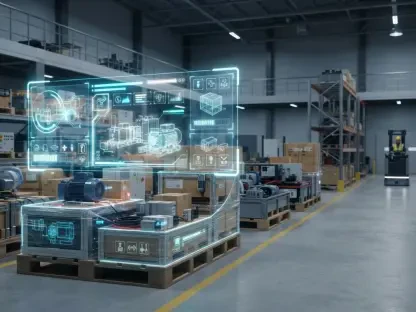
To survive in this volatile environment, manufacturers are moving away from “set it and forget it” procurement in favor of real-time supply chain visibility. By adopting digital procurement platforms and advanced data analytics, companies can monitor supplier production schedules, inventory levels, and even the geopolitical risks of transportation routes with unprecedented precision. These tools provide an early-warning system, allowing businesses to see potential delays weeks or months before they manifest as a line-down situation. This proactive approach is a significant departure from the reactive model of the past, where companies only investigated their supply chain when a part failed to arrive. Modern platforms use artificial intelligence to scan global news, weather reports, and port activity to predict disruptions, giving procurement teams the lead time they need to find alternatives. This digital transparency has become a competitive necessity for any firm operating on a global scale.
Supply Chain Visibility: Vulnerability Mapping and Mitigation
A data-driven approach also allows businesses to identify “single points of failure” within their supply chain, such as a reliance on a single factory in a high-risk region. By mapping out the entire journey of a component—from the raw silicon to the final packaging—manufacturers can uncover hidden vulnerabilities that were previously invisible. Once these risks are identified, companies can take specific steps to mitigate them, such as qualifying a secondary source or relocating a portion of their inventory to a more stable geographic hub. This level of granularity in supply chain management was once considered an unnecessary expense, but it is now viewed as an essential component of risk management and corporate governance. Furthermore, having detailed data on the origins and manufacturing processes of components allows companies to meet increasingly stringent environmental and social responsibility standards, providing a dual benefit of resilience and compliance in an increasingly regulated global marketplace.
Logistic Logistics: Relationships and Distributor Networks
Despite the rise of digital monitoring tools, the synthesis of recent industry shifts suggests that technology is only a partial solution for modern manufacturers. The human element—specifically maintaining strong, long-term relationships with global distributors—remains an indispensable part of a resilient strategy. During times of extreme shortage, the personal trust and history between a buyer and a supplier often determine who receives a critical shipment of parts. These relationships provide a level of flexibility and support that cannot be coded into an algorithm. For example, a trusted distributor might provide early notice of an impending price hike or prioritize a long-term customer over a one-time buyer offering a higher price. This social capital is especially important for medium-sized manufacturers who may not have the direct clout of a tech giant but can still secure their supply chain through loyal partnerships. Investing in these human connections is a core strategy for navigating high-tech logistics.
Logistic Logistics: Human Decision-Making in Crisis
Moreover, the ability of experienced procurement teams to make quick, informed decisions during a crisis remains a vital asset that complements digital tools. While data can highlight a problem, it often requires human intuition and experience to choose the best path forward when every option carries a degree of risk. For instance, deciding whether to pay a premium for air freight or wait for a delayed ship requires a deep understanding of the specific product’s market window and the company’s financial health. Successful manufacturers empower their supply chain professionals to act decisively, using the data as a guide rather than a final authority. This blend of high-tech visibility and high-touch management ensures that the organization remains agile enough to respond to unexpected shocks. As the semiconductor landscape continues to evolve, the most successful firms will be those that foster a culture of resilience, where technology and human expertise work in tandem to overcome the complexities of a fragmented and volatile global market.
Actionable Pathways: Strategies for Future Operational Stability
The transformation of the semiconductor supply chain provided a clear roadmap for manufacturers aiming to thrive in an era of constant disruption. Leaders in the field shifted their focus from short-term cost savings to the implementation of redundant systems and regionalized sourcing hubs. To move forward, companies adopted a policy of continuous auditing, ensuring that every component in their product lineup was vetted for geopolitical risk and long-term availability. They also prioritized the development of internal talent, training engineering and procurement teams to operate as a single, cohesive unit capable of designing for a constrained market. By investing in digital transparency and fostering deep relationships with trusted distributors, manufacturers built the agility needed to pivot when geopolitical or environmental shifts occurred. These strategies transformed the supply chain from a back-office function into a primary driver of innovation and market competitiveness, ensuring that the next generation of electronics was built on a foundation of stability.