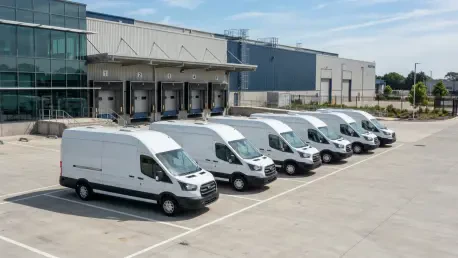

By implementing a strict five-year replacement cycle and remarketing vehicles through professional auctions, Southland maximizes the resale value of its capital assets. This disciplined approach to financial management serves as the bedrock for a fleet that has grown to over 2,000 units in a landscape defined by economic volatility and shifting regulatory requirements. Currently, in 2026, the mechanical services sector is grappling with high interest rates and fluctuating fuel prices that demand a departure from legacy management techniques. Southland Industries, a leader in plumbing and mechanical systems, has navigated these obstacles by converting its transportation wing into a high-tech data hub. By treating each truck and van as a capital asset, the company ensures that every mile driven contributes to the bottom line. This evolution to a technology-first strategy allows the organization to maintain its strong competitive edge while meeting new infrastructure demands.
Strategic Forecasting: Moving Beyond Reactive Procurement
A cornerstone of the current strategy involves moving away from the industry-standard reactive procurement model, which often leaves companies at the mercy of unpredictable supply chains. Instead, the organization has implemented a multi-tiered planning approach that synchronizes fleet requirements with projected employee headcounts and business growth trajectories. Through quarterly meetings between department leaders and annual strategy sessions, the firm can accurately anticipate its vehicle needs long before they become urgent. This foresight allows the company to secure approximately 80 percent of its annual vehicle requirements through planned manufacturer orders rather than relying on more expensive dealer stock. By avoiding the premiums associated with emergency purchases, the organization protects its margins while ensuring that specialized technicians always have the necessary equipment to perform their duties on complex job sites across various national markets.
This disciplined forecasting has proven vital during periods of rapid geographic expansion, such as the recent surge in regional operations across the Southern United States. In Texas, for instance, the local fleet successfully scaled from 550 vehicles to over 1,000 in a span of just four years without encountering the logistical bottlenecks that typically plague such growth. By aligning procurement directly with hiring data, the company managed to integrate these new assets into the existing infrastructure seamlessly. This proactive stance ensures that expansion is supported by a robust backbone of reliable transportation, preventing project delays and maintaining high service standards. Furthermore, by locking in orders with manufacturers ahead of time, the organization mitigates the impact of equipment shortages that continue to affect the broader industrial market. This strategic alignment between the fleet department and operational leadership is a primary driver of efficiency.
Role-Based Standardization: Balancing Unity with Geography
The transition from a model based on personal vehicle preferences to a strictly role-based standardization strategy represents another significant shift in operational philosophy. By defining specific vehicle configurations for each job function, the company has simplified everything from initial procurement to long-term maintenance. When every service technician in a specific division operates the same type of vehicle, the fleet team can streamline parts inventory and establish more efficient repair protocols with service partners. This uniformity reduces the complexity of managing a diverse national fleet and ensures that every truck is perfectly equipped for its intended purpose. Moreover, this approach eliminates the friction often caused by varied vehicle specs, allowing for easier movement of assets between different teams as project demands shift. Standardization serves as a force multiplier, enhancing the overall agility of the workforce while reducing the administrative burden.
While standardization provides a framework for efficiency, the company remains mindful of the diverse environments in which its technicians operate. To address this, the fleet strategy incorporates geographic flexibility into its standard roles, ensuring that vehicle specifications match local climate demands. For example, while the basic configuration for a service van might be consistent nationwide, the hardware required for a technician in Wisconsin differs significantly from one in California. The northern fleet is prioritized for four-wheel-drive capabilities and cold-weather equipment to ensure safety during winter, whereas the southern fleet can opt for more fuel-efficient configurations without those features. This nuanced application of standardization allows the organization to optimize its capital expenditure by only paying for features that are essential to a specific region. By tailoring assets to the reality of the road, the firm improves driver safety and overall operational uptime.
Technological Integration: Leveraging AI for Safety and Health
The deployment of AI-powered telematics systems has fundamentally altered how the organization monitors its mobile assets and interacts with its driving staff. These systems provide real-time visibility into driver behavior, tracking critical safety metrics such as harsh braking, rapid acceleration, and following distances. By utilizing in-cab coaching and external-facing cameras, the technology offers immediate feedback to drivers, fostering a culture of self-correction and professional accountability. This proactive safety measure does more than just reduce the frequency of accidents; it significantly lowers the liability profile of the entire organization. Drivers are empowered to manage their own performance, which reduces the need for constant managerial intervention and builds trust between the office and the field. This integration of artificial intelligence into the daily workflow ensures that safety is not just a policy, but a measurable and interactive part of the operation.
Beyond the human element, these technological tools provide a direct line to the mechanical pulse of every vehicle in the 2,000-unit fleet. Telematics hardware constantly monitors engine hours, fuel consumption patterns, and oil life indicators, transmitting this data back to a centralized management portal. This shift from calendar-based maintenance to a predictive model allows the service team to address mechanical issues based on actual wear and tear. For instance, a vehicle operating in heavy stop-and-go traffic might require more frequent service than one used primarily for highway transit. By tailoring maintenance schedules to the unique duty cycle of each asset, the organization prevents costly breakdowns and extends the total operational lifespan of its equipment. This data-driven approach minimizes unproductive downtime and ensures that the fleet remains in peak condition, which is essential for maintaining the high reliability standards required in service contracts.
Operational Efficiency: Maximizing Labor and Value
One of the most effective strategies for labor optimization involves a decentralized garaging model, where technicians are permitted to take their vehicles home. This policy is designed to eliminate unproductive windshield time, which refers to the hours spent traveling from a central dispatch office to a jobsite. By allowing employees to travel directly from their residences to their first assignments, the organization significantly increases the number of billable hours and improves response times for emergency service calls. This is particularly valuable in congested metropolitan areas where daily commutes can consume a large portion of a technician’s day. The home-garaging model also enhances employee satisfaction and serves as a powerful recruiting tool in a competitive labor market. By placing the assets closer to the customers, the company has successfully reduced fuel consumption and the carbon footprint associated with redundant travel between office locations.
The organization maintained its commitment to financial stewardship by leveraging strong relationships with original equipment manufacturers and national leasing partners. These partnerships provided the company with volume-based purchasing power and access to comprehensive maintenance programs that kept operational costs predictable. By adhering to a strict review process, the fleet team scrutinized every repair recommendation to ensure that maintenance dollars were spent only on necessary and cost-effective services. As the five-year cycle concluded, the company successfully transitioned older assets out of the fleet and into professional auctions, recouping maximum value for its investments. Looking ahead, the focus shifted toward integrating electric vehicle pilot programs and further refining AI insights to prepare for future urban emission zones. By combining disciplined replacement schedules with emerging technology, the firm secured a resilient infrastructure for sustainable growth.