
Rohit Laila has spent decades navigating the intricate labyrinths of global supply chains, witnessing firsthand the shift from manual labor to the highly automated, data-driven world we operate in today. With an extensive background in logistics systems engineering and a deep-seated passion for innovation, he has become a leading voice for companies looking to move beyond simple technology adoption toward true operational excellence. In our discussion today, we explore a fundamental shift in how logistics networks are conceived—moving away from the traditional model of “transformation projects” and toward a philosophy of continuous systems engineering. This conversation highlights the integration of physical and digital assets, the rising importance of architecture as a competitive weapon, and the evolving role of humans as they move higher up the decision stack to manage complexity that would have been unimaginable just a few years ago.
For decades, the logistics industry has functioned on a cadence of major “transformation projects,” such as installing a new warehouse management system or automating a specific facility. Why is this episodic approach to innovation failing in today’s environment, and what does it mean to design a network continuously?
The reality we face in 2026 is that logistics no longer changes at the pace of a project lifecycle. In the past, a company would spend eighteen months implementing a platform, then sit back and expect it to deliver value for the next five years, but that world has vanished. When we talk about continuous design, we are acknowledging that the Autonomous Logistics Network is an ongoing state of evolution rather than a destination you reach and then stop. If you treat a facility automation as a one-time event, you lose the ability to adapt when market signals shift or when new AI models begin to drift from their original parameters. We have to move toward a model where we are constantly refining the architecture, adjusting how data flows and how components interact, rather than waiting for the next big budget cycle to fix what has become obsolete. It is a fundamental shift in management discipline that requires us to observe, validate, and redesign in a closed loop every single day.
Many organizations still view their technology as a “stack” of separate applications for transportation, warehousing, and visibility. You’ve argued that we need to stop thinking in terms of technology stacks and start thinking in terms of operating systems—could you elaborate on that distinction?
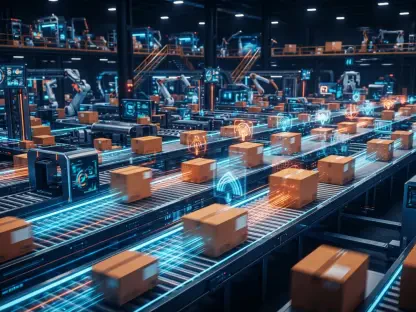
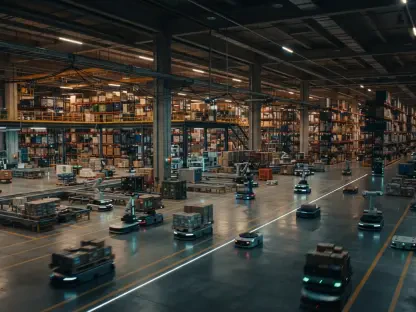
Calling the modern integration of robotics, AI, data, and people a “technology stack” is a massive understatement because it implies these things are just layers sitting on top of each other. In a true systems-engineered environment, we are building an operating system where the most critical questions aren’t about which software you own, but how decisions actually flow through the entire organism. We have to consider how an automated decision in a warehouse affects a transportation route in real-time, or how the system behaves when a specific component fails. It’s about the connectivity between the physical assets and the digital optimization layers, ensuring that data maintains continuity across every single touchpoint. When you manage your logistics as an operating system, you focus on governance, exception escalation, and the boundaries between human and machine interaction, which is where the real competitive advantage lies.
As intelligence moves closer to the point of action, we are seeing a shift from “systems of record” to “systems of decision.” What does this change look like on the ground for a logistics manager dealing with daily disruptions?
We are moving away from the era where software just told you what happened yesterday and into an era where the system identifies a shipment delay, evaluates the impact, and executes a response with almost no human intervention. Imagine a transportation system that doesn’t wait for a manual replanning session every morning but instead continuously re-evaluates routes and capacity as weather patterns change or port congestion spikes. This creates a much faster logistics cycle, but it also makes the underlying architecture far more consequential because the software is now acting, not just reporting. If the governance is weak, a bad output from an automated agent isn’t just a typo in a report; it’s a truck sent to the wrong location or a warehouse priority that conflicts with a top-tier customer’s needs. This level of execution connectivity requires a rigorous “design-deploy-observe” cycle to ensure the system’s behavior aligns with the company’s strategic goals.
There is often a fear that increased automation and AI-driven decision-making will make human expertise redundant. How is the human role actually changing within these highly engineered systems, and what new skills are becoming essential?
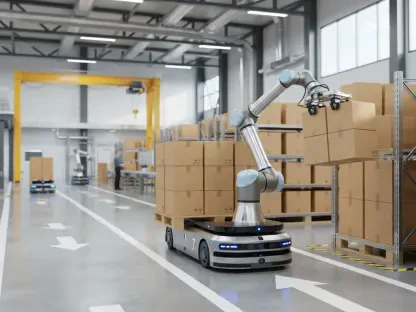
Automation doesn’t eliminate the human element; it actually pushes people much higher up the decision stack, which is a significantly more demanding place to be. Our teams are spending less time on the “grunt work” of reconciling spreadsheets or monitoring routine transactions and more time managing the architectural health of the entire network. The future warehouse leader or transportation manager needs to understand the automated systems influencing their operations deeply enough to know when to trust a recommendation and when to challenge it. They are becoming system designers who must manage cross-functional tradeoffs and strategic relationships while overseeing the governance of the AI models themselves. It is a shift from being an operator to being an architect, where the value of human intuition is applied to novel exceptions and complex, high-stakes choices that machines aren’t yet equipped to handle.
Resilience has traditionally been built through physical buffers like safety stock or redundant warehouse space. How does a systems-engineered approach transform resilience into a digital, architectural property?
Physical resilience, like carrying more inventory, will always be part of the equation, but in 2026, we are pairing it with “decision resilience” powered by digital twins and real-time simulation. When a major disruption occurs, a well-engineered system doesn’t just stall; it triggers a scenario analysis that estimates consequences and evaluates alternatives within seconds. We are using AI to interpret unstructured signals—like social media trends or sudden geopolitical shifts—and allowing automated systems to act within approved boundaries to reconfigure the network. The strongest networks today are the ones that can sense a problem and re-adjust their configuration faster than the competition, rather than just trying to “out-protect” the problem with static assets. It’s about the ability of the system to understand its own dependencies and dynamically shift flows to maintain service levels despite the chaos of the outside world.
If two companies are using the same industry-standard software—the same TMS, WMS, and AI tools—how can one possibly gain a competitive advantage over the other through architecture?
The advantage no longer comes from owning the component; it comes from how those components have been engineered to work together in a coherent way. You can have two companies with the exact same 2026 Supply Chain Decision Intelligence Market Map technologies, yet one will see vastly better results because they have clearer decision rights and tighter process integration. One company might have effective automation boundaries that allow for smooth handoffs between robots and people, while the other struggles with data silos and high decision latency. Competitive differentiation now lives in the “connective tissue”—the data quality, the failure recovery protocols, and the way the operating model is designed to handle complexity. It’s the difference between having a collection of high-performance car parts and having a finely tuned Formula 1 racing machine where every part is engineered to support the others.
What is your forecast for the evolution of logistics management over the next few years as these systems become even more autonomous?
My forecast is that we will see the total convergence of logistics management and systems management, where the “logistics executive” is indistinguishable from a systems engineer. We are moving toward a future where the primary job of a supply chain leader is to govern a self-evolving organism that continuously validates its own performance against business requirements. We will stop seeing “digital transformation” as a specific program with a start and end date and instead treat it as a permanent management discipline. The organizations that thrive will be those that design for failure from the beginning, ensuring that when components of the autonomous network inevitably break, the system is engineered to recover gracefully. Ultimately, the winners won’t be the ones with the most expensive AI, but the ones who have built the most coherent, engineered, and adaptive architectures to house that intelligence.