
Rohit Laila joins us to discuss the Department of Transportation’s 2026 National Freight Strategic Plan, a comprehensive roadmap designed to modernize the movement of $68 billion in goods across our country every single day. With decades of experience navigating the complexities of global supply chains and a deep-seated passion for technological integration, Laila offers a unique perspective on the intersection of federal policy and real-world logistics. In this conversation, we explore the multi-year strategy to revitalize a 7-million-mile network, touching on the critical pillars of safety, workforce development, and the urgent need for digital data standards. We also examine how the government aims to balance high-tech innovation with the grit of physical infrastructure repair to secure the nation’s economic future.
The national freight network spans nearly 7 million miles and handles $68 billion in goods daily. What specific physical bottlenecks currently pose the greatest threat to this volume, and how will streamlining federal project reviews accelerate the removal of these obstacles?
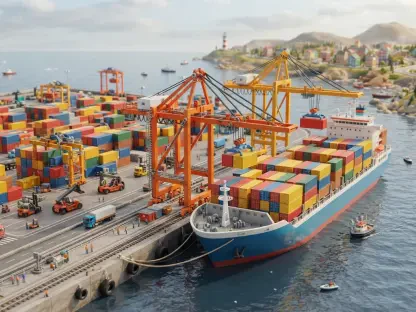
The most significant physical bottlenecks are found where our aging highway interchanges and port access points fail to handle the modern surge of 54 million tons of daily cargo. These chokepoints act like a tightening vice on our economy, causing idling engines and frustrated drivers to lose precious hours that translate into higher costs for everyone. By streamlining federal project reviews, we are essentially cutting through the thick layer of administrative “red tape” that traditionally leaves vital expansion projects sitting on a desk for years. Moving at this accelerated pace means we can break ground on bridge reinforcements and lane expansions while the economic need is still urgent, rather than decades after the fact. It’s about reclaiming the momentum necessary to support a modern economy that demands goods move without friction or delay.
Cargo theft and energy supply chain disruptions are significant security concerns for modern logistics. Beyond digital tracking, what specific hardware innovations or physical infrastructure upgrades are necessary to protect these industries, and what metrics will define success for these security initiatives by 2026?
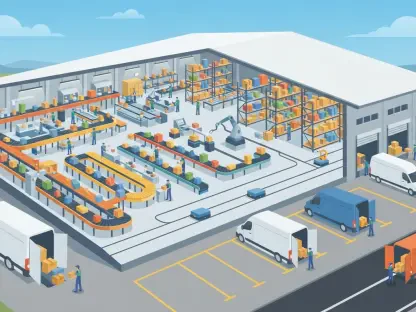
Protecting our industries requires a “hardened” approach to the physical environment, moving beyond simple software patches to include high-tech fencing, smart lighting, and biometric access controls at major freight hubs. We need to see substantial investment in the physical security of our energy corridors to ensure that the fuel powering our country remains insulated from both physical and cyber-physical interference. Success by 2026 will be defined by a measurable reduction in the frequency of cargo theft incidents and a decrease in the recovery time following any localized supply chain disruption. There is a certain peace of mind that comes when a warehouse manager sees robust, integrated security systems protecting their inventory, and that sensory feeling of safety is what we are striving for. If we can keep the shelves stocked for American families without the constant fear of theft, we have succeeded.
The transition toward a modern freight network relies heavily on digital data standards and real-world execution. How can private-sector groups be incentivized to adopt these uniform data standards, and what role will the Assistant Secretary for Multimodal Freight play in bridging the gap between federal policy and local implementation?
Private-sector groups will lean into uniform data standards once they see the direct correlation between digital visibility and their bottom line. When every player in the supply chain speaks the same digital language, we eliminate the costly “black holes” where cargo data currently gets lost between a ship, a train, and a truck. Michael Rutherford, as the first Assistant Secretary for Multimodal Freight, is the person tasked with turning these federal high-level visions into actual boots-on-the-ground progress at the state level. He serves as a vital bridge, ensuring that the strategies developed in Washington actually help a local port director or a regional rail coordinator solve their specific logistics puzzles. This collaborative execution ensures that federal investment doesn’t just fund a plan, but actually builds a more resilient, integrated network.
Workforce development goals focus on improving working conditions and creating clearer career paths. What specific labor trends are currently hindering recruitment, and what step-by-step improvements in driver or warehouse conditions are most likely to stabilize the freight labor market over the next five years?
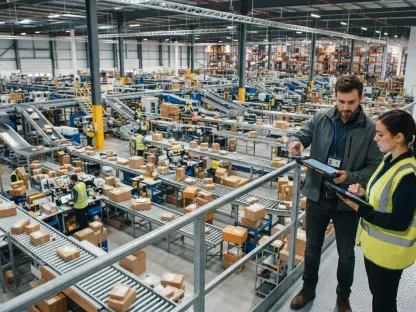
Right now, the industry is struggling with a perception problem and a lack of predictable career longevity, which drives potential talent toward other sectors. To stabilize the market, we have to start by improving the sensory experience of the job—meaning cleaner, safer rest stops for drivers and climate-controlled, ergonomic environments for warehouse staff. The plan emphasizes using better workforce data to identify exactly where the hiring gaps are most acute, allowing us to build targeted pathways into freight careers for the next generation. Over the next five years, we need to implement clearer advancement ladders so that a dock worker or a driver sees a future as a logistics manager or a fleet executive. When we treat the workforce as the most valuable asset in the 7-million-mile network, recruitment becomes a natural byproduct of a healthy industry.
Resilience and innovation are often at odds with immediate cost-efficiency. In a system moving 54 million tons of goods a day, how should planners balance the need for high-tech research investments against the urgent requirement for basic infrastructure repairs in state and regional networks?
It is a delicate dance between fixing the pothole today and building the autonomous-ready highway of tomorrow. We cannot ignore the 54 million tons of goods currently moving; they require solid pavement and sturdy bridges right now to keep the economy afloat. However, if we only focus on basic repairs, we will be perpetually behind the curve, so we must bake innovation into every maintenance project we undertake. For example, when a state replaces a bridge, they should be incentivized to install the sensors and fiber optics that allow for real-time freight monitoring and better data visibility. By combining these two needs, we ensure that every dollar spent on a “basic” repair also serves as a down payment on the “Golden Age of Transportation.”
What is your forecast for the U.S. freight network?
I forecast a future where the U.S. freight network finally catches up to the speed of modern digital commerce, moving from a reactive state to a proactive, highly visible system. Within the next decade, the integration of digital data standards and streamlined federal oversight will allow us to handle significantly more than $68 billion in daily goods with fewer delays and lower environmental impact. We are moving toward a period of high-speed execution where the friction between different modes of transport—rail, road, and sea—is virtually eliminated. This transformation will not only secure our domestic energy supplies but will also make the American logistics sector the undisputed envy of the global economy. The roadmap is clear, and the momentum is building toward a safer, more resilient foundation for every American family.