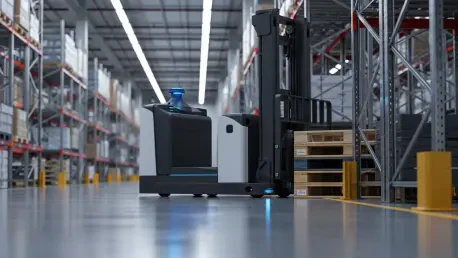

The escalating pressure on global supply chains has reached a critical juncture where manual operations can no longer keep pace with the hyper-accelerated demands of modern e-commerce and industrial distribution networks. To address these systemic bottlenecks, HD Hyundai Site Solution and Kakao Mobility have entered into a strategic partnership aimed at establishing a next-generation unmanned logistics and physical AI ecosystem. Formalized through a memorandum of understanding at the Global R&D Center in Pangyo, this collaboration seeks to develop an intelligent logistics execution platform that bridges the significant gap between heavy hardware and sophisticated software. By integrating autonomous industrial vehicles, such as specialized forklifts, with a robust digital platform for heterogeneous mobility control, the two companies are positioning themselves to redefine how goods move through industrial spaces. This initiative moves beyond simple automation to create a cohesive environment where machines and algorithms interact with unprecedented precision and safety.
Bridging Hardware and Software: The Path to Seamless Automation
A primary objective of this partnership involves tackling the persistent structural inefficiencies that have long plagued the logistics sector, particularly those arising from data disconnection between disparate operational stages. Currently, the movement of goods often stalls when information fails to pass smoothly from transport vehicles to warehouse management systems. By creating a unified framework where physical equipment, real-time data, and cloud-based platforms are natively connected, these industry leaders intend to automate the entire logistics lifecycle. This process begins at the initial unloading of transport vehicles at the loading dock and continues through to final warehouse stacking without requiring manual hand-offs. Such a shift is a direct response to the massive demand for industrial automation, fueled by a market that is projected to grow at a steady 15% annual rate. With a valuation expected to reach approximately $4.8 billion by 2035, the move toward fully autonomous systems is becoming a commercial necessity for maintaining global competitiveness.
Strategic Implementation: Real-World Testing and Ecosystem Evolution
To ensure these innovations transitioned from conceptual models to viable commercial products, the partners committed to conducting joint demonstrations and a comprehensive proof of concept within the current year. These rigorous tests evaluated the technology’s effectiveness and operational reliability in real-world environments, such as high-volume distribution centers and manufacturing plants. The collaboration represented a significant convergence between traditional heavy machinery manufacturing and modern digital platform services, emphasizing high-efficiency, AI-driven solutions capable of managing complex tasks without human oversight. For stakeholders looking to modernize, the focus shifted toward integrating these autonomous fleets into existing enterprise resource planning systems to maximize operational return on investment. Moving forward, the industry prioritized the standardization of communication protocols between different brands of autonomous vehicles to prevent new data silos. This partnership effectively positioned both entities to lead the evolving physical AI landscape by offering a differentiated, fully integrated automation system.