
The global logistics sector is currently witnessing a tectonic shift where the mere conversion of internal combustion engines to electric powertrains no longer suffices to meet the aggressive carbon neutrality targets of the late 2020s. For years, the industry relied on “retrofit” models, essentially stuffing batteries and motors into chassis originally designed for diesel engines, which frequently resulted in compromised weight distribution and inefficient energy management. The arrival of the Dongfeng D600 Intelligent Platform marks the end of this transitional phase, introducing a native architecture designed from the ground up to handle the specific mechanical and digital stresses of decarbonized transport. This platform represents a fundamental reimagining of the commercial vehicle as a programmable, multi-energy node within a global digital supply chain. By integrating hardware flexibility with high-level software control, the system attempts to solve the trilemma of range, cost, and environmental impact that has plagued fleet operators since the beginning of the green transition.
The significance of this technology lies in its ability to decouple the vehicle’s physical structure from its specific power source. In the broader technological landscape, the D600 functions similarly to a high-end smartphone operating system, where the hardware is a stable vessel for rapidly evolving software and energy applications. This shift toward “software-defined vehicles” allows for a level of customization and longevity that was previously impossible. As the industry moves into the late 2020s, the ability to adapt a fleet to changing fuel prices or local emissions regulations without replacing the entire vehicle becomes a critical competitive advantage.
Evolution of the Dongfeng D600 Native Architecture
The development of the Dongfeng D600 Native Architecture is the culmination of a massive, five-year research and development cycle that involved eleven parallel sub-projects. Unlike traditional vehicle platforms that are iterative updates of previous models, the D600 was conceived as a “native” green platform, meaning every component was optimized for zero-emission or low-carbon operation from the first sketch. This approach allows for a total optimization of the “three-electric” system—battery, motor, and controller—ensuring that energy flow is not hindered by the legacy constraints of an internal combustion engine layout.
Emerging in a context where global supply chains are increasingly digitized, the D600 incorporates feedback from over 700 truck drivers across 63 different cities. This immersion into the daily realities of logistics allowed the engineers to identify over 2,300 specific pain points, ranging from cabin ergonomics to the predictability of energy consumption during heavy-haul operations. The evolution of this platform reflects a broader trend in the automotive industry: a shift from hardware-centric engineering to a user-centric, data-driven methodology that prioritizes the full life cycle value of the machine.
Furthermore, the D600 architecture serves as a strategic bridge between the current reliance on fossil fuels and the diversified energy landscape of the future. By creating a standardized frame and electrical backbone, Dongfeng has ensured that the technology remains relevant even as specific energy storage solutions fluctuate in market dominance. This modularity is particularly relevant in the 2026 market, where the transition toward hydrogen and ammonia fuel is gaining momentum alongside pure electrification.
Technical Innovations and Engineering Excellence
Multi-Power Compatibility and Modular Design
At the heart of the D600 platform is its remarkable multi-power compatibility, which supports five distinct energy routes: traditional fuel, natural gas, pure electricity, hydrogen fuel cells, and ammonia fuel. This is achieved through a modular chassis design that allows for the interchangeable mounting of energy storage units. For instance, a vehicle configuration can be swapped from a high-capacity battery pack for regional resource transport to a hydrogen fuel cell system for long-haul trunk line logistics without altering the core cabin or drive axle architecture. This level of versatility covers 34 market segments and 143 operational scenarios, making it one of the most adaptable platforms in the commercial sector today.
The engineering excellence is further evidenced by the platform’s ability to reduce energy consumption by 8% compared to “converted” electric vehicles. This efficiency gain is not the result of a single breakthrough but rather the accumulation of hundreds of small optimizations in thermal management, aerodynamics, and weight distribution. By placing the heavy battery or fuel cell components in a native-designed “energy zone,” the center of gravity is lowered, and the structural integrity of the vehicle is enhanced. This translates to better handling for the driver and lower maintenance costs for the fleet owner, as the chassis is not subjected to the uneven stresses common in retrofitted models.
DEA3.0 Electrical Architecture and Intelligence
The digital “brain” of the D600 is the DEA3.0 electrical and electronic architecture. This system represents a leap forward in the centralization of vehicle control, moving away from dozens of small, disconnected Electronic Control Units (ECUs) toward a unified, high-compute domain controller. The DEA3.0 architecture supports L2+ autonomous driving capabilities as a baseline, with the hardware readiness to scale toward higher levels of automation as regulations evolve. This intelligence is not just about steering; it involves “intelligent global coordination,” where the vehicle analyzes real-time traffic, terrain, and load data to optimize power output and energy recovery.
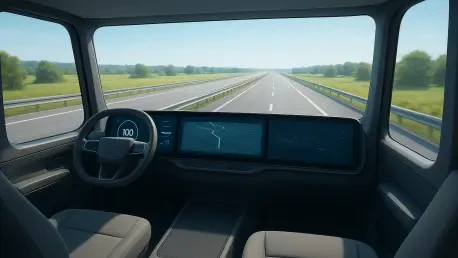
In real-world usage, this architecture transforms the driver’s cabin into a “smart home” environment. The integration of advanced human-machine interfaces reduces the cognitive load on long-haul drivers, providing them with intuitive safety alerts and streamlined navigation. Moreover, the DEA3.0 system enables extensive Over-The-Air (OTA) updates, allowing the vehicle’s performance and safety features to be refined throughout its operational life. This ensures that a vehicle purchased in 2026 will not be technologically obsolete by 2030, as it can receive the latest algorithms for energy management and collision avoidance via the cloud.
Current Trends in Green Logistics and Digitalization
The logistics industry is currently moving away from a transactional model—simply buying and selling trucks—toward an ecosystem-based approach. The D600 platform exemplifies this by offering a “One Platform, Five Pillars” strategy. This model integrates the vehicle with energy replenishment infrastructure, financial services, digital fleet management, and comprehensive maintenance. The trend toward digitalization means that every kilometer traveled by a D600 vehicle is tracked and analyzed, providing fleet operators with unprecedented transparency into their Total Cost of Ownership (TCO). This shift is driven by the need for logistics companies to prove their environmental credentials to investors and regulators.
Another significant trend is the rise of multi-energy parallelism. While the early 2020s focused heavily on battery electric vehicles, the current landscape recognizes that a single energy source cannot solve every logistical challenge. High-density energy carriers like ammonia and hydrogen are becoming essential for heavy-duty, long-range transport where battery weight would severely limit payload capacity. The D600’s ability to accommodate these fuels demonstrates a proactive response to the industry’s realization that the path to zero emissions is diverse. Digitalization plays a role here too, as “smart” refueling networks must coordinate with the vehicle’s energy management system to ensure maximum uptime.
Real-World Applications and Global Deployment
The D600 platform is already seeing deployment across a variety of demanding sectors. In regional resource transportation, the battery-swapping and ultra-fast charging versions of the platform are minimizing downtime, allowing electric trucks to operate with a duty cycle comparable to diesel. For long-distance trunk line logistics, the Dongfeng Tianlong KH hydrogen fuel tractor has become a benchmark for reliability, offering a long range without the weight penalties associated with massive battery packs. These implementations are not just pilot programs; they are backed by significant market volume, as evidenced by thousands of intent orders from global strategic partners.
Global deployment is a central tenet of the D600’s design philosophy. The platform is compatible with five major regulatory systems and is being marketed in 28 different countries. This includes high-end models like the Tianlong GX Super series, which are specifically tailored to meet stringent European safety and environmental standards. By designing for global compatibility from the outset, the platform bypasses the costly “localization” redesigns that often hinder the international expansion of commercial vehicle manufacturers. This global reach ensures that the technical insights gained in one market can be quickly applied to others, accelerating the overall pace of innovation.
Strategic Challenges and Market Barriers
Despite its technical sophistication, the D600 platform faces significant strategic hurdles. The most prominent is the lag in energy infrastructure development. While the platform can support hydrogen and ammonia, the global network of refueling stations for these fuels is still in its infancy compared to traditional diesel or even electric charging grids. This creates a “chicken and egg” problem where fleet operators are hesitant to adopt the most advanced fuel cell models until they are certain of fuel availability. Additionally, the high initial cost of these advanced energy systems remains a barrier, requiring innovative financial models to make the TCO attractive to smaller operators.
Regulatory fragmentation also presents a challenge. While the D600 is designed for 28 countries, the varying speeds of green legislation and autonomous driving permits across these regions create a complex operational environment. Furthermore, the technical complexity of managing five different energy systems on a single production line places an immense strain on manufacturing and supply chain management. Ensuring the same level of reliability and safety for a hydrogen-powered vehicle as for a traditional gas model requires rigorous quality control and a highly skilled workforce, which are not always available in every market where the platform is deployed.
Future Outlook and the 15th Five-Year Plan
Looking ahead from 2026 to 2030, the D600 platform is positioned as the primary vehicle for achieving the goals of the 15th Five-Year Plan. This period will likely see a rapid scaling of the platform’s “Intelligence” features, with L3 and L4 autonomous driving move from controlled-environment testing to mainstream highway usage. The potential for breakthroughs in solid-state battery technology or more efficient ammonia combustion engines could further enhance the platform’s performance metrics. As the digital ecosystem surrounding the D600 matures, we can expect to see deeper integration between the vehicle and the smart grid, allowing trucks to act as mobile energy storage units that stabilize the power supply during peak demand.
The long-term impact of this technology will be the complete transformation of the logistics labor market. As the DEA3.0 architecture takes over more of the driving and energy management tasks, the role of the truck driver will evolve toward that of a “logistics manager” or “on-board technician.” This shift will necessitate new training programs and a rethink of labor regulations. Ultimately, the D600 platform is not just about moving goods from point A to point B; it is about creating a more resilient, efficient, and sustainable foundation for global trade that can withstand the energy and economic shocks of the coming decades.
Assessment of the Dongfeng Solution
The implementation of the D600 platform served as a benchmark for the commercial vehicle industry’s transition into a mature, post-diesel era. By prioritizing a native architecture, the engineering team successfully demonstrated that efficiency gains are found in structural purity rather than retrofitted complexity. The strategic decision to include multiple energy routes from the outset proved to be a necessary safeguard against the volatility of the global energy market during the 2026 to 2028 period. Industry stakeholders observed that the platform’s strength lay in its ability to provide a complete “ecosystem” solution, effectively lowering the barrier to entry for green logistics through integrated finance and service pillars.
In retrospect, the D600’s success was defined by its focus on the human element, incorporating thousands of driver feedback points into a highly automated system. This balance between high-tech intelligence and practical usability addressed the workforce anxieties that often stymie the adoption of new technologies. The next steps for the platform involved the aggressive expansion of the hydrogen and ammonia refueling networks, which remained the final bottleneck for total market penetration. As the industry looked toward 2030, the D600 stood as a testament to the fact that the future of transport required a synchronized evolution of hardware, software, and energy infrastructure.