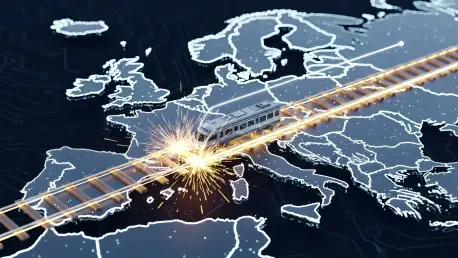

For decades, European trains have operated within a restrictive patchwork of national schedules that effectively halt progress at every sovereign border crossing. By adopting a fresh regulation for infrastructure management, the European Union moved to replace these fragmented schedules with a digital, integrated framework. This shift promised to eliminate the operational friction that currently delays freight and frustrates passengers, signaling a transition toward a truly borderless European railway.
Breaking the Cross-Border Bottleneck
The current European rail network often functions as a collection of isolated islands rather than a unified continent-wide system. Modernized rules aimed to change this by introducing synchronized digital planning that allowed trains to glide across borders without the typical administrative hurdles. This evolution was designed to ensure that technical differences between nations no longer dictated the efficiency of the entire route.
Furthermore, the new policy focused on creating a real-time data environment. By prioritizing fluid movement, the regulation sought to reduce the time trains spent idling at junctions while waiting for local clearance. This transformation was essential for making rail a viable competitor to short-haul aviation and long-distance road transport.
The High Stakes of Fragmented Infrastructure
Modernizing rail capacity is a vital component of the broader environmental strategy within the region. Inefficient coordination between member states historically resulted in wasted space on tracks and avoidable delays at various transition points. As the demand for energy-efficient transport grew, the inability to manage cross-border traffic effectively became a significant economic hurdle.
These rules targeted the “modal shift,” where heavy cargo moved from carbon-heavy trucks to energy-efficient locomotives. By improving the reliability of rail schedules, the EU aimed to provide a faster, greener alternative for logistics companies. This alignment of economic interests and climate goals remained at the heart of the legislative push.
Strategic Pillars of the New Legislative Framework
Central to this modernization was the establishment of the European Network of Infrastructure Managers (ENIM). This body oversaw high-level cooperation for cross-border traffic and service disruptions, ensuring a delay in one country did not trigger a chaotic domino effect across the continent. It moved beyond localized planning toward a vision of continental cohesion.
Complementing this was the European Railway Platform, a consultative forum that brought service operators into the planning process. This body ensured that those running the trains had a direct say in how tracks were managed. Together, these entities prioritized long-term digital coordination over ad-hoc methods, significantly improving punctuality and the overall reliability of the network.
Unlocking Capacity Without Breaking Ground
The Community of European Railway and Infrastructure Companies (CER) estimated that management improvements could unlock up to 4% of additional network capacity. This represented roughly 250 million train kilometers added without laying a single new mile of track. Alberto Mazzola, Executive Director of CER, described the regulation as a milestone that maximized existing assets through sheer operational efficiency.
While the full framework was slated for 2031, industry stakeholders pushed for a progressive rollout to see gains much sooner. This approach allowed for immediate testing of digital allocation tools on the busiest corridors. By optimizing the current footprint, the railway industry prepared to handle increased demand without the decade-long wait times associated with major construction projects.
A Framework for Integrated Traffic Management
The implementation of this strategy focused on performance accountability and standardized cross-border protocols. Infrastructure managers adopted a unified process for handling disruptions, ensuring that the network was treated as a single entity rather than a series of national segments. This practical shift supported the long-term goal of an integrated European rail system that functioned with total transparency.
Ultimately, the transition provided the data needed to refine operations and set clear, enforceable standards. The policy established a roadmap for future infrastructure investments that prioritized digital connectivity over physical expansion. These steps ensured that the European rail network was prepared to meet the logistical challenges of the coming decade while fostering a more sustainable transport economy.