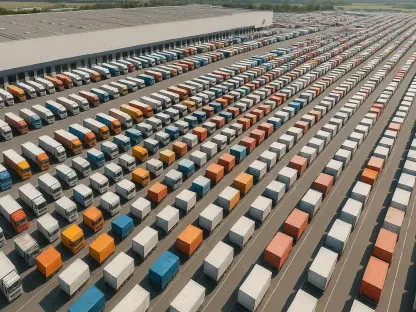

The global supply chain operates as a vast, interconnected organism where the loss of a single shipping container or a slight delay in fleet logistics can trigger a cascading failure across international markets. Fractus, a leading pioneer in the realm of advanced antenna technology, has officially entered into a strategic collaboration with a major international provider of asset tracking solutions to address these vulnerabilities. This alliance is specifically designed to accelerate the deployment of high-performance connectivity within the connected logistics and industrial Internet of Things (IoT) sectors. By focusing on critical segments like fleet management and cargo monitoring, the partnership aims to provide the robust wireless infrastructure necessary for modern trade. The integration of specialized antenna designs into tracking devices for containers, trailers, and pallets represents a significant leap forward in ensuring that every moving part of a global enterprise remains visible, even when navigating the world’s most remote or electromagnetically challenging environments.
Rising Demand for Real-Time Visibility in Logistics
Market dynamics within the logistics industry have shifted dramatically as businesses move away from reactive management toward proactive, data-driven intelligence. According to recent industry analysis from Berg Insight, the momentum in this sector is undeniable, with annual shipments of cargo-carrying unit tracking solutions projected to rise significantly from 2.5 million units in 2026 to 3.7 million by 2029. This growth represents a strong compound annual growth rate that reflects a fundamental change in how global trade is conducted. The total installed base of these tracking units is expected to reach 13.7 million within this timeframe, marking a transition where asset tracking is no longer considered a niche luxury for high-value goods but has instead become a standard operational requirement for any digitalized supply chain. As companies strive for greater transparency, the need for reliable, continuous data streams from the field has never been more urgent for maintaining a competitive edge.
Building on this statistical growth, the technical challenges associated with maintaining connectivity across diverse geographic regions require more than just standard hardware. Modern asset tracking requires sophisticated telemetry that can survive the rigors of maritime transit, extreme temperature fluctuations, and the physical stresses of industrial handling. Fractus addresses these issues by providing antenna solutions that are optimized for the compact form factors of modern tracking devices without sacrificing signal strength or battery efficiency. The synergy between high-precision tracking software and high-performance antenna hardware allows for a level of data integrity that was previously difficult to achieve in the field. This technical evolution ensures that logistics providers can maintain a comprehensive view of their inventory, reducing the risks associated with lost cargo or inefficient route planning. By prioritizing the underlying wireless performance, the industry is moving toward a future where dead zones are no longer a barrier to total supply chain visibility.
Strategic Advancements and Practical Implementations
CEO Jordi Ilario has emphasized that as tracking solutions become increasingly sophisticated, the quality of the underlying antenna technology serves as the primary factor in determining overall system reliability. Fractus is positioning itself not just as a component supplier but as a key enabler for the next generation of industrial IoT applications where scale and long-term technological relevance are paramount. The company’s influence in high-growth segments is reinforced by its ability to deliver connectivity that directly enhances the value proposition of tracking products for global operators. This partnership serves as a proof of concept for how specialized engineering can solve the persistent problem of signal attenuation in dense metal environments like shipping yards and warehouses. By securing this agreement, Fractus has effectively established a framework for logistics operators to leverage real-time asset intelligence at scale, ensuring that the hardware remains functional and efficient even as the complexity of global logistics networks continues to expand.
The collaboration between these industry leaders demonstrated a profound synthesis of technological innovation and market timing, setting a new benchmark for connected logistics. To capitalize on these advancements, logistics organizations should prioritize the evaluation of their current hardware infrastructure, ensuring that legacy systems do not become a bottleneck for emerging data analytics tools. Implementing a modular approach to tracking hardware will allow for easier upgrades as antenna technology continues to evolve, thereby protecting long-term capital investments. Companies that adopted these integrated solutions found themselves better equipped to handle the fluctuations of global trade and the rising expectations for rapid delivery. Moving forward, the industry must focus on standardizing communication protocols between different tracking platforms to ensure seamless data flow across international borders. By investing in high-quality connectivity components today, logistics providers secured a more resilient and transparent operational model.