
The traditional image of a robot as a rigid, clumsy machine is rapidly fading as a new generation of silicon-brained laborers begins to master the delicate nuance of the human touch. While autonomous mobile robots (AMRs) have spent years navigating warehouse aisles with impressive speed, the true measure of success has shifted from the floor to the fingertip. The recent acquisition of Nexera Robotics by Locus Robotics marks a fundamental change in this trajectory, signaling that the industry is no longer satisfied with robots that merely move goods; it demands robots that can intelligently interact with them.
The Shift From Moving Goods to Picking Them
In the high-stakes world of e-commerce, the race has shifted from how fast a robot can travel across a warehouse floor to how delicately and accurately it can grasp a single item. While AMRs have mastered the art of navigation, the “holy grail” of logistics remains the ability to pick a diverse array of products without human intervention. The acquisition of Nexera Robotics serves as a catalyst for this evolution, moving the industry away from simple transport toward sophisticated, AI-driven manipulation that mimics the versatility of the human hand.
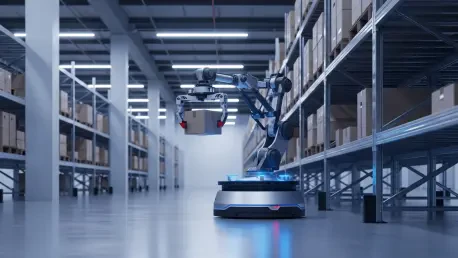
This transformation is not just about adding hardware; it is about the fusion of physical agility and cognitive depth. By integrating Nexera’s expertise, Locus is transitioning from a fleet of transport bots to a unified workforce of intelligent manipulators. This shift allows fulfillment centers to move past the limitations of “point A to point B” logic and enter a phase where robots handle the intricate task of sorting and selecting individual units from a sea of inventory.
Why the “Grasping Problem” Is the Final Frontier in Logistics
The modern warehouse is a chaotic environment filled with millions of unique SKUs, each possessing different weights, textures, and fragilities. Traditional robotic grippers often struggle with this variability, requiring expensive, fixed infrastructure or specialized tools for different product categories. As global supply chains face labor shortages and increasing pressure for rapid fulfillment, the demand for “mobile manipulation” has become a business imperative. Solving the technical challenge of high-variability picking is the key to unlocking true end-to-end automation at an enterprise scale.
Overcoming this obstacle requires a departure from the “one-size-fits-all” mechanical approach. In the past, a robot designed to lift a heavy box would likely crush a light bulb or fail to grip a poly-bagged garment. By focusing on the grasping problem, developers are addressing the most significant bottleneck in the supply chain, ensuring that automation can finally reach the “each-pick” level where the majority of labor costs currently reside.
The Synergy: Locus Array and NeuraGrasp Technology
The integration of Nexera’s technology into the Locus ecosystem represents a significant leap forward in physical AI. By combining established mobile platforms with advanced end-effectors, Locus is building a system capable of handling complex workflows that were previously manual. This synergy ensures that the brain of the robot, which calculates the most efficient route, is perfectly synchronized with the hand of the robot, which executes the physical task.
At the heart of this advancement is the NeuraGrasp end-effector, a product of years of iterative development and millions of successful real-world picks. Unlike rigid mechanical claws, NeuraGrasp utilizes a patented soft membrane structure that allows it to conform to the shape of the object it is lifting. This physical adaptability is paired with AI-driven intelligence and computer vision, enabling the robot to “see” an item and determine the optimal grip in real-time, effectively eliminating the need for pre-programmed coordinate sets for every SKU.
Beyond the hardware, the acquisition brings the entire Nexera engineering team into the Locus fold, creating a concentrated powerhouse of expertise. By absorbing Nexera as a wholly-owned subsidiary, Locus secured a robust portfolio of intellectual property that covers the intersection of computer vision and tactile engagement. This move effectively fortified their competitive position, making it increasingly difficult for rivals to replicate the seamless blend of movement and dexterity.
Expert Perspectives: The Future of Autonomous Fulfillment
Industry leaders suggest that we are entering a “decade of dexterity” where the value of a robotic system is measured by its SKU-handling breadth. Rick Faulk, CEO of Locus Robotics, has emphasized that the future of warehouse efficiency depends on the ability to pick millions of different product types with both speed and precision. This sentiment is echoed by analysts who believe that the transition from fixed-path automation to flexible, AI-powered mobile manipulation will be the defining trend for retail giants.
The focus is now shifting toward “split-case” picking and “each-picking” workflows, where the diversity of items is highest and the potential for human error is greatest. Experts argue that the ability to deploy robots that can learn and adapt to new packaging on the fly will determine which logistics providers thrive. The consensus is clear: the future belongs to those who can bridge the gap between digital instructions and physical execution without requiring a human to step in and fix the “unpickable” items.
Strategies: Integrating Advanced Manipulation Into Modern Workflows
For warehouse operators looking to leverage these advancements, the transition required a strategic approach to automation that prioritized flexibility over static setups. Facilities shifted away from rigid conveyor systems and toward modular AMR fleets, allowing layouts to evolve alongside changing inventory needs. This modularity ensured that a sudden change in product dimensions or seasonal demand did not result in a total operational shutdown for hardware reconfiguration.
Implementing mobile manipulation proved most effective in high-velocity environments where speed and reliability were paramount. Operators focused on integrating these robots into specific workflows where the robotic “hand” and “feet” worked in perfect synchronization from the shelf to the shipping dock. This proactive integration strategy ultimately reduced the dependency on manual labor in the most repetitive tasks, allowing human workers to pivot toward oversight and exception management. This era of dexterous automation provided a blueprint for more resilient, self-correcting supply chains that thrived on variability rather than being hindered by it.