
The maritime industry currently stands at a transformative crossroads where the steady hum of diesel engines is increasingly being replaced by the silent efficiency of high-capacity battery systems. As international pressure to decarbonize global trade intensifies, the feasibility of fully electric transit on high-traffic corridors like the Dover–Calais and Tallinn–Helsinki routes has moved from a theoretical aspiration to an imminent operational reality. This transition is not merely a response to environmental advocacy but a strategic alignment with rigorous mandates such as the EU Emissions Trading System and FuelEU Maritime regulations. These legal frameworks have essentially placed a deadline on traditional combustion technology, forcing shipowners to reconsider the long-term viability of heavy fuel oil. By analyzing the current trajectory of battery energy density and power management systems, it becomes clear that the infrastructure for short-sea shipping is undergoing its most significant overhaul since the transition from sail to steam. This evolution promises to redefine how regional goods and passengers move across European waters, establishing a blueprint for zero-emission logistics that could soon be replicated on a global scale.
Economic Viability: The Transition From Capital To Savings
While the initial procurement of a battery-electric RoPax vessel requires a significantly higher capital investment compared to its conventional counterparts, the long-term financial landscape tells a much more persuasive story. Projections indicating that these vessels will offer between 8% and 15% lower lifetime costs from 2026 to 2040 suggest that the “green premium” is rapidly evaporating in favor of operational efficiency. This economic shift is largely driven by the plummeting costs of energy storage technology and the elimination of volatile fuel expenditures that have historically plagued maritime budgets. Furthermore, the removal of carbon-related taxes and the reduction of maintenance requirements for electric motors contribute to a projected decrease in operational expenses by roughly 20% to 27%. Consequently, the industry is reaching a definitive turning point where the adoption of battery-electric propulsion is no longer viewed as a risky environmental experiment but as a superior commercial strategy. Decisions made by shipowners today are increasingly dictated by these bottom-line advantages, ensuring that the financial incentive for electrification is just as powerful as the regulatory push.
Building on these fiscal advantages, the integration of autonomous technologies and advanced energy management systems further enhances the attractiveness of electric fleets. Modern vessel designs now incorporate sophisticated power distribution architectures that can optimize energy consumption in real-time based on sea conditions and cargo weight. This level of precision allows operators to maximize the range of their battery arrays, effectively extending the lifespan of the hardware while maintaining strict schedules. As the cost per kilowatt-hour continues to drop, the period required to achieve a return on investment is shrinking, making the proposition even more attractive to private equity and traditional maritime lenders. This influx of capital is accelerating the development of specialized hull forms that minimize drag, ensuring that every joule of stored energy is used to its maximum potential. The synergy between decreasing hardware costs and increasing aerodynamic and hydrodynamic efficiency means that the total cost of ownership for electric vessels will likely continue to outperform internal combustion alternatives. This financial momentum creates a self-sustaining cycle of adoption that is difficult for traditional fossil-fuel-based models to disrupt or compete with effectively.
Innovative Design: Engineering For A New Maritime Era
To meet the diverse demands of the modern maritime market, engineers have moved beyond simple retrofitting to develop purpose-built vessel concepts that prioritize modularity and energy efficiency. Recent designs for 200-meter-plus vessels showcase a dual-track approach: one optimized for low-speed cargo transport and another tailored for the high-speed requirements of the passenger and tourism sectors. These vessels are equipped with electric podded propulsors, which offer superior maneuverability compared to traditional shaft lines and significantly reduce energy losses during transit. Modular battery rooms allow for the easy swapping or upgrading of cells as technology improves, ensuring that a ship delivered today remains relevant and efficient throughout its decades-long service life. Such versatility is essential for operators who must navigate changing market conditions while adhering to strict environmental standards. By decoupling the energy source from the propulsion system, these designs provide a future-proof platform that can adapt to new solid-state battery technologies or alternative energy carriers without necessitating a complete structural overhaul of the hull.
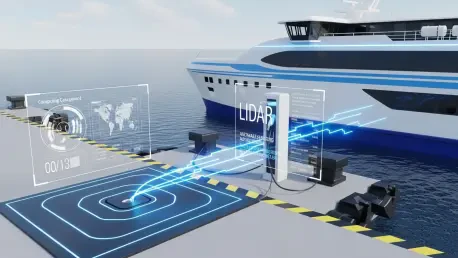
The integration of autonomous docking systems represents another critical advancement in the design of next-generation electric ships. These systems utilize a suite of sensors, including LiDAR and high-definition cameras, to guide the vessel into its berth with millimeter precision, minimizing the need for energy-intensive thruster adjustments during the mooring process. By streamlining the arrival and departure phases of a voyage, operators can significantly reduce the “port-time” energy drain, preserving battery capacity for the actual transit. Additionally, these automated features reduce the physical wear and tear on the vessel and port infrastructure, leading to lower long-term maintenance costs. The inclusion of these technologies is not just about automation for the sake of modernity; it is a fundamental component of the energy efficiency equation. Every second saved during a docking maneuver translates directly into energy conserved, which is a vital metric for battery-electric operations where every percentage of charge matters. As these sophisticated systems become standardized, the gap between traditional manual operations and highly efficient electric sailing will widen, making the latter the only logical choice for high-frequency short-sea routes.
Infrastructure Challenges: Bridging The Gap At The Pier
The primary obstacle preventing the universal adoption of electric shipping remains the disparity between vessel technology and port-side infrastructure. For a fleet to operate effectively on a tight schedule, ports must be equipped with high-capacity megawatt charging systems capable of delivering massive amounts of energy during brief loading windows. This requirement places an immense strain on local power grids, often necessitating the installation of large-scale stationary energy storage systems at the dock to buffer the load. Overcoming these hurdles requires an unprecedented level of synchronization between shipowners, municipal authorities, and utility providers to ensure that the energy supplied is not only sufficient but also sourced from renewable origins. Without a robust and standardized charging network, even the most advanced electric vessel remains tethered to the limitations of its home port, stifling the flexibility that maritime commerce demands. Therefore, the focus is shifting toward collaborative investment models where the costs of infrastructure upgrades are shared across the value chain, ensuring that the burden does not fall solely on a single stakeholder.
Addressing the technical requirements of port-side charging also involves the development of automated connection systems that can handle high-voltage cables without manual intervention. These robotic arms or under-hull charging plates must operate reliably in harsh maritime environments, where salt spray and extreme weather can compromise electrical contacts. Furthermore, standardization is a critical concern; for the short-sea shipping industry to thrive, a vessel from one region must be able to plug into a charger in another without requiring proprietary adapters. Industry bodies are currently working to finalize these global standards, which will serve as the final catalyst for widespread infrastructure deployment. Once the physical and digital interfaces between the ship and the shore are harmonized, the perceived risk of electrification will diminish, encouraging more conservative operators to make the jump. The transition is therefore moving toward a phase of systemic integration, where the ship is seen as one component of a larger, interconnected energy ecosystem that encompasses the entire logistics corridor from start to finish.
Strategic Directions: Implementing The Electric Vision
The successful transition to a fully electric short-sea shipping network had to begin with a clear focus on the most profitable and technically viable routes. Stakeholders must now prioritize the establishment of “Green Corridors,” where regulatory support and infrastructure investment are concentrated to create a proof-of-concept for the rest of the world. This approach involves moving beyond pilot projects and toward the full-scale deployment of electric fleets on specific, high-frequency paths. To sustain this momentum, port authorities should implement preferential port fees or priority berthing for zero-emission vessels, providing a tangible competitive advantage to early adopters. Additionally, maritime companies ought to invest in specialized training programs to equip their crews with the skills necessary to operate and maintain high-voltage electrical systems safely. These human-centric investments are just as crucial as the hardware, as the shift in propulsion technology requires a corresponding shift in operational expertise. By focusing on these high-impact areas, the industry can ensure that the initial successes of electrification are scaled up efficiently across broader geographical regions.
Looking ahead, the integration of shore-to-ship power must be complemented by a radical transparency in energy sourcing to verify the actual carbon savings of the electric transition. Operators should seek partnerships with green energy providers to guarantee that the electricity used for charging is generated from wind, solar, or hydroelectric sources. This holistic view of the supply chain was essential for meeting the stringent requirements of modern environmental legislation and satisfying the demands of eco-conscious consumers. Furthermore, the industry must explore the potential for “second-life” battery applications, where maritime batteries that have reached the end of their sea-going life are repurposed for stationary storage in port facilities. This circular economy approach not only improves the overall sustainability of the technology but also provides a secondary revenue stream that further offsets the initial investment costs. By treating the transition as an integrated system of energy, technology, and policy, the maritime sector moved toward a future where electric shipping was not just an alternative, but the foundational standard for regional trade and transport.