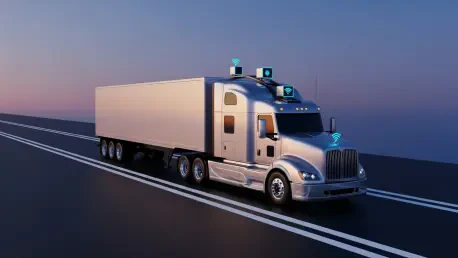

The massive silver grilles of Volvo VNL trucks are now becoming a common sight on the I-45 corridor between Dallas and Houston, but the drivers behind the wheel are increasingly becoming observers rather than active operators. This specific stretch of Texas highway has become the primary proving ground for Volvo Autonomous Solutions and their partner DSV, marking a definitive pivot from conceptual research to a commercially viable freight model. By deploying a production-ready autonomous ecosystem, these companies are not merely testing sensors; they are rewriting the rules of logistics for the next decade. This analysis explores how the integration of high-level software and heavy-duty engineering is addressing the most pressing inefficiencies in the American supply chain.
The Evolution of Autonomous Transport and the Texas Proving Ground
The push toward driverless heavy-duty vehicles was born from a desperate need to stabilize a freight industry long plagued by high operational costs and labor volatility. Historically, the logistics sector faced a losing battle against fuel price fluctuations and a dwindling pool of long-haul drivers. Texas emerged as the premier laboratory for this technology due to its unique combination of predictable weather, business-friendly regulations, and the “Texas Triangle” economic zone. Understanding this regional focus is essential; the state infrastructure acts as a blueprint for national deployment. These foundational steps have successfully moved the industry into a phase where driverless operations are no longer a buzzword but a standard operational requirement.
Strategic Integration: The Volvo and DSV Partnership
Practical Implementation: The Autona Platform
A major pillar of Volvo’s market dominance is the Autona platform, which serves as a unified solution combining the Volvo VNL truck with software from Aurora and Waabi. Unlike previous iterations of self-driving technology that required extensive manual intervention, Autona is designed for depot-to-depot operations. This specific logic allows autonomous trucks to slot into the existing workflows of global giants like DSV without requiring a complete overhaul of their logistics terminals. The success seen in Texas proves that for automation to scale, it must act as a seamless extension of current supply chains rather than a disruptive outlier.
Enhancing Human Potential and Operational Continuity
Beyond the technical specifications, this shift addresses the systemic human resource challenges that have historically bottlenecked freight growth. By transitioning toward a 24/7 operational model, Volvo and DSV are significantly increasing the uptime of their fleets, allowing assets to move goods while human drivers rest or manage local deliveries. This evolution suggests a future where the role of the truck driver matures from manual steering to high-level system supervision. Furthermore, the focus on enhancing safety through automated reflexes reduces the risk of human error, which remains the leading cause of highway accidents in the heavy-haul sector.
Overcoming Regional Complexities and Software Refinement
Navigating the complex traffic patterns between Dallas and Houston provides a wealth of real-world data that is vital for refining the underlying AI. While hardware often gets the spotlight, the true competitive advantage lies in software maturity and the ability to handle unpredictable road conditions. Volvo’s methodical data collection, spanning millions of miles in regional hauls, has debunked common myths regarding the unreliability of autonomous systems in high-traffic environments. By focusing on production-ready environments, the partnership is solving the intricate puzzle of how to manage heavy freight with precision and predictability.
The Road Ahead: Innovation and Regulatory Evolution
Looking forward, the success of the Texas pilot is expected to catalyze a shift toward a standardized national framework for autonomous trucking. As state-level successes demonstrate the safety of these systems, federal guidelines will likely adapt to facilitate interstate autonomous corridors connecting major industrial hubs. Economically, the declining cost of lidar and high-speed computing will make it feasible for smaller carriers to adopt these technologies, leading to a rapid digital transformation across the sector. Industry experts anticipate that the next few years will see a transition where autonomous lanes become the backbone of the transcontinental freight network.
Navigating the Transition: Strategies for the Logistics Industry
The analysis of the Texas rollout offers clear directives for logistics stakeholders looking to remain competitive in an automated landscape. First, businesses should prioritize the development of digital-ready hubs that can facilitate the handoff between autonomous highway trucks and manual local delivery vans. Second, fostering data-sharing partnerships is essential for optimizing fleet performance and reducing fuel consumption. Professionals in the field must also focus on workforce retraining, ensuring that current staff can transition into roles that oversee automated systems. Taking these steps now prevents a reactive scramble when autonomous lanes expand beyond regional borders.
A Turning Point for Global Freight
Volvo’s operations in Texas established a significant milestone that moved the entire transportation industry toward a more efficient future. By merging advanced vehicle engineering with strategic logistics partnerships, the initiative proved that driverless freight could handle the rigors of commercial demand. This project served as a definitive blueprint for how modern supply chains could overcome labor shortages and safety concerns. Ultimately, the successful deployment in the Texas Triangle demonstrated that the era of autonomous freight was no longer a distant vision, as it provided a resilient foundation for the global movement of goods.