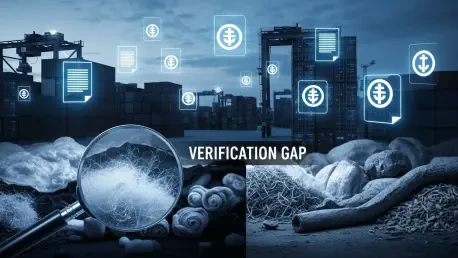

Modern trade networks have become so convoluted that traditional paper-based auditing systems can no longer keep pace with the deceptive practices used to mask the true origin of raw materials. As global commerce undergoes significant structural shifts, the reliance on digital ledgers and physical certificates has created a false sense of security for many international brands. This discrepancy between official documentation and the physical reality of a product is known as the Verification Gap, a phenomenon that has left corporations vulnerable to severe regulatory and reputational damage.
The objective of this exploration is to examine how forensic science can bridge this gap by providing an empirical “source of truth” that goes beyond administrative records. By looking at the latest data regarding high-risk material exposure and shifting manufacturing hubs, this discussion highlights the growing necessity for scientific intervention. Readers can expect to learn how forensic verification serves as a defensive shield against the complexities of modern trade while addressing the profound lack of consumer confidence in corporate claims.
Key Questions
What Is the Verification Gap and Why Does It Pose a Risk?
The Verification Gap represents a critical failure point where corporate paperwork claims one origin for a raw material, while the physical properties of the material suggest another. In the current landscape, many organizations assume that having a signed document from a supplier constitutes full traceability. However, these paper trails are often easily manipulated or lack the granular detail required to identify the exact farm or field where a commodity was harvested. This creates a systemic vulnerability where prohibited or unethical materials can be blended into legitimate supply chains without detection until a regulatory audit occurs.
The risks associated with this gap are no longer theoretical or distant concerns for compliance officers. Companies failing to verify the physical origin of their goods face immediate consequences, including blocked shipments at borders, substantial financial penalties, and disrupted production timelines. Moreover, as governments implement stricter enforcement protocols, the burden of proof has shifted onto the brands themselves. Relying solely on administrative visibility is a precarious strategy that leaves a business exposed to the hidden realities of its global network.
Why Is Risk Increasing While Companies Claim Better Visibility?
Recent data reveals a startling trend where nearly 94 percent of major companies claim to have established traceability for their primary materials, yet the actual risk of exposure to prohibited origins has surged. In the cotton industry, for example, the number of brands testing positive for high-risk origins jumped from 64 percent to 90 percent in a single year. This paradox occurs because many firms are shifting their manufacturing to new regions to avoid tariffs or regulatory scrutiny without scrutinizing the underlying raw material sources.
While a factory might move from one country to another, the fibers, minerals, or skins used in that factory often originate from the same high-risk zones as before. This geographical “shell game” provides a veneer of compliance while the core ethical and legal issues remain unaddressed. Consequently, the increased volume of tracking data does not necessarily correlate with an increase in product integrity. Without forensic testing to verify the biological or chemical signatures of the material, companies are simply documenting a more complex and potentially more deceptive path to market.
Can Science Restore the Growing Consumer Trust Deficit?
Public skepticism regarding corporate social responsibility has reached an all-time high, with a mere 3 percent of consumers reporting that they trust marketing claims about product origins. This massive trust deficit stems from years of perceived “greenwashing” and high-profile supply chain scandals that have left the average shopper feeling disillusioned. Today, approximately 60 percent of consumers actively avoid brands they believe are untrustworthy, prioritizing objective proof over polished corporate messaging or vague sustainability promises.
Scientific traceability offers a concrete solution to this skepticism by replacing subjective narratives with undeniable physical evidence. When a brand can prove through forensic analysis that its leather is sourced ethically or its minerals are conflict-free, it moves from a position of “take our word for it” to one of “here is the proof.” This shift toward empirical validation resonates with a public that increasingly demands mandatory ethical sourcing proof and government-backed regulation to ensure corporate accountability.
Summary
The current state of global trade demands a transition from reactive remediation to a proactive, scientific model of supply chain management. The evidence indicates that traditional traceability methods are failing to protect brands from the resurgence of origin-related risks, particularly as manufacturing hubs become more fragmented. By adopting forensic verification, businesses can establish a resilient “source of truth” that satisfies the rigorous demands of regulators and restores the faith of a skeptical consumer base. This programmatic approach allows organizations to identify issues early, ensuring market access and protecting long-term brand equity in an environment where transparency is no longer optional.
Conclusion
The analysis of modern supply chain dynamics demonstrated that the reliance on paper-based documentation was insufficient for the complexities of the current market. As companies navigated the structural shifts of international trade, the move toward forensic science provided a much-needed bridge between corporate claims and physical reality. Those who integrated scientific verification into their operations managed to mitigate the risks of border delays and reputational loss. Moving forward, the industry must prioritize these empirical methods to build a more transparent and accountable global economy. Businesses should now evaluate their current verification protocols and consider how forensic data can bolster their existing traceability frameworks to ensure lasting compliance.