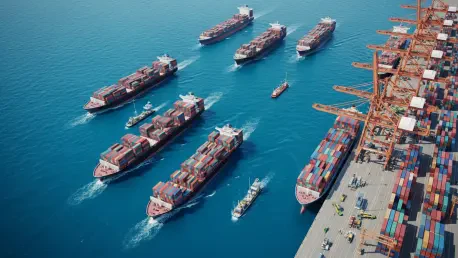

Rohit Laila brings decades of deep-seated experience to the table, having navigated the complex evolution of global supply chains from traditional freight forwarding to the high-tech logistics era. As a veteran who has witnessed the industry’s shift toward diversification, he offers a unique perspective on how regional shifts in manufacturing, particularly in Southeast Asia, are rewriting the rules of international trade. Our discussion covers the strategic importance of new shipping routes, the mounting financial pressures of peak-season surcharges, and how carriers are adapting to a world of constant disruption.
Vietnam is increasingly serving as a primary manufacturing hub for goods headed to the United States. How does establishing direct routes from Vung Tau to the West Coast change the logistics landscape for retailers, and what specific operational hurdles do companies face when diversifying production across Southeast Asia?
The shift toward Vietnam is a seismic change in how we think about sourcing, as retailers are no longer comfortable keeping all their eggs in one basket. By establishing direct calls from Vung Tau to the West Coast, we are seeing a significant reduction in transit times and a bypass of traditional transshipment bottlenecks that used to slow down the flow of goods. However, spreading production across Southeast Asia isn’t as simple as flipping a switch; companies face the grueling task of managing fragmented infrastructure and varying regulatory environments. It requires a massive coordination effort to ensure that the quality and timing of goods leaving a newer hub like Vung Tau match the established reliability of older, more mature manufacturing markets.
Seasonal shipping services are launching in June to accommodate the third-quarter peak. What does this timing indicate about expected consumer demand for the second half of the year, and how should port authorities in Long Beach prepare for a surge in e-commerce and retail volumes?
Launching these services on June 9th is a clear signal that the industry anticipates a very healthy appetite from American consumers during the back-to-school and holiday shopping windows. This early start to the peak season suggests that retailers are pulling inventory forward to avoid the frantic “just-in-time” failures we’ve seen in the past. For the Port of Long Beach, this means they must brace for a relentless influx of e-commerce and retail containers that will test their yard capacity and gate efficiency. Port authorities need to focus on labor availability and equipment flow to ensure that the surge of goods from Vietnam and Shanghai doesn’t turn into a localized gridlock that ripples through the entire domestic supply chain.
Global shipping networks are currently being reshuffled due to Red Sea disruptions and evolving trade policies. Beyond simply adding new routes, how can carriers maintain schedule reliability, and what trade-offs must manufacturers consider when moving away from a single-market sourcing model to gain supply chain flexibility?
Maintaining reliability today feels like navigating a minefield, as carriers must constantly pivot their fleets to avoid conflict zones like the Red Sea while dealing with the looming threat of new tariffs. To keep schedules on track, carriers are forced to inject more vessels into their loops and build in extra “buffer time,” which essentially increases the cost of doing business. Manufacturers, on the other hand, are making a conscious trade-off by sacrificing the economies of scale they enjoyed in a single-market model for the safety of a diversified footprint. While this move provides a vital safety net against geopolitical shocks, it often leads to higher per-unit logistics costs and a much more complex web of vendor relationships to manage daily.
Peak-season surcharges on routes to the U.S. East and Gulf Coasts are reaching upwards of $1,800 per container. How do these compounding costs influence the inventory strategies of major importers, and what practical steps can small businesses take to mitigate these sudden financial pressures?
When you see surcharges hitting that $1,000 to $1,800 range per container, it forces a total re-evaluation of profit margins and inventory levels for major importers. These companies are increasingly moving away from high-frequency, low-volume shipments to more consolidated loads to maximize every inch of paid space. For small businesses, these spikes are particularly painful, often requiring them to look for alternative ports of entry or negotiate longer-term contracts to lock in rates before the peak season madness begins. Many are also exploring “near-shoring” options or shifting their arrival points to the West Coast to avoid the specific fees targeting the East and Gulf Coast lanes.
What is your forecast for the transpacific shipping market?
I expect the transpacific market to remain highly volatile yet surprisingly resilient as we move through the end of the year, driven by a persistent “push-pull” between consumer demand and geopolitical instability. We will likely see carriers continue to favor flexible, multi-port routes that include hubs like South Korea and Vietnam to hedge against any sudden closures or policy changes in a single region. Importers should prepare for a “new normal” where the traditional off-season disappears, replaced by a constant state of preparation for the next disruption. Ultimately, those who invest in diverse sourcing and agile logistics partnerships will be the ones who maintain their shelf presence while others are left waiting at the docks.