
The escalating complexity of global supply chains has forced modern retailers to rethink the traditional separation between front-end showrooms and back-end fulfillment centers. As shipping expenses and consumer demands for rapid delivery reach unprecedented levels, the industry is witnessing a pivot toward a unified infrastructure model that prioritizes localized inventory. This strategic shift is exemplified by Bob’s Discount Furniture, which recently introduced a combined retail and distribution facility in Solon, Ohio, to streamline its Midwest operations. By embedding a high-capacity warehouse within the same physical footprint as a customer-facing store, the company aims to eliminate the traditional “last-mile” friction that often erodes profit margins. This pilot program serves as a critical test case for whether merging these distinct business functions can effectively insulate a large-scale retailer from the volatile logistics market and the ongoing pressures of an increasingly digital-first consumer base.
Strategic Shifts in Supply Chain Architecture
The Mechanics of Integrated Fulfillment Centers
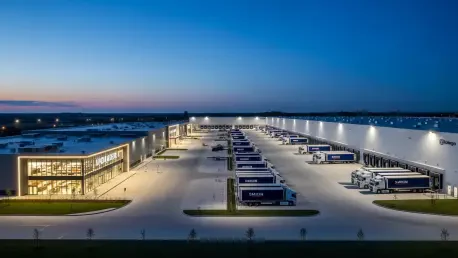
The decision to launch an integrated hub in Ohio marks a departure from standard logistical practices where inventory is typically housed in remote, massive warehouses far from the urban centers where products are actually sold. By situating the inventory directly adjacent to the retail floor, the company can significantly reduce line haul transportation costs, which represent the expensive long-distance movement of freight between major nodes. This proximity allows for a much more responsive replenishment cycle, ensuring that floor models and customer orders are always supported by on-site stock rather than relying on a cross-country transit schedule. Furthermore, this dual-format facility acts as a regional nexus, providing storage and shipping support for neighboring stores that do not have the same level of back-end capacity. The strategic placement near Interstate 480 ensures that heavy transit vehicles can access the facility without navigating congested city streets, thereby optimizing the flow of goods into and out of the region while maintaining high operational efficiency.
Beyond the immediate cost savings associated with reduced fuel consumption and driver hours, the integrated model enhances the overall agility of the supply chain in a way that traditional warehouses cannot match. When a customer makes a purchase at the Solon site, the item can theoretically be moved from the racking system to a delivery truck or even a customer’s vehicle in a fraction of the time it would take to process a request from a centralized distribution point. This speed is no longer just a luxury but a requirement in an environment where major e-commerce players have conditioned the public to expect near-instant gratification. The facility utilizes advanced tracking technology to monitor real-time inventory levels, allowing management to make data-driven decisions about stock allocation across the broader Midwest market. By concentrating resources into a single, high-output location, the company effectively bridges the gap between the physical browsing experience and the digital-era demand for rapid fulfillment, creating a more seamless and profitable operational loop.
Scaling Regional Hubs for Long-Term Growth
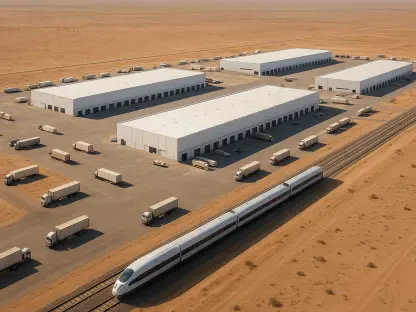
Following the implementation of the Ohio pilot, the expansion strategy has moved toward massive infrastructure investments aimed at securing a dominant position in the Southeast. The construction of an 800,000-square-foot distribution center in Macon, Georgia, represents a significant escalation in the commitment to localized logistics. Scheduled to reach full operational capacity by 2027, this seventh U.S. hub is engineered to serve as the backbone for approximately 100 retail locations across multiple states. This facility is not merely a storage space but a high-tech engine designed for high-volume throughput, featuring more than 100 dock doors and high-density racking systems that maximize vertical space. The scale of the Georgia project indicates that the company sees regional density as the primary solution to logistical bottlenecks. By positioning such a large volume of inventory within the Southeast, the retailer can bypass many of the disruptions that occur when moving goods across vast distances or through congested national shipping corridors.
The development of these large-scale regional hubs reflects a broader trend toward decentralization in the furniture industry, where the weight and size of the products make shipping costs particularly sensitive to distance. Unlike smaller consumer electronics or apparel, furniture requires specialized handling and significant square footage, making every mile traveled a substantial line item on the balance sheet. By establishing these localized nodes, the company builds a defensive wall against the rising costs of freight and labor that have plagued the sector over the last several years. The Macon facility will utilize sophisticated warehouse management systems to ensure that inventory moves through the building with minimal friction, allowing for rapid loading and unloading of fleet vehicles. This proactive approach to infrastructure suggests that the future of retail growth is less about opening as many stores as possible and more about ensuring that the existing network is supported by an invincible, high-efficiency logistical foundation.
Navigating External Economic Pressures
Mitigating Tariffs and Freight Volatility
The current economic landscape is characterized by significant headwinds, including fluctuating tariff policies and the persistent volatility of global freight rates. For a retailer dealing in large-scale goods, these external factors can lead to unpredictable pricing and diminished margins if the supply chain is not sufficiently optimized. The push toward integrated hubs and regional centers is a direct response to these challenges, as it allows the company to absorb and manage inventory more effectively before it reaches the final consumer. By holding larger volumes of stock closer to the point of sale, the organization can hedge against sudden spikes in shipping costs or disruptions in the international shipping lanes. This buffer provides a level of price stability for the consumer, which is essential in a competitive market where household budgets are often constrained by broader inflationary trends. The ability to control the “middle mile” of the logistics journey becomes a critical competitive advantage when external variables are increasingly outside of a company’s direct control.
Moreover, the furniture industry is uniquely susceptible to the health of the housing market, which has seen its own share of turbulence in the current year. When home sales slow down, the demand for new furniture often follows suit, requiring retailers to be more efficient with their capital and inventory turnover. The tech-enabled facilities in Ohio and Georgia are designed to provide the necessary visibility to navigate these cycles with precision. Rather than overstocking items that are not moving, the integrated model allows for more granular control over what is kept in the warehouse based on local sales data. This reduction in waste and excess inventory directly translates to better financial health, even when the macro-economic environment is less than ideal. By focusing on operational excellence and localized fulfillment, the brand is positioning itself to remain profitable regardless of whether the housing market is in a period of rapid growth or temporary stagnation, effectively decoupling its success from factors it cannot influence.
Future Considerations for Retail Logistics
The performance of the Ohio facility will serve as the primary barometer for whether the integrated “combo” model becomes the standard blueprint for all future expansions. If the data from the Solon site demonstrates a significant reduction in per-unit delivery costs and an increase in customer satisfaction scores, it is highly likely that similar facilities will be deployed in other major metropolitan areas. This transition would signal a fundamental change in how retail real estate is valued, moving away from simple showroom aesthetics toward a more utilitarian, logistics-focused design. Analysts are watching these developments closely, as they represent a shift from a “just-in-time” inventory philosophy to a more resilient “just-in-case” strategy that prioritizes local availability over centralized efficiency. The success of this model could force other players in the home goods and bulky items sectors to adopt similar strategies or risk being left behind by a more agile and cost-effective competitor.
Looking ahead from 2026 to 2028, the focus will likely shift toward further integrating automation and artificial intelligence within these regional hubs to drive even greater efficiency. While the current facilities are already high-tech, the next generation of logistics centers will probably feature even higher levels of robotic sorting and autonomous loading systems to combat rising labor costs. Retailers should consider how their current physical footprint can be adapted to support these technologies, perhaps by converting existing underperforming stores into micro-fulfillment centers. The primary takeaway from the current strategic shift is that the boundary between the warehouse and the storefront is permanently blurring. For businesses to thrive in the coming years, they must view their physical locations not just as places where people shop, but as vital nodes in a complex, localized delivery network that prioritizes speed, reliability, and cost-efficiency above all else.
The strategic integration of distribution and retail functions was successfully piloted through the Solon project, which proved that localized fulfillment significantly mitigated the impact of rising transportation costs. By the time the Macon facility reached its initial development milestones, the organizational focus had shifted from purely reactive cost-cutting to a proactive, technology-driven growth model. These facilities allowed the brand to maintain high levels of inventory availability while shielding the consumer from the most volatile effects of global supply chain disruptions. Moving forward, the industry adopted these dual-format structures as a primary method for ensuring long-term profitability in a challenging economic climate. This evolution in logistics architecture ensured that the company remained agile, efficient, and capable of meeting the rigorous demands of a modern, fast-paced retail market.