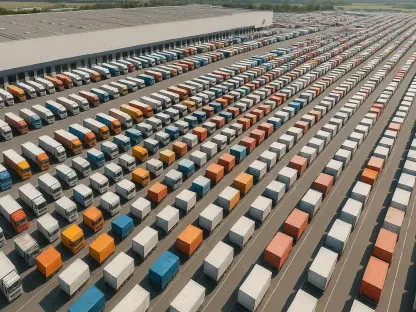

The sheer scale of Amazon’s physical delivery network has reached a point where its internal capacity can now swallow the logistics needs of entire global industries without breaking a sweat. This development represents a monumental shift in how global commerce functions, as the company effectively transitions from being a dominant online retailer to a fundamental utility provider for the movement of goods. By offering its sophisticated supply chain as a standalone service, the organization is attempting to replicate the successful trajectory of its cloud computing division on a physical plane.
This article explores the strategic maneuvers behind this expansion and evaluates whether the logistics arm is truly poised to become the next Amazon Web Services. The discussion focuses on the operational changes required to support third-party businesses, the motivations behind opening such a proprietary network, and the potential impact on the broader economic landscape. Readers can expect to gain a deeper understanding of how the company uses internal data and infrastructure to solve complex global problems for external clients.
The scope of this analysis covers the transition from a closed-loop retail system to an open third-party logistics platform. By examining the structural decoupling of software and the implementation of a zero-defect culture, the text provides a comprehensive look at the mechanics of this transformation. Ultimately, this exploration serves as a guide for understanding the future of supply chain management in an increasingly integrated global market.
Key Questions
How Is Amazon Moving Toward a Universal Logistics Model?
The recent pivot toward becoming a comprehensive third-party logistics provider marks a significant departure from the company’s historical focus on its own retail marketplace. In the past, the delivery infrastructure was a secondary support system designed purely to ensure that packages ordered on the site reached consumers quickly. However, the current strategy involves opening this entire ecosystem to any business, regardless of whether they sell products through the traditional Amazon storefront. This change effectively turns a private operational arm into a public service available to the broader commercial world.
To achieve this universal model, the organization had to undergo a massive internal restructuring of its technological framework. Previously, every logistical process was tied to a specific internal identification system that required a merchant to be an active participant in the retail marketplace. By removing these technical barriers and decoupling the logistics software from the retail platform, the company has created a flexible environment where any enterprise can plug into the shipping network. This evolution allows the firm to compete directly with established global shipping giants and specialized freight forwarders.
What Factors Precipitated the Opening of the Logistics Network?
Several catalysts drove the decision to externalize a network that was once a closely guarded competitive advantage. Primary among these was the persistent demand from existing sellers who already trusted the fulfillment centers for their marketplace sales. These businesses often managed multiple sales channels and expressed a clear need for a unified shipping solution that could handle inventory regardless of where the final transaction occurred. As these requests reached a critical mass, the potential for a new, high-growth revenue stream became impossible to ignore.
Moreover, the maturation of internal capabilities such as bulk distribution and complex inventory management provided the necessary foundation for this shift. For years, the focus remained on the last-mile delivery of individual parcels to residential addresses. To serve large-scale enterprise clients, however, the company had to develop and externalize the ability to move massive quantities of stock between various points in the global supply chain. This expansion into industrial-scale logistics addressed a significant gap in the market for reliable, high-speed distribution services.
Why Is the AWS Comparison a Valid Framework for This Expansion?
The comparison to Amazon Web Services is not merely marketing rhetoric but a reflection of a proven business methodology used by the company for decades. Much like the cloud computing division began as a way to handle internal IT needs before being offered to the public, the logistics network has followed the path of invention at scale. This framework identifies a widespread customer problem and applies unique, data-driven capabilities to solve it. Once the internal solution is robust enough, it is transformed into a external product that can support the growth of other businesses.
The same three-pillared approach that guided the development of the Kindle and cloud services is being applied to the physical movement of goods. First, the organization identified that supply chain volatility was a major pain point for global businesses. Second, it utilized its vast network of fulfillment centers and AI-driven sorting systems to provide a solution that few others could match. Finally, it recognized that the global logistics market is large enough to justify the massive investment required to turn a cost center into a primary profit generator.
How Does the Zero Defect Culture Impact External Partners?
For external partners like major manufacturers and apparel brands, the appeal of this logistics network lies in its obsessive focus on operational precision. This philosophy, often described as a zero-defect culture, ensures that even the smallest systemic failures are investigated and corrected at the root level. When a large corporation entrusts its entire inventory to an outside provider, it requires a level of certainty that traditional logistics firms often struggle to provide. By applying the same rigorous standards to external shipments as it does to its own, the company builds high levels of trust with enterprise clients.
This culture of precision is championed at the highest levels of leadership, ensuring that the commitment to quality is not just a warehouse-level initiative. When a defect occurs, the response is not merely to fix the immediate problem but to adjust the underlying system to prevent a recurrence across the entire global network. For companies like Proctor and Gamble or American Eagle, this means fewer lost packages and more predictable delivery times. This reliability is the primary currency that allows the provider to move from small-scale testing to managing the bulk of a client’s total volume.
What Economic Advantages Does Speed and Certainty Provide to Businesses?
The ultimate value of integrating with this logistics network is the direct impact on a company’s bottom line through improved consumer conversion. Decades of retail data have demonstrated a clear correlation between the speed of delivery and the likelihood of a customer completing a purchase. When a business can offer a precise and fast arrival window, the friction of the online shopping experience is significantly reduced. By externalizing this capability, the provider is essentially selling business growth to its clients.
This shift also forces internal teams to adapt to a much more diverse set of requirements than they faced when only serving a single retail entity. Different industries, from industrial manufacturing to high-end fashion, have unique needs regarding how their goods are handled and stored. Adapting to these varied demands requires constant innovation and flexibility within the fulfillment centers. Consequently, the logistics network becomes more robust and versatile with every new external partner it onboard, creating a feedback loop that continues to drive efficiency and speed.
Summary
The transition of Amazon’s logistics network into a universal service marks a turning point in the history of global supply chains. By decoupling its shipping infrastructure from its retail marketplace, the company creates a new standard for third-party logistics that emphasizes speed, data, and precision. This move successfully monetizes years of internal investment and operational refinement, offering external businesses a level of reliability that was previously reserved for the organization’s own products. The parallels to the growth of cloud services suggest that this logistical expansion has the potential to become a dominant force in the physical economy.
Key takeaways include the importance of the zero-defect culture in winning over large enterprise clients and the strategic use of existing data to drive conversion rates for partners. The organization demonstrates that internal capabilities can be successfully externalized when they solve a universal problem at a massive scale. As more businesses integrate into this network, the boundary between retail support and global infrastructure continues to blur, positioning the company as the underlying operating system for modern commerce.
Conclusion
The strategic expansion into universal logistics represented a bold attempt to redefine the physical movement of goods as a scalable utility. Decisions made during this period focused on removing the technical silos that once limited the network’s reach, allowing it to function independently of the retail marketplace. Leaders prioritized operational excellence and systemic reliability, which eventually convinced some of the world’s largest manufacturers to move their inventories through this new channel. The framework of invention at scale proved effective once again, turning a complex internal operation into a sought-after commercial product.
Businesses that observed this transition found that embracing high-speed fulfillment was no longer an optional luxury but a necessity for maintaining competitive growth. The lessons learned from this shift suggested that infrastructure should be viewed as a flexible asset rather than a fixed cost. Looking back, the move toward a more integrated and open supply chain model provided a blueprint for how other industries might externalize their core strengths. It challenged the traditional boundaries of what a logistics provider could be, leaving a lasting impact on how global trade was organized and executed.