
The Next Frontier in Automated Fulfillment: Beyond Simple Transport
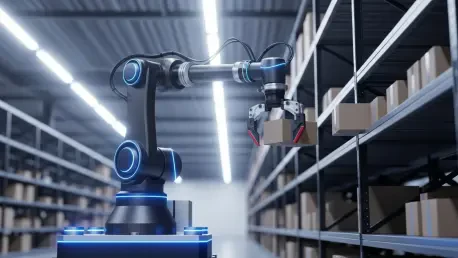
The global logistics sector is currently grappling with a high-stakes disparity where the sheer velocity of e-commerce demand frequently outstrips the physical capacity of traditional human-operated sorting systems. While warehouses have successfully deployed fleets of robots to ferry goods across vast concrete floors, the intricate act of reaching into a bin to select a specific item—the “picking challenge”—remains a significant bottleneck. Recent strategic moves, such as Locus Robotics acquiring Nexera Robotics, signal a fundamental shift toward solving this problem through mobile manipulation. By merging advanced robotic limbs with mobile bases, the industry is transitioning toward a model where machines do not just move inventory but actively manage it, promising a radical leap in operational efficiency.
From Movement to Manipulation: The Evolution of Warehouse Robotics
To grasp the importance of mobile manipulation, one must analyze the historical trajectory of logistics automation which has favored mobility over dexterity for years. For the past decade, the market has been dominated by Autonomous Mobile Robots (AMRs) that specialized in person-to-goods workflows. These machines successfully reduced the miles walked by human staff, yet they still relied on human hands to perform the final pick. This left the most labor-intensive and error-prone segment of fulfillment largely untouched. Current developments represent a pivot from passive transport to active physical interaction, finally addressing a technical gap that has persisted since the dawn of industrial robotics.
Bridging the Gap Between Perception and Physical Handling
Overcoming the SKU Diversity Crisis: Advanced Vision and Gripping
The primary reason picking has remained a human-centric task is the staggering variety of stock-keeping units in modern distribution centers. A single facility might house millions of items, ranging from soft poly-bagged apparel to fragile glassware and heavy, metallic hardware. Traditional grippers were often too rigid to handle such a spectrum. However, technologies like NeuraGrasp are rewriting this narrative by utilizing sophisticated sensors and computer vision to assess physical attributes in real-time. This allows a robot to adjust its grip strength and orientation on the fly, enabling it to pick diverse items with the same reliability as a person.
Integrating Intelligence: The Power of Unified Platforms
The true value of mobile manipulation emerges when grasping intelligence is natively embedded into a mobile platform. When these capabilities are integrated into a system like the Locus Array, the robot evolves into a fully autonomous unit capable of navigating to a shelf and completing a complex task without human assistance. This synergy eliminates “islands of automation” where different machines handle disjointed parts of a process. By creating a unified system that can both travel and touch, enterprises can achieve a much higher volume of fulfillment within a smaller warehouse footprint, effectively mitigating the risks associated with global labor shortages.
Navigating Complexities: Real-World Technical Hurdles
Despite the immense promise, the path to full autonomy is fraught with complexities, including unpredictable packaging materials and narrow shelving configurations. Regional differences in warehouse infrastructure and the rise of sustainable, less rigid packaging constantly shift the requirements for robotic success. Analysis suggests that the key to mastering these hurdles is “grasping intelligence,” an AI-driven approach that learns from every interaction. There is a common misconception that robots must replicate the human hand exactly; in practice, the most effective solutions often combine vacuum suction with flexible actuators to navigate cramped spaces more efficiently than a human could.
The Future Landscape of Autonomous Warehouse Environments
As the industry moves toward the next decade, the focus is shifting from experimental pilots to widespread, end-to-end automation. There is an expected trend where AI-driven mobile manipulation becomes the primary engine of enterprise value across the supply chain. Emerging patterns suggest that robots will soon engage in collaborative picking, where multiple units coordinate their movements to optimize the total flow of goods. Furthermore, as regulatory frameworks evolve to meet these technological leaps, standardized safety protocols will likely allow high-speed picking robots and humans to share workspaces in even closer proximity, supported by 5G connectivity and edge computing.
Strategic Recommendations for an Automated Era
For businesses aiming to remain competitive, adopting mobile manipulation is becoming a strategic necessity rather than an optional upgrade. Organizations should prioritize modular robotic platforms that can scale alongside their inventory volume and SKU complexity. It is advisable to begin by automating high-frequency, standardized items before expanding into the “long-tail” of more difficult goods. Best practices also dictate a heavy investment in data infrastructure to refine the machine learning models that power the picking process. By adopting a phased approach, professionals can ensure their technological stack and workforce evolve in tandem to maximize long-term returns.
Conclusion: Embracing the New Standard of Warehouse Productivity
The integration of mobile manipulation marked a definitive end to the era of robots acting as mere motorized carts. By solving the picking challenge through vision and flexible gripping, the industry set a new benchmark for what was possible in modern logistics. This evolution moved beyond labor replacement, creating a more resilient and scalable supply chain capable of meeting the global hunger for instant fulfillment. As this technology matured, it became the decisive factor for players leading the next generation of commerce. The successful transition toward intelligent, manipulative systems ensured that warehouses were no longer just storage hubs, but highly active, autonomous ecosystems.