
Ensuring the resilience of freight corridors involves a complex integration of transport policy with military mobility and advanced digital innovation. In the current landscape of 2026, the European transport sector finds itself at a defining moment where legislative frameworks must harmonize with the day-to-day operational realities of those moving goods and passengers across borders. During the recent Connecting Europe Days in Brussels, which drew over 4,500 stakeholders including policymakers and industry leaders, a central theme emerged regarding the disconnect between high-level sustainability goals and the physical constraints of the existing network. The International Road Transport Union (IRU) has taken a leading role in advocating for a shift from theoretical targets to functional solutions. This approach requires that every regulatory decision considers the economic survival of operators who are currently managing razor-thin margins. To bridge this gap, policy must evolve from rigid mandates into a supportive ecosystem that encourages investment.
Policy Implementation: Transitioning From Theory to Road Reality
Transitioning from abstract political ambition to operational delivery requires a fundamental shift in how the European Union approaches its connectivity and decarbonization targets. While the political will to achieve a greener continent is evident, the industry has reached a point where the focus must shift toward creating the enabling conditions that allow transport companies to survive the transition. For the period from 2026 to 2028, the primary objective is ensuring that operators possess the financial capacity to invest in new technologies without compromising their long-term competitiveness. This necessitates a regulatory framework that offers certainty rather than fluctuating mandates that disrupt long-term planning. European Commission leadership has acknowledged that road transport remains indispensable for achieving broader economic goals, particularly as the network for electric vehicle charging expands. This integration depends on whether the administrative burden can be reduced effectively.
The necessity of moving beyond demonstration projects to scaled deployment has become a cornerstone of the current transport agenda. Industry leaders emphasize that the gap between innovation and reality often stems from a lack of practical support for the “operator perspective” in high-level discussions. As autonomous vehicle testing and alternative fuel adoption accelerate, the underlying infrastructure must keep pace to prevent logistical bottlenecks that could stifle trade. It is no longer enough to set year-end targets; policymakers must address the specific hurdles of permitting and grid access that delay the rollout of heavy-duty charging stations. By prioritizing the operational needs of fleet owners, Europe can ensure that the move toward a zero-emission future does not inadvertently lead to a fragmented or inefficient logistics network. The focus remains on making these technologies accessible to all market participants to maintain a level playing field across the single market during this industrial evolution.
Physical Requirements: Modernizing Infrastructure and Secure Logistics
Modernizing the infrastructure for passenger transport is essential for the success of the European Sustainable Tourism Strategy, which seeks to better link visitors to diverse destinations. For coach travel to serve as a viable alternative to private cars, cities must provide predictable access and dedicated infrastructure that accommodates the specific needs of large-scale passenger vehicles. This includes the development of modernized coach terminals and safe pick-up points that prioritize passenger convenience and safety. Furthermore, the welfare of drivers remains a critical factor in maintaining the reliability of the transport network. Facilities must offer adequate rest areas and secure environments that comply with strict safety standards. Without these improvements, even the most ambitious tourism goals will struggle to gain traction among travelers who demand efficiency and comfort. Addressing these logistical hurdles is a prerequisite for ensuring that the transition to sustainable mobility is effective.
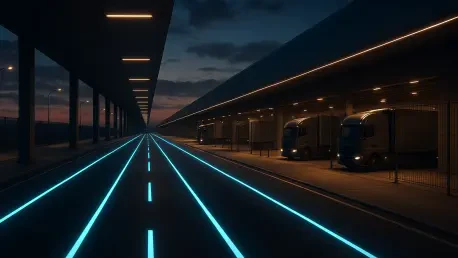
On the freight side, the resilience of European logistics corridors is increasingly dependent on the availability of safe and secure truck parking areas. These facilities serve as the backbone of the logistics ecosystem, protecting not only the cargo and vehicles but also the mental and physical health of the drivers. High-level discussions involving military staff and security experts have highlighted the dual-use nature of transport infrastructure, where secure parking plays a vital role in both commercial efficiency and military mobility. As digital innovation integrates with physical roads, the need for data-driven management of parking spaces has become more urgent. A robust network of secure rest stops is necessary to prevent theft and ensure that long-haul drivers can comply with mandatory rest periods without compromising the safety of their shipments. This holistic view acknowledges that transport is no longer an isolated sector but a foundational element of continental security and economic stability.
Economic Resilience: Securing the Transition Through Actionable Steps
The financial health of transport operators was addressed during the summit as a primary obstacle to achieving long-term sustainability. Stakeholders recognized that many companies functioned on razor-thin margins, which made the “late payment” crisis a critical threat to fleet modernization. To solve this, the industry successfully advocated for mandatory 30-day payment terms and automatic interest on late invoices. These measures were essential for ensuring the liquidity required to invest in zero-emission heavy-duty vehicles and to improve working conditions across the sector. Without a stable cash flow, the transition to sustainable fuels remained an impossible financial burden for most small-scale operators. By strengthening enforcement mechanisms, the European Union aimed to create a more equitable environment where businesses could remain solvent while upgrading their fleets. These legislative steps were viewed as vital for maintaining the momentum of the green transition through the 2028 timeframe.
In addition to financial reforms, the alignment of transport policy with practical reality required a massive expansion of the supportive ecosystem for alternative fuels. The summit concluded that innovation alone was insufficient if it was not backed by accessible charging infrastructure and simplified permitting processes. Efforts were made to bridge the gap between innovation and deployment by focusing on depot charging and timely grid connections that reflected the actual habits of freight operators. These forward-looking strategies ensured that the physical and financial frameworks became as advanced as the vehicles they supported. By addressing specific pain points, such as inadequate parking and grid bottlenecks, policymakers provided a viable roadmap for the future. This collaborative approach ensured that the goals of connectivity and decarbonization were pursued through protective regulation. Ultimately, the industry moved toward a more resilient future where the needs of those moving goods and people remained the central focus.