
The rapid evolution of urban commerce has fundamentally altered consumer expectations, forcing logistics providers to rethink how goods move across densely populated metropolitan centers in record time. Shadowfax Technologies Limited is positioning itself at the heart of this transformation by acquiring WeFast, the Indian arm of Borzo, for approximately ₹23.3 crore. This strategic move signifies a major pivot toward on-demand intra-city goods transportation, moving beyond traditional e-commerce parcel delivery. By absorbing WeFast’s operations, Shadowfax aims to dominate the small and medium enterprise and customer-to-customer segments. These markets are currently witnessing a massive surge in digital adoption, as local businesses seek more reliable ways to navigate complex urban corridors while maintaining cost efficiency and transparency. The integration is expected to harmonize disparate delivery networks, providing a seamless interface for local businesses that require immediate transport.
Strategic Consolidation Within the Hyperlocal Ecosystem
The Indian intra-city logistics sector is currently experiencing a phenomenal expansion, with an annual growth rate exceeding 50% as formalized services replace fragmented networks. Historically, the movement of local goods across major cities relied on informal, unorganized service providers who offered little in terms of tracking or predictable pricing models. However, the modern marketplace demands high-tech platforms capable of providing real-time visibility and a diverse fleet of vehicles to meet specific cargo needs. WeFast brings a substantial operational foundation to Shadowfax, featuring a dedicated network of 32,000 delivery partners and a consistent volume of 1.2 crore deliveries annually. In 2025, WeFast generated an adjusted revenue of approximately ₹200 crore, offering Shadowfax an immediate entry point into five of India’s most critical urban centers where the demand for urgent delivery is most acute. This formalized approach reduces the friction associated with last-mile logistics.
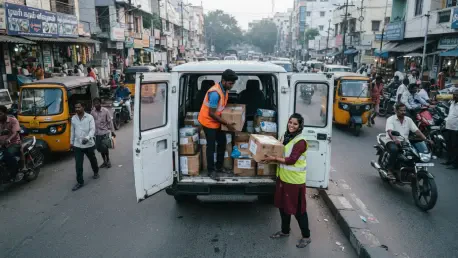
Shadowfax is uniquely positioned to scale these newly acquired services by plugging WeFast’s specialized model into its own massive existing infrastructure of over 3.8 lakh delivery partners. This internal ecosystem already covers more than 16,000 PIN codes, providing a geographic reach that is difficult for smaller competitors to match without significant capital expenditure. The acquisition builds upon the recent success of the Shadowfax 360 initiative, which was designed to target direct-to-consumer brands and small businesses seeking comprehensive logistical support. Recent financial reports highlight the explosive potential of this strategy, with the company’s hyperlocal segment recording an 87.7% year-on-year revenue increase in the second quarter of FY27. By adding WeFast’s focus on urgent goods movement—ranging from motorcycles for small documents to trucks for bulky furniture—Shadowfax creates a unified logistics ecosystem that serves every possible touchpoint within the modern smart city.
The completion of this acquisition signaled a definitive shift in how regional logistics players approach the problem of urban congestion and fragmented demand. Management successfully identified that the future of intra-city delivery depends on a fleet that can adapt to varying load sizes while maintaining a unified technological backbone for routing and dispatch. Moving forward, businesses seek to prioritize the adoption of integrated logistics platforms that offer API connectivity to their own inventory management systems to reduce manual intervention. This approach allows for automated scheduling of pickups as soon as an order is generated, drastically reducing the turnaround time from warehouse to end-user. Furthermore, the industry has begun exploring deeper data analytics to predict peak demand periods within specific neighborhoods, allowing for the pre-positioning of assets. Embracing these advanced technological frameworks has become essential for maintaining a competitive edge.