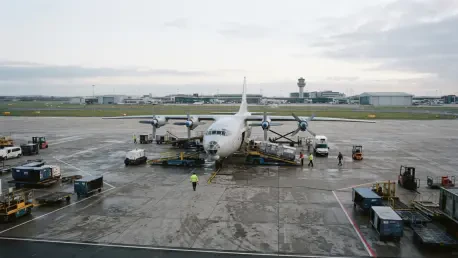

A state-of-the-art consolidated deicing facility completed in 2022 ensures that the global logistics fleet remains on schedule during severe winter weather events. This technological advancement serves as a microcosm for the broader operations at Memphis International Airport. Located just seven miles from the heart of downtown Memphis, Tennessee, this facility is far more than a regional gateway; it is the beating heart of the world’s overnight delivery network. By day, the terminal hums with the typical activity of travelers navigating the Mid-South, but as the sun sets, the airport undergoes a dramatic metamorphosis into the primary SuperHub for FedEx Express. Recently renamed in honor of the legendary logistics pioneer Frederick W. Smith, the airfield functions as a high-velocity artery for the modern global economy. It represents a unique intersection where civil aviation and massive industrial scale meet, creating a logistics epicenter that powers international commerce 24 hours a day.
Infrastructure Growth and Strategic Evolution
Evolution From Farmland to Global Center
The journey of Memphis International began in 1929 on a modest 200-acre plot of farmland, a far cry from the sprawling complex that dominates the landscape today. In its infancy, the airfield was a simple municipal site that had to adapt quickly to the rapid technological changes of the early 20th century. For example, the installation of runway lights in 1930 was a necessity born from a navigational mishap where a pilot, unable to locate the airfield in the dark, was forced to land in the Mississippi River. During World War II, the airfield took on a critical strategic role as the home of the 4th Ferrying Group, which managed the overseas delivery of countless aircraft to Allied forces. This period of military service solidified the airport’s reputation for operational excellence and prepared it for the massive industrial expansion that followed in the postwar era, setting the stage for its eventual transformation into a global logistics center.
Significant social and structural milestones continued to define the airport’s trajectory throughout the mid-20th century. A landmark 1962 Supreme Court ruling mandated the desegregation of its facilities, ensuring that the airport became a symbol of social progress in the American South. This era also witnessed the completion of the iconic 1963 passenger terminal, famous for its distinctive martini-glass support columns. However, the most transformative shift occurred in 1973 when FedEx moved its primary hub operations to Memphis. This decision permanently altered the focus of the airfield from traditional passenger service toward heavy cargo logistics. Although the airport enjoyed a peak as a major passenger hub for Northwest and Delta Air Lines with millions of travelers in 2007, the subsequent consolidation of those hubs led to a necessary right-sizing. Today, the facility balances five million annual passengers with its identity as a dominant global force in air freight.
Technical Layout and Engineering Modernization
The physical layout of the airfield is a masterpiece of logistical engineering, specifically designed to accommodate the intense demands of high-volume cargo traffic. It features a triple-parallel runway configuration that allows for simultaneous operations, which is essential for managing the nightly arrival and departure waves. The primary runway, 18C/36C, stretches 11,120 feet in length, providing ample space for the world’s largest wide-body freighters to land and take off while fully loaded with global shipments. This specialized infrastructure enables the airport to function with high velocity, moving massive aircraft in and out of the terminal area with minimal delay. Every inch of the pavement has been reinforced to handle the weight of Boeing 777Fs and 747-8Fs, ensuring that ground operations are just as robust as the flight schedules. This focus on heavy-duty infrastructure ensures that Memphis remains the preferred destination for global carriers.
To manage the complex coordination required for these massive operations, the airport has invested in cutting-edge air traffic control and ground management systems. A state-of-the-art control tower, which opened in 2011, provides controllers with unparalleled visibility over the active taxiways and runways, a necessity when hundreds of aircraft are moving in tight windows. Furthermore, the 2022 completion of the consolidated deicing facility has proven to be a game-changer for winter resilience. This massive facility allows multiple large aircraft to be treated simultaneously, recycling deicing fluids to minimize environmental impact while maximizing speed. These investments in technical modernization ensure that the airport can maintain its strict operational tempo even during the unpredictable weather patterns of the Mid-South. By integrating advanced technology with physical infrastructure, Memphis has created a resilient environment where the global supply chain can operate without interruption.
Dominance in Cargo and Logistics
The FedEx SuperHub and Freight Volume
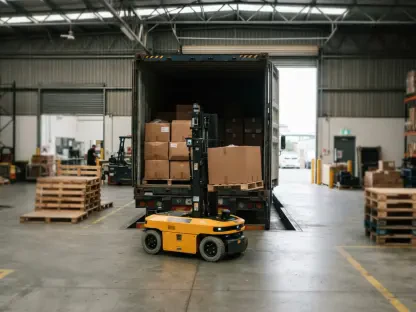
The FedEx SuperHub remains the undisputed engine of the airport’s cargo dominance, operating at a scale that is difficult to comprehend. This massive sorting facility has the capacity to process a staggering 484,000 packages and documents every hour, utilizing miles of conveyor belts and advanced automated sorting technology. On a typical night, the airfield manages approximately 250 dedicated cargo flights that link Memphis to major economic centers in Asia, Europe, and Latin America. This operation creates a global bridge, allowing businesses to transport goods across oceans in less than 24 hours. The efficiency of the sorting process is matched by the speed of the ground crews, who can unload and reload wide-body aircraft with surgical precision. This relentless cycle of activity has kept Memphis at the top of the global cargo rankings for decades, making it an indispensable asset for international trade and a primary driver for the regional economy.
While FedEx is the primary tenant, the airport’s cargo ecosystem is bolstered by other major players and significant annual freight volumes. UPS has maintained a regional hub at the facility since 1999, further diversifying the logistics landscape and ensuring that the airfield remains a competitive environment for freight forwarders. In 2025, the airport handled approximately 6.5 billion pounds of cargo, demonstrating its resilience even amid fluctuations in global trade volumes. This density of logistics activity has turned Memphis into a megacity for freight, where specialized services and infrastructure are tailored specifically to the needs of heavy-lift operations. The economic impact of this cargo dominance is immense, providing thousands of jobs and attracting secondary businesses that rely on rapid shipping. As global e-commerce continues to expand between 2026 and 2028, the airport is positioned to capture even more growth, reinforcing its status as a logistics powerhouse.
Passenger Experience and Modernized Facilities
While cargo is the primary focus, the passenger experience has undergone a significant modernization to meet the needs of contemporary travelers. The 2022 refurbishment of Concourse B transformed the terminal from a dated, oversized hub into a streamlined, boutique facility. Featuring higher ceilings, wider walkways, and 23 modernized gates, the new concourse offers a much more comfortable environment for the five million people who pass through annually. The design incorporates natural light and modern amenities, moving away from the crowded mega-hub feel of previous decades. By consolidating operations and decommissioning older sections like Concourses A and C, the airport has increased its operational efficiency while reducing maintenance costs. This right-sizing approach ensures that travelers can navigate the airport quickly and easily, with short walk times and efficient security checkpoints, making it one of the most user-friendly regional airports in the nation.
The strategic modernization of Memphis International successfully balanced its role as a cargo giant with its duties as a regional transit hub. Strategic investments in the Concourse B expansion and the ground transportation center ensured that passenger convenience stayed ahead of demand through the mid-2020s. Aviation enthusiasts and planespotters frequently gather at the perimeter to witness the arrival of the 164th Airlift Wing’s C-17 Globemaster IIIs, highlighting the facility’s vital military importance. To maintain this momentum, stakeholders focused on expanding landside infrastructure and enhancing multimodal connections from 2026 to 2028. Future upgrades sought to integrate sustainable fuel technologies and automated ground handling to further optimize the overnight logistics wave. By prioritizing both high-tech freight systems and a refined traveler experience, the airport established a sustainable blueprint that other global logistics hubs adopted to remain competitive in the future.