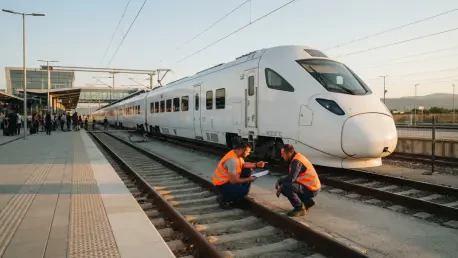

Global trade efficiency hinges on physical infrastructure, requiring over 25 billion dollars in investments for rail networks and ports across the Middle Corridor by 2040. The recent inauguration of the 153-kilometer high-speed rail section connecting the industrial hub of Çerkezköy to Kapıkule on the Bulgarian border represents a seismic shift in how goods move between continents. By modernizing the Thrace region’s transit capacity, Türkiye is effectively dismantling the logistical bottlenecks that have historically slowed commerce between the manufacturing powerhouses of Asia and the affluent consumer markets of the European Union. This project, which integrates cutting-edge engineering and local strategic vision, serves as a proof of concept for a much larger transcontinental ambition. It signifies a transition from legacy systems to a sophisticated, high-speed artery that promises to redefine Türkiye’s role in the global supply chain as the network expands toward Istanbul.
Strengthening the Middle Corridor
Establishing a Terrestrial Trade Alternative
The newly operational railway serves as the essential western anchor for the Trans-Caspian Transport Corridor, commonly known as the Middle Corridor. This 6,000-kilometer route is designed to provide a terrestrial alternative that connects China, Central Asia, and the Caucasus directly to the European market. For decades, maritime shipping dominated the flow of goods, but the volatility of ocean freight rates and the vulnerability of maritime chokepoints have forced a rethink of global logistics. By positioning itself at the terminus of this corridor, Türkiye is transforming into a pivotal gateway rather than just a transit country. The integration of high-speed rail into this network allows for a seamless transition of goods, significantly reducing the time spent in transit compared to the traditional sea routes through the Suez Canal. This terrestrial link offers the reliability and speed that modern just-in-time manufacturing processes demand today.
Bridging Continental Gaps with Modern Rail
Beyond merely moving freight, the development of this route fosters a new era of geopolitical and economic cooperation across the participating nations. As the Middle Corridor gains traction, it creates a diversified logistics landscape that mitigates the risks associated with relying on a single transport path. The sophistication of the Halkalı-Kapıkule line ensures that once cargo reaches Türkiye from the Caspian Sea, it can be whisked to the European border with unprecedented efficiency. This capability is not just about speed; it is about creating a predictable and scalable environment for international trade. The corridor is increasingly viewed as a stabilizer for regional economies, providing landlocked nations in Central Asia with a direct and efficient path to global markets. By investing in this infrastructure, Türkiye is securing its place at the heart of a revitalized Silk Road, where the flow of physical goods is synchronized through modern rail technology.
Projecting Regional Economic Impacts
The economic implications of a fully operational Middle Corridor extend far beyond Türkiye’s borders, promising to revitalize the economies of participating nations through increased trade. Current data suggest that this corridor could potentially triple trade volumes by the end of the next decade, significantly boosting the gross domestic product of countries like Kazakhstan, Azerbaijan, and Georgia. Such a massive increase in commercial activity is expected to generate approximately two million new jobs across the region, fostering stability through shared prosperity. For these nations, the railway is more than just a transport line; it is a catalyst for industrialization and modern service sectors. By reducing the costs associated with geographic isolation, the high-speed rail network allows local producers to compete on a global scale. This economic transformation is underpinned by the synergy between physical infrastructure and institutional reforms that streamline transport.
Sustaining Development Beyond Commodities
Building on this foundation of regional integration, the corridor provides a framework for long-term sustainable development that transcends traditional commodity exports. As transit times are halved, the competitiveness of diverse goods—from textiles and plastics to high-tech electronics—is drastically improved. This shift encourages the diversification of economies that were once heavily dependent on raw materials, allowing them to move up the value chain. Furthermore, the corridor serves as a magnet for foreign direct investment, as international companies seek to establish manufacturing and logistics bases near efficient transport hubs. The reliability of the rail network minimizes the capital tied up in inventory during long transit periods, providing a direct financial incentive for businesses to utilize the Middle Corridor. Consequently, the project acts as an engine for regional growth, where the physical tracks facilitate the flow of innovation alongside physical products.
Overhauling National Logistics
Resolving the National Logistics Imbalance
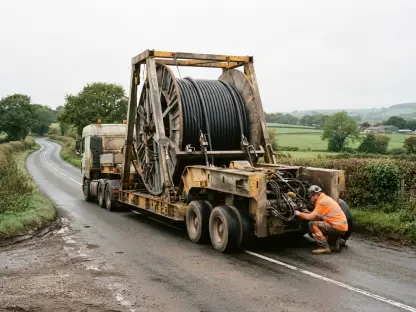
A primary objective of the high-speed rail initiative is to correct Türkiye’s historical over-reliance on heavy-duty truck transport for inland freight movement. Currently, approximately 95% of the nation’s non-pipeline cargo is moved by road, a distribution that is increasingly seen as an anomaly among upper-middle-income countries with similar economic profiles. In contrast, nations like Mexico, China, and South Africa maintain rail freight market shares that are significantly higher, ranging from 25% to nearly 40%. This heavy dependence on trucks creates persistent logistical bottlenecks, leading to increased maintenance costs for highway infrastructure and unpredictable delivery schedules due to traffic congestion. By shifting a significant portion of this freight to the high-speed rail network, Türkiye is aiming to modernize its logistics mix in line with international standards. This transition is expected to alleviate pressure on the national road network and improve overall safety.
Optimizing Cost and Freight Throughput
The financial rationale for this shift is equally compelling, as truck transport in Türkiye has proven to be nearly three times more expensive per ton-kilometer than rail alternatives. These high operational costs directly impact the competitiveness of Turkish exports in the global marketplace, especially within the price-sensitive markets of the European Union. By utilizing the new high-speed tracks, logistics companies can slash freight transit times from eight and a half hours to just three and a half hours for the journey to the Bulgarian border. This dramatic increase in efficiency allows for a higher turnover of goods and a more effective use of rolling stock. Additionally, the expansion of freight capacity from 1.5 million tons to 9.5 million tons annually provides the necessary scale to support Türkiye’s growing manufacturing sector. As the nation moves toward a more balanced transport strategy, the integration of rail will provide the structural stability required for business.
Prioritizing Carbon Reduction in Transport
The shift from road to rail offers a powerful solution to the environmental challenges faced by the global logistics sector. Modern rail transport is fundamentally more sustainable, producing only a fraction of the carbon emissions generated by heavy-duty trucks. Specifically, Turkish trucks generate roughly 2.6 times more CO2 than diesel locomotives and an astounding 6.3 times more than electric-powered high-speed trains. By adopting electric rail technology for the Halkalı-Kapıkule line, Türkiye is taking a decisive step toward reducing its national carbon footprint and aligning with international climate mitigation goals. This “green” logistics approach is no longer a peripheral concern but a central requirement for maintaining access to the European market, which is increasingly implementing strict environmental standards. The reduction in air pollution also brings immediate public health benefits to the densely populated regions of Thrace and the Istanbul metropolitan area.
Transitioning Toward Integrated Digital Trade
The completion of the initial high-speed rail segments in the Thrace region marked a definitive turning point in the modernization of Eurasian logistics. By successfully bridging the gap between Asian production and European demand, this project validated the strategic importance of the Middle Corridor as a viable trade artery. Stakeholders across the continent observed how the reduction in transit times and the increase in freight capacity provided a tangible boost to regional competitiveness. The transition from a road-heavy logistics model to an electrified, high-speed rail system demonstrated a clear commitment to both economic efficiency and environmental stewardship. This progress laid the groundwork for future expansions and fostered a spirit of collaboration among neighboring nations. Ultimately, the successful implementation of these rail systems proved that targeted infrastructure investment could reshape global trade patterns, and the focus shifted toward digital integration to ensure long-term fluidity.