
The persistent volatility of global energy markets combined with an unprecedented surge in secondhand trade volume has forced a fundamental reconfiguration of how packages move across the continent. Logistics providers are increasingly finding that the traditional door-to-door delivery model, once the gold standard of convenience, is becoming a financial liability in an environment defined by rising fuel costs and labor shortages. Consequently, the industry is pivoting toward Pickup and Drop-off (PUDO) frameworks, which aggregate shipments at centralized hubs to drastically reduce the number of individual vehicle stops. This evolution represents more than a mere change in delivery routes; it is a structural shift that aligns the economics of the “last mile” with the growing consumer demand for affordable, circular commerce.
The rise of the resale economy has served as the primary catalyst for this logistics transformation, as the movement of low-margin inventory requires a much leaner shipping cost structure. For platforms dealing in pre-owned apparel and vintage goods, a standard carrier fee can often match or exceed the item’s purchase price, effectively killing the transaction before it begins. To sustain this ecosystem, marketplaces are integrating package consolidation strategies that allow them to bypass the expensive residential delivery fees that have historically hampered small-scale sellers. This transition is turning the logistical focus away from the individual doorstep and toward community-based drop-off points that can handle hundreds of units simultaneously.
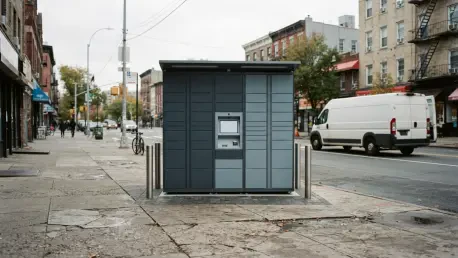
Market leaders are no longer merely testing the waters; they are making significant technological investments in automated locker systems and proprietary consolidation software. These systems allow for a more predictable flow of goods, moving away from the chaotic routes of traditional carriers and toward a grid-based architecture. By utilizing automated parcel lockers (APLs), companies can offer 24-hour access to shipments, removing the constraints of delivery windows and reducing the overall mileage traveled by delivery vans. This shift is not just about moving boxes; it is about creating a synchronized digital and physical infrastructure that treats every neighborhood retail spot as a potential logistics node.
Rising fuel prices and the frequent implementation of carrier surcharges have made the third-party delivery model increasingly untenable for high-volume, low-value e-commerce. As legacy carriers struggle to maintain profitability amidst these overhead spikes, PUDO networks provide a pressure valve for the entire supply chain. By centralizing the final leg of the journey, operators can mitigate the impact of congestion and the high “cost-per-stop” associated with urban residential areas. The goal is to create a model where the consumer participates in the logistics chain, trading a short walk or drive to a local shop for a significantly lower shipping fee.
Navigating the High-Stakes Evolution of Modern E-commerce Logistics
The current logistics landscape in 2026 reflects a decisive move away from the expectation of universal home delivery toward a more tiered service structure. High-end retail continues to offer doorstep convenience at a premium, but the mass market is rapidly adopting hub-based alternatives to keep prices competitive. This shift is particularly evident in metropolitan areas where the density of residential buildings makes traditional delivery both difficult and expensive. PUDO networks are filling this gap by turning local convenience stores and coffee shops into auxiliary sorting centers, creating a mutually beneficial ecosystem for retailers and logistics providers alike.
Moreover, the psychological transition of the consumer is matching the physical shift in infrastructure. Buyers are becoming more sensitive to the environmental and social costs of an endless stream of delivery vans idling in residential neighborhoods. The adoption of PUDO points is being framed not just as a cost-saving measure, but as a more secure and reliable way to receive goods. With package theft becoming a persistent issue in many regions, the controlled environment of a locker or a staffed retail counter offers a level of security that an exposed front porch simply cannot provide.
Strategic Drivers and Market Trajectory of Decentralized Shipping
Transforming Last-Mile Economics Through Consumer Behavior and Density
The ongoing implementation of the “UK Blueprint” serves as a primary reference point for how density and proximity drive high adoption rates in mature PUDO markets. In the United Kingdom, logistics networks have reached a point where nearly 95% of the population lives within a one-mile radius of a pickup location. This level of saturation creates a frictionless experience for the user, as dropping off or collecting a package becomes a secondary task performed during a daily commute or a grocery run. The high density of these networks allows for extreme route optimization, as a single van can service multiple high-volume points rather than wandering through suburban cul-de-sacs.
Shifting consumer preferences are also favoring these alternatives because they offer a degree of flexibility that home delivery lacks. In the modern work environment, where hybrid schedules are the norm, the certainty of a secure locker is often preferable to the risk of a missed delivery attempt. This behavioral shift is reducing the operational burden on carriers, who previously had to account for the high costs of redelivery or return-to-sender scenarios. By empowering the consumer to choose their own pickup window, the industry is effectively outsourcing the most difficult part of the delivery process to the end user.
Market Growth Projections and the Unit Economics of Resale
Data-driven analysis indicates a strong correlation between shipping cost reductions and the velocity of transactions within the resale market. When shipping fees drop below a certain psychological threshold, the frequency of microtransactions increases, leading to higher overall platform revenue despite the lower margins per item. This dynamic is essential for the long-term health of peer-to-peer marketplaces, which rely on a high volume of small sales to maintain a vibrant community. By lowering the entry barrier for both buyers and sellers, PUDO networks act as a catalyst for economic growth within the circular economy.
Performance indicators for these networks are currently highlighting a transition from subsidized marketing experiments to structural profitability. Previously, many platforms offered free or discounted shipping as a way to gain market share, a strategy often viewed as an “irrational subsidy” by industry observers. However, the development of proprietary locker networks and retail partnerships is now allowing these companies to achieve genuine cost savings. Forecasts suggest that the North American market will see a massive expansion of these services by 2030, as the infrastructure begins to catch up with the advanced models seen in Europe and Asia.
Overcoming Structural Hurdles and Geographic Complexity
A significant challenge remains in addressing the “density gap” that exists in the United States compared to more compact European logistics networks. While urban centers in the US are ripe for locker integration, the sprawling nature of suburban and rural American communities requires a different approach. Simply placing lockers in a central location is not enough if that location is five miles away from the average resident. To solve this, logistics providers are exploring hybrid models that combine community-based hubs with a limited number of consolidated residential stops, ensuring that the benefits of PUDO are accessible even in less populated regions.
Managing user friction is another critical area that requires careful navigation, particularly when platform-enforced policies conflict with seller convenience. If a marketplace mandates that all items must be dropped off at a specific PUDO point, it risks alienating sellers who do not have easy access to those locations. This friction can lead to canceled sales and a decrease in platform trust, which is why flexibility remains paramount. Successful operators are finding ways to incentivize PUDO usage through lower fees rather than making it a mandatory requirement, allowing the market to move naturally toward the more efficient model.
Quality control and reliability within third-party logistics (3PL) partnerships also present a hurdle for expanding networks. The risk of package loss or poor service at a partner retail location can quickly tarnish a brand’s reputation, regardless of the cost savings. To mitigate these risks, companies are implementing more rigorous digital authentication and tracking systems that provide real-time visibility from the moment a package is dropped off. Scaling this physical infrastructure without prohibitive capital expenditure involves forming strategic alliances with existing retail chains, turning their underutilized floor space into valuable logistics assets.
The Regulatory Landscape and Industry Compliance Standards
Navigating zoning laws and municipal regulations for the placement of parcel lockers and shipping hubs is a complex task for any expanding PUDO operator. Many cities have strict rules regarding the use of public sidewalks or the installation of large metal structures in residential areas. Companies must work closely with local governments to prove that these hubs actually reduce traffic congestion and carbon emissions, making them a net positive for the community. Standardizing these regulations across different jurisdictions is essential for creating a cohesive national network that can operate without constant legal interference.
Data privacy and security protocols are also coming to the forefront as digital authentication becomes the standard for locker access. Every time a consumer uses a keypad or a mobile app to open a locker, they are generating data that must be protected. Ensuring that these physical nodes are as secure as a digital transaction is a top priority for developers, who are integrating advanced encryption and biometric verification into their hardware. These security measures are not just for the protection of the package, but for the safety of the individual user and the integrity of the overall network.
The impact of labor regulations on independent PUDO operators and retail partner staff cannot be ignored. When a convenience store becomes a shipping hub, the workload for the employees at that location increases significantly. There are ongoing discussions regarding how these workers should be compensated for their role in the logistics chain and whether they should be classified as logistics personnel. Furthermore, standardizing insurance and liability frameworks is necessary to determine who is responsible if a package is damaged or stolen while being held at a third-party retail location.
Future Horizons: Innovation, Disruptors, and Synergistic Partnerships
The potential for retail consolidation is one of the most exciting aspects of the future logistics landscape. Leveraging existing storefront footprints as multi-functional hubs could revolutionize how we think about physical retail. For example, some major electronics or game retailers have explored turning their locations into PUDO points and authentication centers for secondhand sales. This model uses the brick-and-mortar presence to add value to the digital marketplace, creating a hybrid environment where a store is no longer just a place to buy goods, but a vital link in the supply chain.
Technological integration through AI and predictive analytics is already beginning to optimize package consolidation and route efficiency. By analyzing historical shipping data, platforms can predict when a particular locker will be full and adjust pickup schedules accordingly. AI can also help in determining the optimal locations for new PUDO points based on population growth and consumer spending patterns. These data-driven insights allow companies to build leaner, more responsive networks that can adapt to the seasonal fluctuations of the e-commerce market without requiring excessive manual oversight.
Sustainability remains a primary driver for the adoption of consolidated delivery systems, as the environmental benefits are undeniable. By reducing the number of individual “last-mile” trips, PUDO networks significantly lower the carbon footprint associated with every order. Many municipalities are now incentivizing the use of these hubs as part of their broader green initiatives, offering tax breaks or easier zoning approvals for companies that prioritize consolidated delivery. This alignment of economic incentives and environmental goals is creating a powerful momentum that is unlikely to be reversed.
Toward a Sustainable Shipping Framework for the Next Generation of Retail
The strategic necessity of PUDO networks became increasingly clear as the industry grappled with the unsustainable trajectory of traditional shipping costs. Stakeholders recognized that the era of door-to-door delivery as a default service was no longer compatible with the low-margin realities of the resale market. By focusing on physical consolidation points, platforms successfully decoupled business growth from the rising costs of fuel and labor. This shift provided a structural foundation that allowed smaller vendors to remain competitive against larger, centralized retailers who possessed their own dedicated shipping fleets.
The eBay and Depop model served as a critical benchmark for the broader industry, proving that integrated logistics could drive consumer trust and transaction volume. These platforms demonstrated that when the shipping experience was simplified and made more affordable, the overall health of the marketplace improved. The industry successfully moved away from “irrational subsidies” and toward a model where efficiency was built into the physical infrastructure itself. This transition was not merely a reaction to temporary market pressures but a calculated long-term investment in a more resilient shipping ecosystem.
Ultimately, the market determined that the future of e-commerce delivery required a hybrid approach that prioritized physical infrastructure over digital-only solutions. While software remained essential for tracking and route optimization, the real gains were made through the expansion of lockers and retail partnerships. Stakeholders who invested early in these physical assets found themselves better positioned to handle the complexities of a globalized, high-volume shipping environment. The industry concluded that the “last mile” was no longer a hurdle to be overcome, but an opportunity to create a more sustainable and cost-effective framework for the next generation of retail.