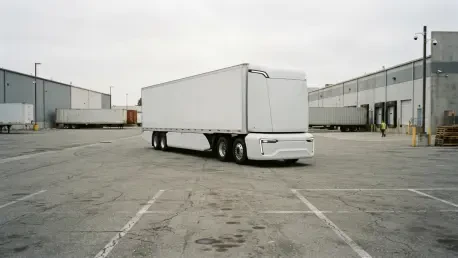

The logistics industry is currently witnessing a transformative shift as San Francisco-based Humble Robotics secures substantial Series A funding to propel its autonomous electric vehicle fleet into real-world commercial operations. With a recent infusion of fifty-one million dollars, the company has accumulated seventy-five million in total capital since its inception less than a year ago, signaling a massive vote of confidence from prominent firms like Obvious Ventures. This financial momentum is accelerating the development of the “Humble Hauler,” a battery-electric Class 8 vehicle that completely omits the traditional driver’s cab in favor of a modular, aerodynamic skateboard platform. By removing human-centric components, the design optimizes structural weight and energy efficiency while drastically reducing the total cost of ownership for freight operators who are struggling with rising fuel costs and labor shortages.
Targeting the High-Volume Regional Freight Market
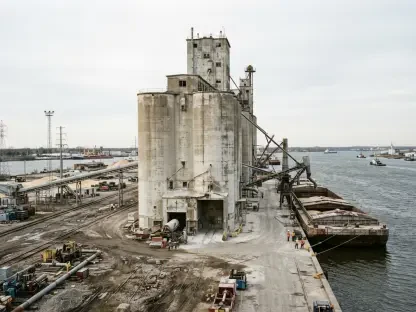
While the broader autonomous vehicle sector has historically obsessed over the complexities of transcontinental long-haul transit, Humble Robotics is pivotally focusing on the underserved regional market. Statistics show that approximately eighty-seven percent of all truck tonnage in the United States moves across distances shorter than two hundred and fifty miles, frequently cycling between ports, rail terminals, and massive distribution centers. These localized routes offer a predictable environment that is far more conducive to battery-electric propulsion and supervised autonomous systems than the unpredictable nature of cross-country highways. CEO Eyal Cohen emphasizes that the industry has moved past the proof-of-concept phase and into a period where reliability and scalability for daily commercial use are the primary metrics for success in this high-volume sector.
The transition toward specialized regional applications allows for a more seamless integration into existing logistics infrastructure without requiring a radical overhaul of current facility layouts or shipping schedules. By concentrating on these shorter distances, freight companies can capitalize on faster turnaround times and more frequent charging cycles, which align perfectly with the operational constraints of current battery technology. This strategy minimizes range anxiety often associated with heavy-duty electric vehicles while providing a consistent and repeatable testing ground for software performance. As ports and rail hubs become increasingly congested, the introduction of cabless electric haulers offers a way to streamline operations through continuous transport cycles that do not depend on human shift limits. This targeted approach positions the company to deliver immediate value to partners.
Advanced Systems and Operational Implementation
At the technological heart of the Humble Hauler is a sophisticated suite of sensors and advanced vision-language-action models that prioritize virtual simulation over the accumulation of millions of real-world highway miles. Unlike traditional systems that rely on rigid programming, these AI-driven models adapt to the chaotic variables of a busy loading dock or a crowded port entrance with high-fidelity situational awareness. The engineering team utilizes a digital-first approach where specific freight links are mapped with extreme precision to create “stress tests” in a simulated environment before any truck touches the asphalt. This method allows for the rapid iteration of software patches and the testing of thousands of dangerous scenarios in a fraction of the time it would take on the road. By mastering port-to-warehouse routes in simulation, the company ensures that its physical trucks are prepared for the most difficult maneuvers in a safe and controlled manner.
Operational pilots were launched for dock-to-dock shipping container transport, providing a practical blueprint for freight companies looking to modernize their aging fleets with autonomous technology. Industry leaders observed that the most effective way to transition toward this automated future involved starting with isolated, repetitive routes that minimized interaction with general public traffic. It was recommended that logistics providers begin evaluating their current route data to identify short-haul links that could benefit from the lower maintenance costs of electric propulsion. Stakeholders also prioritized the development of charging infrastructure at key distribution hubs to support the continuous rotation of autonomous haulers without long periods of downtime. These strategic steps ensured that the integration of technology remained both economically viable and operationally safe while providing a clear path for future fleet scaling.