
The formal conclusion of the 2019 catenary vehicle agreement between Enviri Corporation and Deutsche Bahn marks a critical turning point for the European rail manufacturing sector. This separation, finalized in late 2026, represents the resolution of a complex and increasingly volatile relationship that initially aimed to modernize German overhead line maintenance. For years, the project stood as a testament to the high ambitions of international rail engineering, yet it eventually became a source of significant financial strain for the parent company. By reaching this release agreement, the corporation has effectively insulated itself from long-tail liabilities and technical risks associated with bespoke, engineered-to-order projects. This “clean break” strategy is designed to shift focus toward operational stability, allowing both parties to pursue their respective infrastructure goals without the weight of past contractual obligations. The termination is not merely an exit but a strategic recalibration that highlights the inherent risks of massive, custom-built industrial programs.
Financial Impacts: Navigating Repayment and Recovery
To facilitate this exit, Enviri navigated a structured settlement that required a repayment of approximately $73 million in customer advances to Deutsche Bahn. While such a figure might seem daunting, the move was carefully calculated to unlock stagnant capital and eliminate future performance risks that could have hovered over the company for years. The financial maneuver was significantly offset by the release of $49 million in restricted cash held as collateral, alongside the return of $13 million in performance bonds. This resulted in a more manageable net impact than the headline figures might suggest. Funding for the repayment was primarily sourced from the previous divestiture of the company’s Clean Earth division, showcasing a broader corporate strategy of shedding non-core assets to fortify the balance sheet. By prioritizing liquidity and risk reduction, the corporation has positioned itself to navigate the current landscape with greater flexibility, ensuring that resources are directed toward sectors with more predictable margins.
The broader fiscal narrative surrounding this split involves a deliberate acceptance of short-term losses to secure long-term viability. During the progress of this exit, the company recorded significant noncash impairment charges and liabilities exceeding $200 million, a move that cleared the way for a fresh start. This proactive accounting treatment allowed the firm to report a net gain of $19 million in the third quarter of 2026, largely due to initial proceeds from asset sales and the release of historical liabilities. By front-loading these financial hits, leadership has sought to stabilize quarterly earnings reports and provide investors with a clearer picture of the company’s forward-looking potential. This transition away from high-stakes manufacturing projects reflects a growing trend among mid-sized industrial firms to avoid bespoke traps that can lead to years of technical delays and cash outflows. The focus now rests on maintaining a lean operation that prioritizes service-led revenue and standardized equipment.
Manufacturing Continuity: The Rise of Gleisbaumechanik Brandenburg
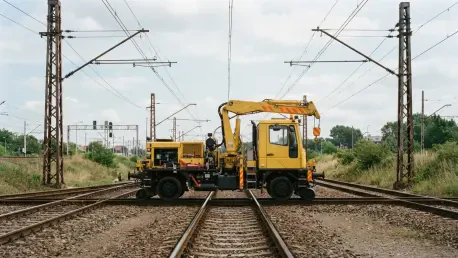
Although the partnership with the original contractor has ended, the development of specialized maintenance machinery continues under new leadership. Responsibility for the vehicle program has transitioned to Gleisbaumechanik Brandenburg (GBM), a subsidiary of General Atomics and a long-standing manufacturing partner in the region. In a strategic asset sale, the project’s intellectual property, inventory, and essential technical equipment were transferred to GBM, ensuring that the progress made since 2026 remains viable for the German rail network. This handover represents a pragmatic solution for Deutsche Bahn, as it retains the technical advancements of the program while shifting to a partner with a deeper local manufacturing footprint. For GBM, this acquisition provides a significant boost to its portfolio, placing it at the center of Germany’s efforts to modernize its rail infrastructure. The transition ensures that the research and development efforts already invested in the machinery are not lost to the industry.
This handover has already yielded tangible results, as GBM secured a series production order from Deutsche Bahn for an initial 23 vehicles. The production schedule is now firmly established, with test vehicles slated for debut by the end of 2026 and full series deliveries expected to begin in the final quarter of 2027. For the former partner, this transition serves as a critical capital recovery mechanism; the company received an initial payment in 2026 and expects additional installments totaling up to $34 million through the first half of 2027. These payments are contingent on meeting specific contractual milestones, providing a clear roadmap for the final liquidation of the project assets. By handing over production to GBM, the sector avoids a total loss of specialized machinery vital for the upkeep of catenary systems. This arrangement allows the original manufacturer to exit engineering risks while still recovering a portion of its original investment through the sale of intellectual property and stock.
Strategic Realignment: Shifting to Standardized Maintenance Models
The decision to walk away from the Deutsche Bahn contract, alongside a similar exit from a “stoneblower” project for the UK’s Network Rail, reflects a broader shift in corporate strategy. These engineered-to-order projects, while prestigious, frequently resulted in unpredictable cash outflows and technical hurdles that were difficult to manage from a distance. By absorbing the costs to exit these deals, the company is prioritizing the stabilization of its financial reporting over the pursuit of complex, custom manufacturing contracts. This shift is part of a larger trend where rail technology firms are moving away from being general contractors and toward becoming specialized component and service providers. The goal is to reduce exposure to the technical and financial volatility inherent in building bespoke rail fleets for diverse national networks. This strategic refocusing is expected to lead to more consistent performance and a more attractive profile for stakeholders who prioritize steady growth over high-risk engineering.
Moving forward, the focus is now squarely on the “core maintenance-of-way business,” which emphasizes more standardized equipment and life-extension services. This pivot is designed to deliver more predictable profit margins by leveraging existing technologies rather than reinventing systems for every new contract. While the company still maintains some specialized obligations, such as a utility vehicle contract with Swiss Federal Railways that concludes in 2027, its overarching goal is to minimize future exposure to the volatility of large-scale European manufacturing projects. This approach naturally leads to a more service-oriented business model, where long-term maintenance contracts provide a steady stream of revenue less susceptible to the supply chain disruptions and engineering delays that plagued the previous decade. By standardizing its offerings, the company can achieve better economies of scale and faster delivery times, making it a more competitive player in the global market for rail maintenance and infrastructure support.
Future Pathways: Lessons for the Global Rail Sector
The industry response to this transition provided clear indicators for future infrastructure procurement strategies across the continent. Decision-makers in the rail sector recognized that the risks associated with highly customized vehicle fleets necessitated a shift toward modularity and cross-border standardization. To mitigate the technical bottlenecks that plagued the earlier years of this program, strategic advisors suggested that railway operators should prioritize hybrid and adaptable platforms rather than proprietary, singular designs. Stakeholders also focused on the importance of robust life-extension programs for existing fleets to bridge the gap during manufacturer transitions. By analyzing the outcomes of the Harsco-DB split, procurement officers adopted more rigorous vetting processes for engineered-to-order projects, ensuring that manufacturing partners possessed the localized scale required for such complex deliveries. These steps fundamentally reshaped how the industry approached large-scale asset replacement in the latter half of the decade.
The shift toward sustainable and hybrid technology became a central pillar of the revised procurement strategies that followed this contractual resolution. Railway operators like DB InfraGO aggressively pursued partnerships with manufacturers who could provide battery-electric and hybrid drive systems, such as those found in the latest generation of catenary maintenance vehicles. This evolution allowed for full-shift operations under electric power, significantly reducing the carbon footprint of infrastructure maintenance while improving reliability. Industry leaders prioritized the integration of telematics and real-time monitoring to enhance the efficiency of standardized fleets, moving away from the era of bespoke, standalone machinery. These advancements ensured that the rail network remained resilient and capable of meeting increasing traffic demands without the financial instability seen in previous years. Ultimately, the lessons learned from this split fostered a more collaborative and technologically advanced environment for rail infrastructure developers across the global market.