
The rapid integration of robotics into city centers is no longer a distant vision but a daily reality as autonomous delivery networks reshape how goods move through congested urban corridors. This technological shift represents a critical pivot in the logistics sector, moving away from carbon-heavy, labor-intensive courier models toward highly synchronized, automated ecosystems. By examining the current trajectory of urban logistics, this review analyzes how established infrastructure and data collection are merging to solve the most persistent problem in the industry: last-mile delivery. The objective is to evaluate the technical robustness, economic viability, and future scalability of these networks as they transition from experimental pilots to foundational urban infrastructure.
Evolution of Autonomous Logistics Systems
The journey of autonomous logistics began as a response to the massive inefficiencies found in traditional courier services. Historically, the movement of small packages within dense cities relied on a fragmented workforce and oversized vehicles that exacerbated traffic congestion. However, the paradigm shifted when logistics providers realized that software alone could not solve the physical constraints of a city. This realization triggered the development of integrated systems where robotics, artificial intelligence, and specialized urban architecture work in unison.
The current landscape is defined by the transition from simple e-bike rentals to sophisticated, high-tech logistics providers. This evolution is marked by a departure from human-centric operations toward “Physical AI,” a concept where hardware is designed specifically to feed and respond to machine learning algorithms. Modern networks are no longer just about the vehicle; they are about the automated synchronization of the entire delivery journey, ensuring that the movement of goods is as streamlined as the flow of digital data.
Core Pillars of the Automated Network
Infrastructure-First Micro-Hub Strategy
The most significant differentiator for successful autonomous networks is the prioritization of a physical footprint over software-only solutions. Unlike competitors that focus solely on navigation algorithms, leading firms have secured underutilized urban spaces, such as railroad arches and underground parking garages, to create a web of micro-hubs. These facilities provide the necessary proximity to high-density delivery zones, allowing for rapid deployment and vehicle turnaround.
These hubs function as more than just storage units; they are the heart of the automated operation. By controlling over 50,000 square feet of strategic real estate in major metropolitan areas, these networks ensure that charging, maintenance, and package sorting happen at the edge of the network. This localized approach reduces the energy required for long-haul transport and maximizes the uptime of the robotic fleet, creating a resilient backbone that can support thousands of deliveries daily.
Data-Driven AI Training Engines
The intelligence of these delivery robots is not developed in a vacuum but is trained using massive amounts of real-world street data. By utilizing existing manual fleets equipped with NVIDIA-powered cameras and lidar sensors, companies turn every delivery run into a data-gathering mission. This dual-purpose model allows human riders to map complex urban environments, capturing high-resolution details on traffic patterns, curb heights, and pedestrian behavior.
This high-quality data is then uploaded via high-speed fiber-optic connections at the micro-hubs to refine the “AI Driver” software. This iterative process bridges the gap between current manual operations and future full autonomy. By training on diverse datasets from thousands of active vehicles, the AI learns to navigate the unpredictable nature of city streets far more effectively than it would in a simulated environment, providing a competitive edge in safety and reliability.
Emerging Trends in Robotic Urban Delivery
Current trends indicate a significant shift in how capital is deployed within the logistics technology sector. Major financial institutions are no longer betting on speculative software; they are investing in companies that demonstrate a mastery of both physical assets and digital intelligence. Recent capital injections, totaling tens of millions of dollars, have enabled a rapid transition toward comprehensive logistics services capable of scaling across international borders.
There is also an increasing move toward modularity within the robotic fleet. Rather than a one-size-fits-all approach, developers are creating specialized robots that can handle different cargo types and urban topographies. This trend toward “Physical AI” ensures that the hardware is as adaptable as the software, allowing the network to handle everything from hot food to large retail packages with the same degree of automated precision.
Real-World Applications and Strategic Partnerships
Collaborative Last-Mile Solutions
The practical application of autonomous delivery is most visible in partnerships with traditional postal services. For instance, the integration of robotic delivery systems and cargo trailers into national mail routes has already facilitated the transport of hundreds of thousands of packages. These collaborations allow established carriers to modernize their operations without overhauling their entire existing infrastructure, demonstrating that robotic solutions can complement rather than just replace traditional methods.
These partnerships serve as a proof of concept for the reliability and throughput of autonomous networks. By handling high volumes of mail and retail goods, these systems have proven they can meet the rigorous demands of seasonal peaks and daily fluctuations. The successful deployment of these technologies in real-world scenarios has moved the conversation from “if” these systems work to “how” they can be integrated more deeply into the global supply chain.
Urban Density and Specialized Cargo Fleet
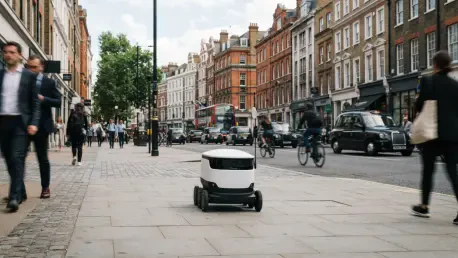
In metropolitan hubs like London, Manchester, and Birmingham, autonomous networks have specifically targeted the challenges posed by urban density. The use of specialized cargo bikes and small-scale robots allows for navigation through narrow streets and pedestrian zones that are inaccessible to standard delivery vans. This precision-based approach solves the logistical bottlenecks that often lead to delayed deliveries and increased operational costs in city centers.
Furthermore, the deployment of these fleets has shown a marked improvement in urban air quality and traffic flow. By replacing large delivery vehicles with smaller, electric autonomous units, cities can reduce the physical footprint of logistics operations. This shift is particularly effective in high-density areas where every square foot of road space is at a premium, making the autonomous network an essential tool for sustainable urban planning.
Technical and Regulatory Obstacles
Operational and Environmental Constraints
Despite technical advancements, significant hurdles remain regarding the physical environment. Navigating unpredictable curbs, managing operations in severe weather, and ensuring safety in high-traffic pedestrian areas are ongoing challenges. These robots must be equipped with sensors that can differentiate between a permanent obstacle and a temporary one, such as a trash bag or a moving pet, which requires immense processing power.
Moreover, the physical security of the micro-hubs and the robotic units themselves is a constant concern. Operating in diverse urban environments means these assets are exposed to the public, necessitating robust security protocols and tamper-proof designs. Ensuring a consistent, high-speed connection for data uploads at every hub also requires a level of infrastructure investment that remains a barrier for many smaller players in the industry.
Regulatory and Public Acceptance Hurdles
The deployment of autonomous machines on public sidewalks often faces a complex web of municipal regulations. Concerns regarding privacy, as these robots are equipped with high-resolution cameras, have led to calls for stricter data anonymization and storage rules. Developers must work transparently with local governments to establish safety frameworks that protect pedestrians while allowing for technological innovation.
Public trust is equally important; for autonomous networks to become a staple of urban life, the general population must feel safe sharing the sidewalk with robotic couriers. This requires not only rigorous safety testing but also public education initiatives to demonstrate the benefits of these systems. Navigating these legal and social terrains is often more time-consuming than the technical development itself, acting as a throttle on the speed of widespread adoption.
Future Outlook and Scalability
The trajectory of autonomous delivery points toward a future where these networks are as ubiquitous as public utilities. As the technology matures, the focus will shift from local pilots to cross-border expansion, with cities like Paris already being identified as the next frontier for automated logistics. The goal is to create a standardized, interoperable network where robotic fleets can operate seamlessly across different jurisdictions, further driving down costs for retailers and consumers alike.
Technological refinements will likely focus on enhancing the “sensing” capabilities of the robots, allowing them to handle even more complex urban topographies and extreme weather conditions. As these systems become more integrated into the fabric of “smart cities,” they will provide a wealth of data that can be used to optimize traffic flow and urban infrastructure development. The transition to a fully automated last-mile delivery system is now a matter of scaling existing, proven models rather than inventing new ones.
Summary of Findings
The review of autonomous urban delivery networks demonstrated that the combination of physical infrastructure and data-driven intelligence was the most effective strategy for solving last-mile logistics. It was found that companies focusing on a hub-first approach achieved greater operational stability compared to those relying solely on software. The integration of high-resolution data collection into manual fleets provided a robust pipeline for training the AI drivers of the future. While technical and regulatory hurdles remained significant, the progress made in high-density metropolitan areas suggested that the technology was ready for broader international expansion. The findings indicated that the synergy between robotics and specialized urban spaces created a foundation for more sustainable and efficient city commerce. It was concluded that the industry’s success depended on maintaining this balance between physical presence and digital innovation to ensure long-term viability.