
The relentless surge of e-commerce has fundamentally reshaped global supply chains, yet the massive volume of product returns remains a stubborn bottleneck that threatens the thin margins of digital retailers across the world. Zalando has addressed this challenge by deepening its strategic partnership with Sereact through a Series B funding round that has pushed the total capital infusion beyond the $145 million mark. This move signals a significant transition within the logistics sector, moving away from purely digital optimization toward what industry experts define as physical artificial intelligence. By investing in machines that can navigate the unpredictable and often messy environments of modern fulfillment centers, retailers are seeking a permanent solution to the labor-intensive task of processing items that consumers decide not to keep. This partnership is not just about financial backing; it represents a fundamental shift in how the industry views the intersection of computer vision, mechanical dexterity, and the complex reality of physical labor.
Overcoming the Logistical Burden of Returns
The Hidden Complexity: Manual Processing in E-Commerce
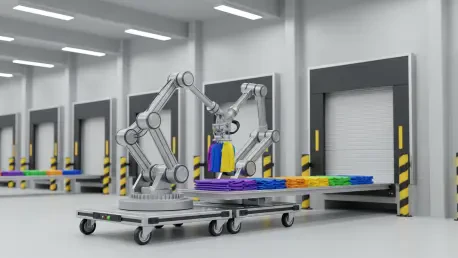
Managing the flow of outgoing goods is relatively straightforward compared to the chaotic nature of incoming returns, which often arrive in various states of disarray and require meticulous inspection. In Germany and throughout much of Europe, consumers utilize generous return policies that result in approximately half of all ordered apparel being sent back to the warehouse for reprocessing. Traditionally, this task has been the exclusive domain of human workers because machines struggled with the tactile complexity of soft fabrics, varying packaging types, and the need for delicate refolding. Sereact has addressed this specific pain point by developing dual-arm systems capable of performing these nuanced movements with a precision that mimics human interaction. By automating the unpacking and folding of garments, these robots are transforming a previously manual bottleneck into a streamlined, high-speed operation that operates with consistent quality.
The economic burden of manual returns processing has forced retailers to reconsider their entire logistics architecture, as the cost of human labor and the shortage of available workers continue to escalate. Beyond the simple act of picking and placing, the returns process involves identifying defects, verifying items against original orders, and preparing them for resale in a way that meets consumer expectations. Sereact’s involvement provides a scalable framework that allows companies like Zalando to maintain high throughput even during peak seasons when return volumes typically spike. This capability is essential for maintaining profitability in a market where shipping costs and operational overhead are constantly rising. By integrating advanced sensing technology with robotic arms, the system can differentiate between various materials and determine the most efficient way to handle each item without damaging the goods or the packaging, ensuring a seamless circular flow.
Cortex OS: Predictive Intelligence and the Data Flywheel
The intelligence driving these robotic systems has evolved from basic reactive algorithms to a more sophisticated platform known as the Cortex operating system. While early industrial robots were limited to repetitive, pre-programmed paths, the latest Cortex 2.0 iteration utilizes a learned world model to anticipate the consequences of its movements before they are executed. This predictive capability allows the robot to internally simulate various scenarios, assessing potential risks and physical outcomes in a fraction of a second. Instead of merely reacting to an obstacle, the system understands the underlying physics of its environment, which enables it to handle delicate or oddly shaped items with unprecedented confidence. This shift from simple automation to cognitive reasoning is what allows these machines to function effectively in the unpredictable settings of a fashion warehouse where no two boxes or polybags are positioned exactly the same way.
One of the most significant advantages Sereact possesses is its reliance on a vast data flywheel generated from actual industrial operations rather than purely synthetic environments. With over 200 systems currently active in high-stakes settings like IKEA and BMW, the company has accumulated a massive library of over a billion production picks. This real-world experience provides the AI with a deep understanding of the subtle nuances found in industrial settings, from varying lighting conditions to the presence of dust and mechanical wear. Every successful pick and every minor error contributes to a centralized intelligence that improves the performance of every unit in the fleet simultaneously. This collective learning process ensures that the robots become more efficient and reliable over time, outperforming systems that are trained solely in laboratories. The volume of data allows the system to identify patterns that would be impossible to replicate in a simulation.
Strategic Engineering and Global Growth
Stability Over Novelty: The Case for Functional Hardware
In a market often captivated by the visual appeal of walking humanoid robots, Sereact has deliberately chosen a more pragmatic engineering path focused on functional efficiency. The company’s design philosophy prioritizes stability and operational longevity by utilizing dual-arm systems mounted on wheeled platforms rather than complex bipedal structures. This choice ensures that the robots have a lower center of gravity, which is crucial for maintaining safety and speed in high-traffic warehouse environments where heavy machinery is constantly moving. Wheeled platforms also offer significantly better battery life and lower maintenance costs compared to the energy-intensive mechanisms required for legged movement. By focusing on what works in a practical industrial context, Sereact avoids the technical hurdles and high failure rates associated with experimental humanoid designs. This functional approach ensures that the hardware is robust enough to handle the daily rigors of a logistics hub.
Beyond the immediate mechanical benefits, the integration of Sereact’s technology is deeply rooted in a commitment to industrial safety and rigorous regulatory compliance within the European Union. Adhering to CE marking and complex machinery safety standards is a prerequisite for any technology intended for use by global industrial giants. Sereact has prioritized these legal and safety requirements from the outset, ensuring that their robots can work safely alongside humans in busy warehouse environments. This focus on reliability builds a level of trust that is essential for enterprise-scale adoption, where safety violations can lead to significant liabilities and operational shutdowns. By meeting these high standards, the company has positioned its technology as a viable, long-term solution for organizations that require absolute certainty in their automation investments. This professional approach to compliance distinguishes Sereact from more experimental startups that may prioritize speed over safety.
Scaling General Robotics: From Europe to North America
Following the successful implementation of its technology across Europe, Sereact is now aggressively expanding its footprint with a new North American headquarters located in Boston. This strategic move is intended to bring its physical AI solutions to the massive and rapidly evolving logistics market in the United States, where the demand for automation is at an all-time high. The Boston area provides access to a rich ecosystem of robotics talent and research institutions, which will support the company’s efforts to adapt its technology for new industrial applications. By establishing a local presence, Sereact can better serve its growing list of international clients and provide the localized support necessary for large-scale rollouts in the Western Hemisphere. This global expansion marks a new chapter for the company as it moves beyond its regional roots to become a dominant force in the international robotics industry, proving the universal applicability of its core intelligence platform.
The vision for Sereact’s technology extends far beyond simple warehouse picking and returns processing, aiming to create a universal intelligence for complex industrial assembly. As the general robotics brain matures, it is being applied to tasks that require even higher levels of precision, such as joining components in automotive manufacturing or handling fragile materials in electronics assembly. This expansion into broader industrial sectors highlights the versatility of the Cortex OS and its ability to learn and master diverse physical tasks. By providing a unified software platform that can drive various hardware configurations, Sereact is positioning itself as the operating system for the next generation of industrial automation. This transition toward more complex labor-intensive tasks signifies a maturation of the physical AI market, where machines are no longer limited to the most basic movements but are becoming integral partners in the manufacturing and distribution processes.
The partnership between Zalando and Sereact demonstrated that the most effective path toward full automation was rooted in the combination of advanced predictive AI and pragmatic hardware design. By focusing on the high-volume challenge of e-commerce returns, these organizations provided a blueprint for how other sectors could tackle their most persistent labor bottlenecks through the application of physical intelligence. Decision-makers within the logistics industry recognized that the transition to robotic systems required more than just purchasing hardware; it necessitated a commitment to data-driven learning and a willingness to integrate AI into every level of the supply chain. The move toward a general-purpose robotic brain allowed for greater flexibility, ensuring that investments remained valuable even as market demands shifted over time. Ultimately, the successful deployment of these systems highlighted the importance of prioritizing safety, regulatory compliance, and functional reliability over the pursuit of aesthetic novelty in industrial technology.