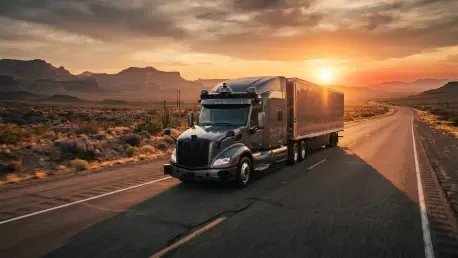

Kodiak AI is challenging the traditional logistics model by pricing its autonomous driver software at approximately ninety-seven cents per mile, a figure that intentionally mirrors current human labor rates. This strategic decision marks a significant departure from the historical narrative that suggested autonomous technology would immediately undercut human labor costs to gain market share. Instead, the partnership with DTL Transport highlights a shift toward a Driver-as-a-Service (DaaS) model, where the value proposition is rooted in operational reliability rather than labor savings alone. DTL Transport, a specialized carrier based in California, focuses on the transportation of perishable goods, a sector where the window of viability for cargo is exceptionally narrow. By integrating Kodiak’s self-driving stacks into its existing fleet, the company is not merely seeking to replace drivers but to fundamentally alter the productivity of its capital-intensive assets. This agreement represents one of the first binding commercial contracts that moves beyond the experimental phase into a structured, long-term deployment, proving that mid-market carriers are ready to lead the transition into high-tech logistics.
Enhancing Operational Efficiency and Asset Value
Redefining Asset Utilization: Round-the-Clock Logistics
The primary economic driver behind this partnership is the ability to bypass Federal hours-of-service regulations that currently limit human drivers to eleven hours of operation per day. Because an autonomous tractor does not require sleep or mandatory rest breaks, it can operate nearly twenty-four hours a day, effectively doubling the annual mileage of a single truck. In the current 2026 landscape, a conventional truck might cover one hundred thousand miles a year, whereas Kodiak and DTL are forecasting annual distances of approximately two hundred twenty-five thousand miles per vehicle. This transformation allows carriers to move significantly more freight with the same amount of capital equipment, turning a static asset into a relentless profit engine. The capability to run trucks through the night and across major corridors without interruption changes the fundamental math of logistics, offering a path to extract two trucks of output from a single tractor. This efficiency is not just about speed but about maximizing the return on investment for the hardware that carriers already own.
Competitive Advantages: The Case for Perishable Goods
For a specialized carrier like DTL Transport, the shift to continuous operations offers a massive boost in transit speed that directly impacts the bottom line. In the world of perishable logistics, faster delivery times correlate to fresher products and higher margins for end consumers. By reducing the time a truck spends sitting in a rest area or waiting for a driver swap, DTL can provide a level of service that traditional human-operated fleets cannot match. This efficiency makes autonomous technology especially attractive to regional haulers dealing with high-value, time-sensitive cargo where shelf life is the primary constraint. Furthermore, the predictability of autonomous systems allows for tighter scheduling and more reliable delivery windows, which are essential for maintaining supply chain integrity in the food and beverage industry. As these systems become more integrated, the advantage will shift toward those who can guarantee arrival times with surgical precision, effectively decoupling logistics from the physical limitations of the human body and the variability of driver availability in a tightening labor market.
Strategic Market Positioning and Financial Viability
Securing Investor Confidence: The Binding Contract Strategy
While the contract with DTL Transport is not set to begin full-scale operations until 2028, its immediate value lies in its role as a proof of concept for the investment community. Kodiak is currently managing a significant cash burn rate, and securing long-term commitments from mid-market carriers serves as tangible evidence of market demand. These agreements function as essential exhibits for venture capitalists, providing the necessary leverage for the company to secure the funding required to survive the gap between development and full-scale commercialization. By pricing the technology at parity with human labor at ninety-seven cents per mile, Kodiak avoids the race to the bottom that could occur if it attempted to win market share solely on price. This strategy positions the technology as a seamless line-item substitute on a carrier’s balance sheet, making it easier for financial officers to approve the transition. The focus remains on the superior output of the autonomous system, which provides more value per mile than a human driver even if the nominal cost remains the same in the short term.
Targeting the Mid-Market: A Path to Agile Integration
Kodiak’s decision to focus on mid-market carriers, specifically those with fleets ranging from fifty to five hundred trucks, was a deliberate tactical choice that the industry observed throughout the past year. Unlike mega-carriers that often have slow-moving bureaucracies and aggressive negotiation tactics, mid-market firms like DTL Transport are typically more agile and capable of integrating new technology at startup speed. By helping these smaller, flexible organizations adopt autonomous solutions, Kodiak can validate its technology in real-world lanes while avoiding the logistical hurdles often found in massive corporate infrastructures. The successful execution of the driver-out pilot on the Interstate 45 corridor between Dallas and Houston provided the necessary data to convince these carriers that the 2028 roadmap was technically feasible. Actionable steps for other fleets now involve identifying specific high-traffic regional lanes where continuous uptime provides the highest margin. The industry move toward these agile partnerships indicated that the future of trucking would be defined by those who can adapt their operations to accommodate twenty-four-hour cycles rather than those who simply wait for the technology to become a commodity.