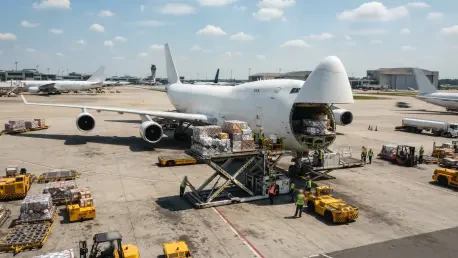

Marie Owens Thomsen, IATA’s Chief Economist, has highlighted that shipping goods profitably is becoming nearly impossible as cargo yields lag behind historical fuel price spikes. This stark reality defines the current global air cargo industry, which finds itself trapped in a perplexing paradox where surging shipment volumes fail to translate into healthy balance sheets. As of September 2026, the sector recorded a robust 7.7 percent year-over-year increase in demand, a figure that would typically signal a period of immense prosperity and expansion. However, this momentum is being countered by an extremely volatile energy market that has seen jet fuel prices skyrocket by over 103 percent in a single year. While the global trade environment remains resilient, the escalating operational overhead is rapidly eroding the margins of even the most efficient carriers. This situation forces industry leaders to evaluate whether the sheer volume of goods can eventually outpace the crushing weight of energy inflation or if a total structural shift in pricing is required to maintain the long-term viability of global air logistics.
The Imbalance of Market Dynamics
Market Equilibrium: Analyzing Demand, Capacity, and Load Factors
A deep dive into the recent performance metrics reveals a significant and widening gap between the global appetite for air freight and the actual capacity available on cargo aircraft. During the latter half of 2026, international demand for shipping services surged by 8.6 percent, yet the growth in available cargo tonne-kilometers was limited to a mere 3.3 percent. This discrepancy has pushed cargo load factors to significantly higher levels, as airlines maximize every cubic inch of space within their holds to meet the needs of international shippers. While a higher load factor is usually the hallmark of an efficient operation, the current environment is unique because these efficiency gains are being completely offset by the monumental 103.4 percent annual increase in fuel costs. The scarcity of space allows carriers to theoretically demand premium rates, but the pace of these yield increases is not sufficient to cover the nearly two-fold increase in the price of jet kerosene over the last twelve months of operation, creating a high-efficiency trap for most modern airlines.
Industrial Momentum: Macroeconomic Drivers and Manufacturing Trends
Despite the severe financial pressures stemming from the fuel market, the fundamental drivers supporting the air cargo sector have remained remarkably resilient throughout 2026. The Global Manufacturing Output Purchasing Managers’ Index reached a five-year high of 53.8, indicating that the production of physical goods is expanding at a healthy pace across major industrial hubs. This industrial momentum is further supported by the New Export Orders Index, which climbed to 51.9, ensuring a steady and reliable pipeline of freight for the foreseeable future. A significant portion of this growth is attributed to the continued proliferation of artificial intelligence technologies, which has triggered a surge in the shipment of high-value electronic components and specialized hardware across major transpacific corridors. As technology companies race to build out their infrastructure, the demand for rapid, reliable air transport becomes non-negotiable, providing a solid foundation for the cargo market even as the broader economy faces headwinds from energy costs and inflation.
Regional Performance and Trade Lane Divergence
Regional Variance: Geographic Leaders and Emerging Market Constraints
Geographic performance across the world remains highly fragmented, with North America emerging as the clear growth leader by posting an 11.8 percent increase in demand during the most recent reporting period. This surge is particularly notable because it occurred while regional capacity grew by only 0.8 percent, creating a highly competitive market for shippers who are desperate to secure space on limited flights. Meanwhile, European carriers have faced a different set of challenges, seeing a modest 4.5 percent rise in demand while simultaneously experiencing a 1.6 percent contraction in available capacity. This intentional or forced reduction in space has pushed Europe’s cargo load factor to a global high of 54.6 percent, indicating that while they are carrying less total volume than some other regions, they are doing so with a much higher degree of utilization. These variations demonstrate that there is no one-size-fits-all experience in the current market, as each region struggles to balance its unique capacity constraints against the rising costs of fuel.
Trade Flow: Significant Fluctuations in Global Trade Corridors
The performance of specific trade corridors provides a more granular view of how global commerce is shifting in late 2026, with the Asia–North America lane standing out as a massive success story. This route saw a 17.0 percent surge in traffic, marking eight months of continuous growth for a corridor that represents nearly a quarter of all global air cargo activity. Similarly, routes within the Asian continent grew by 10.2 percent, extending a growth streak that has now lasted for 35 consecutive months. This regional strength is largely a reflection of the high demand for semiconductor shipments and consumer electronics that originate in manufacturing hubs like Taiwan and South Korea. However, the Middle East is navigating a much more difficult environment, as trade lanes connecting the region to Europe and Asia have faced sustained declines. Traffic between the Middle East and Europe plummeted by 18.0 percent, highlighting a regional disconnect that forces global carriers to be highly agile, shifting assets away from declining zones toward booming transpacific routes.
Forward Path: Resilience and Strategic Shifts in Aviation
The air cargo industry navigated a complex landscape throughout 2026, proving its essential role in global supply chains while facing its most severe financial challenge in recent memory. While the support from manufacturing and the explosion of AI-driven trade kept cargo holds full, the persistent pressure of doubled fuel costs meant that operational success did not always lead to fiscal health. Moving forward, carriers had to prioritize the implementation of more dynamic and aggressive pricing models that could respond in real-time to energy price fluctuations. Strategic investments in fuel-efficient fleet modernization and the acceleration of sustainable aviation fuel adoption became the primary methods for mitigating long-term risk. Furthermore, logistics providers were encouraged to diversify their routing to avoid declining trade corridors and focus on high-yield technology markets. By shifting away from volume-based growth and toward a yield-focused strategy, the industry sought to restore the balance between global demand and sustainable profitability.