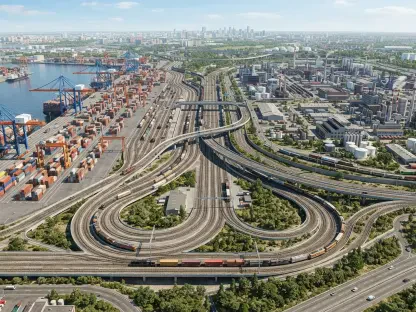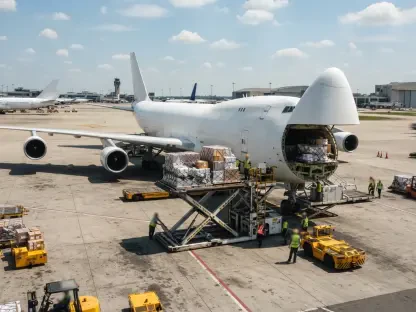

The unprecedented integration of artificial intelligence into physical infrastructure is currently forcing global enterprises to fundamentally rethink how goods cross borders and reach doorsteps. As the current year progresses, the logistical sector is no longer viewed as a mere utility but has instead emerged as a primary engine of economic growth and competitive advantage. The 2027 Prologis Global Supply Chain Outlook, developed alongside The Harris Poll, provides a panoramic view of this transformation by synthesizing perspectives from 1,800 leaders in the United States, United Kingdom, Germany, India, China, and Mexico. This comprehensive study marks a definitive shift in the industry, where delivery speed, energy infrastructure, artificial intelligence, and geopolitical agility form the four critical pillars of modern commerce.
Navigating the Modern Logistics Landscape: A Global Perspective
Modern commerce is undergoing a structural realignment that favors resilience over simple cost-cutting. By engaging with key decision-makers across six major economies, the report captures a consensus that the old models of supply chain management are insufficient for the current decade. Logistics has transitioned from a back-end support function to a central strategic lever, where the efficiency of a warehouse or a shipping route can determine the ultimate success of a global brand.
The global scope of the research emphasizes that while regional challenges vary, the pressure to modernize is universal. In markets like India and China, the focus often leans toward rapid scalability, whereas in the United States and Germany, the emphasis shifts toward sophisticated automation and regulatory compliance. Regardless of the region, the findings suggest that the strategic pillars of speed and energy are now the most significant determinants of a company’s ability to navigate the complexities of the current market.
Transforming Operations through Speed and Intelligence
The New Baseline: Meeting the Demand for Instant Gratification
Consumer psychology has undergone a radical shift, effectively moving the goalposts for what constitutes acceptable service. Fulfillment windows that once spanned a week have contracted to a standard of 24 to 48 hours, a change that 91% of business leaders recognize as the current industry benchmark. Over recent years leading to the current market, the capability of organizations to provide same-day or next-day delivery has surged from 24% to 58%, reflecting a massive reallocation of capital toward last-mile infrastructure and localized inventory management.
This acceleration has changed the very nature of competition. While pricing strategies were once the primary way to gain market share, speed and reliability have now emerged as the dominant differentiators. Customers are increasingly willing to pay a premium for certainty, forcing companies to prioritize the consistency of their delivery networks over the traditional pursuit of the lowest possible transportation costs.
Data-Driven Projections for AI and Automation Adoption
The narrative surrounding artificial intelligence has moved from theoretical potential to practical application. Current projections indicate that roughly 75% of industry leaders are targeting AI investments specifically for demand forecasting and inventory replenishment. These tools allow companies to anticipate market shifts with a level of precision that was impossible only a few years ago, effectively reducing the capital tied up in unsold goods.
Moreover, the rise of agentic AI—systems capable of autonomous decision-making—is set to disrupt established hierarchies. These technologies enable smaller, more agile players to challenge industry giants by optimizing complex logistical routes and warehouse workflows with minimal overhead. This democratizing effect of technology means that established leaders must innovate rapidly or risk being bypassed by tech-forward newcomers who leverage AI to achieve superior operational efficiency from 2026 to 2028.
Critical Obstacles in Power Access and Global Stability
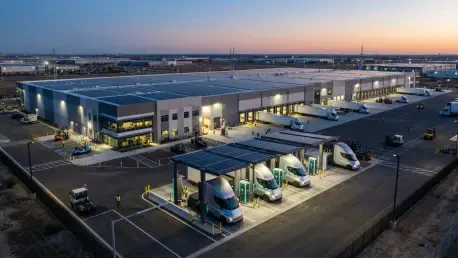
The logistics industry is currently facing a silent crisis centered on electricity. High-density warehousing and the massive computational requirements of AI have led to a surge in power demand that often outstrips existing local infrastructure. Consequently, energy reliability has risen to become a primary factor in choosing new facility locations, as companies seek to insulate themselves from grid instability and rising utility costs.
Operating expenses are being further squeezed by fluctuations in the global supply of liquified natural gas and ongoing disruptions in major shipping corridors. These factors, combined with the need for high-voltage connections for electric fleet charging, mean that energy management is now as critical as labor management. Organizations are increasingly looking toward on-site renewable generation and sophisticated battery storage solutions to mitigate these financial and operational risks.
Compliance, Regulation, and the Geopolitical Framework
Global trade policies are currently undergoing a period of intense fragmentation, leading to the rise of regionalized economic zones. This shift is a direct response to evolving international laws and the perceived risks of over-extended supply chains. The move toward nearshoring and reshoring is no longer just a trend but a strategic imperative for companies looking to minimize the impact of international trade tariffs and shifting regulatory requirements.
Navigating these complexities requires a robust framework for risk management and security. As trade becomes more regionalized, companies must balance the benefits of proximity to their markets with the challenges of higher labor costs and differing regulatory standards. Protecting supply chains against geopolitical volatility now involves a sophisticated mix of legal compliance, local political engagement, and a diversified sourcing strategy.
Future Horizons: The 2027 Strategic Roadmap
Looking toward the coming years, energy has effectively become the new geography. The decision of where to build a hub is now dictated more by the availability of a stable and powerful electrical grid than by simple proximity to highway intersections. This convergence of clean energy access and sophisticated, AI-driven logistics hubs is creating a new blueprint for industrial development that prioritizes long-term sustainability alongside operational speed.
The agile supply chain is becoming a permanent fixture in global commerce, characterized by its ability to pivot in response to sudden market disruptions. This roadmap emphasizes that the winners will be those who can integrate technological sophistication with physical infrastructure. The future landscape will likely be dominated by logistics networks that function as integrated ecosystems, where data flows as seamlessly as the physical goods themselves.
Summary of Findings and Strategic Recommendations
The assessment of the global logistics landscape demonstrated that success depended on the successful marriage of high-speed delivery systems with a stable energy foundation. Stakeholders were encouraged to prioritize energy security as a core component of their real estate and operational strategies. It became clear that investments in AI literacy were no longer optional but were essential for maintaining a competitive edge in a data-saturated market.
Leading organizations took proactive steps to diversify their energy sources and integrate autonomous decision-making into their core workflows. By focusing on these long-term stability factors, they were able to build a more resilient economic framework that could withstand the pressures of geopolitical shifts. The evolution of logistics ultimately moved toward a model where innovation and sustainability were the primary drivers of growth.