
The logistics sector is no longer just about storing boxes; it has become an intricate dance of digital intelligence and physical execution that demands more than what traditional software can provide. As global supply chains transition from static storage to dynamic fulfillment centers, the limitations of legacy Warehouse Management Systems (WMS) have become clear.
These older platforms act primarily as record-keepers, trailing behind the real-time needs of modern commerce. In contrast, the arrival of JASCI Phoenix™ signals a shift toward AI-native architecture, where intelligence is woven into the foundational code rather than being added as a superficial layer.
The Paradigm Shift in Modern Logistics and Warehouse Orchestration
Current market dynamics require a departure from reactive models that struggle with labor shortages and trade volatility. Modern facilities now operate as high-velocity hubs where traditional WMS architecture often acts as a bottleneck rather than an enabler of efficiency.
The emergence of JASCI Phoenix™ demonstrates how AI-native systems move beyond basic cloud connectivity to offer deep operational reasoning. By prioritizing an autonomous technological foundation over legacy frameworks, logistics leaders can better navigate the complexities of global trade.
The Technological Evolution Driving Intelligent Fulfillment
Emerging Trends in Autonomous Reasoning and Agentic Workflows
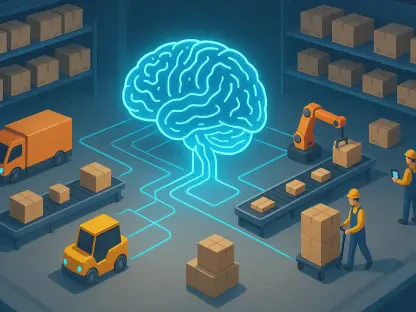
Innovation has moved beyond simple chatbots toward intelligent agents that facilitate cross-functional collaboration. Within the “AI Studio” environment, these specialized agents communicate to solve hurdles, shifting workflows from manual triggers to proactive, autonomous decision-making.
Furthermore, the introduction of “AI Remote Control” allows the system to automate administrative execution and form-filling. This capability allows developers to ship new features fifty times faster than the previous industry norm, ensuring software stays ahead of physical demands.
Market Projections and the Rise of AI-Driven Efficiency
Analysis suggests significant growth for AI-integrated logistics through 2030 as companies seek scalable solutions. With platforms already processing four billion annual transactions, the reliability of these AI-native ecosystems is firmly established for large-scale operations.
This technological rise facilitates a transition from “human-in-the-loop” to “human-on-the-loop” operational models. In this setup, the software manages granular tasks while human operators focus on high-level system supervision and strategic exceptions.
Navigating the Obstacles of Legacy Modernization and Integration
Modernizing remains a significant hurdle because refactoring millions of lines of legacy code requires immense focus. Eliminating the silo effect between inventory and labor is the primary goal of this digital transformation to ensure data flows freely.
Integrating heterogeneous robotics into a single AI layer remains complex but necessary for a unified operating environment. Consequently, the workforce must pivot from manual data entry to supervising these sophisticated autonomous systems effectively.
Standards, Security, and Compliance in the Age of Autonomous AI
Regulatory landscapes for data privacy are evolving alongside cloud-based warehouse environments to protect sensitive information. Ensuring ethical AI reasoning is crucial for maintaining transparency in every autonomous logistical decision made by the system.
Adherence to international shipping standards and labor safety remains a priority within automated facilities. Robust cybersecurity measures are now non-negotiable for systems handling billions of global transactions to prevent disruptions in the supply chain.
The Future Landscape of AI-Native Supply Chain Operations
A total convergence of WMS, Warehouse Execution Systems, and Robotics Control Systems is now underway. This unified approach enables self-healing supply chains that adjust to market disruptions without requiring human intervention for every minor adjustment.
Consumer demand for hyper-fast delivery is pushing the industry toward ambient and voice-driven interactions. Moving away from traditional screens allows for a more intuitive environment where agents and humans work together seamlessly.
Strategic Outlook: Embracing the AI-Native Logistics Era
Logistics leaders recognized that investing in scalable, AI-first infrastructure was the only way to maintain a competitive advantage. They discovered that rapid software iteration cycles allowed their operations to pivot instantly when global trade shifts occurred.
This transition solidified AI-native systems as the new standard for excellence in fulfillment and warehouse management. Organizations that moved toward autonomous reasoning successfully bypassed the rigidity of legacy code to secure their place in the modern market.