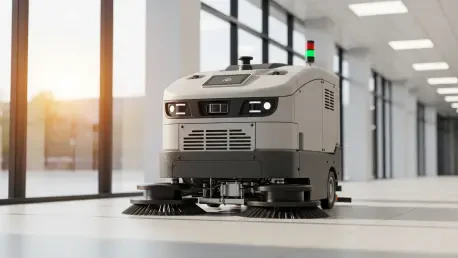

A Strategic Alliance to Modernize the Floor-Cleaning Industry
The rapid convergence of artificial intelligence and heavy industrial machinery is effectively dismantling the traditional barriers that once limited the widespread adoption of autonomous maintenance systems across global logistics hubs. Tennant Company and Brain Corp recently finalized an expanded strategic partnership, signaling an aggressive move toward large-scale automation in the cleaning sector. This collaboration rests on a three-year exclusivity agreement intended to expedite the delivery of next-generation robotic solutions. By blending Tennant’s manufacturing heritage with Brain Corp’s AI expertise, the venture expects to introduce 10 new products within the next two years, aiming to transform autonomous cleaning into a $250 million business segment by 2028.
The Evolution of Automation in Commercial Maintenance
Commercial maintenance has transitioned from a manual labor-intensive model to a sophisticated technology-driven ecosystem as demographic shifts and rising operational costs create a vacuum in the workforce. Previous years saw robotics move from niche prototypes to enterprise tools, but the current market demands a higher degree of spatial intelligence and reliability. Foundational developments in sensor technology and machine learning have allowed companies to navigate complex environments with minimal human oversight. This historical trajectory explains why the move to scale is not merely a technical upgrade but a necessary structural response to a global labor crisis.
Strengthening the Foundation of Autonomous Cleaning Technology
Synergizing Hardware Excellence with AI Intelligence
The integration of Brain Corp’s BrainOS into Tennant’s heavy-duty machinery represents a pivotal shift toward true operational autonomy in high-traffic settings. A prime example is the X16 SWEEP, a robotic sweeper engineered for the relentless demands of logistics centers where environmental variables change by the minute. These machines are designed to maximize uptime and cleaning consistency, providing a tangible solution to the unpredictability of manual scheduling. However, the success of such deployments hinges on the ability of hardware to endure 24/7 industrial stress while the software maintains high-fidelity data processing.
Streamlining the Customer Experience through a Unified Model
A major hurdle in the adoption of advanced robotics has historically been the fragmented support system that forced clients to manage hardware and software issues through separate vendors. To resolve this, the partnership established a unified customer model where Tennant serves as the singular point of contact for sales, maintenance, and technical support. This consolidation allows Brain Corp to dedicate its resources to advancing AI and cybersecurity protocols without the distractions of physical logistics. Consequently, this “one-stop-shop” approach lowers the barrier to entry for businesses that previously viewed robotics as too complex to integrate into traditional facilities.
Navigating Technical Complexities and Security Standards
Scaling these technologies requires addressing sophisticated technical and regulatory challenges that vary across global regions and industrial sectors. Misconceptions persist that autonomous cleaners function as simple plug-and-play devices, whereas their efficacy actually depends on rigorous safety standards and transparent performance data. By prioritizing data integrity and human-robot collaboration, the alliance ensures that these machines assist overstretched teams rather than seeking to replace the human element entirely. Navigating these socioeconomic nuances is essential for fostering trust among enterprise clients who require reliable and secure automation.
Scaling the Next Generation of Industrial Robotics
The trajectory from 2026 to 2028 is expected to be defined by specialized robotics designed for hyper-specific facility layouts and floor types. Market trends indicate a move away from general-purpose machines toward intelligent platforms that utilize predictive analytics to optimize resource allocation. As AI capabilities expand, these units will become more intuitive, requiring less initial programming and offering better adaptability to dynamic surroundings. Experts anticipate that autonomous cleaning will soon evolve from a premium service into a baseline requirement for any modern commercial real estate portfolio.
Strategic Pillars for Implementing Robotic Solutions
To capitalize on this shift, facility managers should prioritize identifying specific labor gaps where autonomous sweepers can offer the most significant return on investment. Successful implementation requires choosing partners that provide comprehensive lifecycle support to minimize potential downtime during the transition phase. Furthermore, stakeholders must utilize the data generated by these autonomous fleets to validate performance metrics and improve the overall transparency of maintenance operations. Viewing these tools as strategic assets rather than simple equipment replacements will likely yield the best long-term productivity gains.
Shaping the Future of Autonomous Facility Management
The expansion of the partnership between Tennant and Brain Corp provided a decisive roadmap for the industrialization of autonomous floor care. By focusing on scalability and technical synergy, these organizations dismantled the operational silos that once hindered the growth of high-tech maintenance fleets. This alliance demonstrated that the path to operational efficiency required a blend of hardware durability and software intelligence. Moving forward, businesses looked to these integrated solutions to secure their facilities against labor volatility and to establish a new standard for environmental safety and consistency.