
Rohit Laila stands at the forefront of a logistical revolution, possessing a career that bridges the gap between traditional supply chain grit and the high-tech frontier of 2026. With decades of experience navigating the complexities of global delivery networks, he has witnessed the transition from manual ledger entries to the sophisticated, agentic AI systems that now define the industry. Laila is not merely a proponent of technology; he is a strategist who argues that the true challenge of our era is not the adoption of software, but the fundamental redesign of organizational management. His perspective is deeply rooted in the belief that efficiency and resilience are the twin pillars of a modern supply chain, and his insights provide a roadmap for leaders attempting to harmonize human judgment with machine intelligence.
The core of our discussion centers on the evolution of AI from a predictive tool to an autonomous collaborator. We explore the critical hurdles of data integrity and the often-misunderstood distinction between simple automation and true business transformation. Laila shares his perspective on the “prediction-action gap,” the necessity of robust AI governance, and the shifting role of the human worker in a landscape increasingly populated by digital twins and humanoid robots. By examining the five priorities of visibility, prediction, automation, collaboration, and trust, he outlines how organizations can move beyond “firefighting” to a state of proactive, strategic readiness.
Moving from simple automation to a complete management redesign requires a fundamental shift in perspective. How should leaders distinguish between merely speeding up a process and actually transforming it for the better?
The most common trap I see is what I call “automation without transformation.” Many leaders look at a chaotic, inefficient process and think that throwing a Robotic Process Automation or a few digital workers at it will solve the underlying rot. In reality, automation can be a double-edged sword; if you automate an invoice matching or order processing system that is fundamentally broken, you are simply making mistakes faster. True transformation requires a systematic reengineering where we use business systems techniques to understand, document, and simplify the workflow before a single line of code is applied. We are now seeing digital workers handle routine tasks across finance, procurement, and sales, but the real impact comes when we redesign organizational structures and responsibilities to suit this new capability. It is about asking whether a process should even exist in its current form, rather than just finding a machine to do it.
Data integrity is frequently cited as the primary barrier to AI implementation. From your experience, how do fragmented systems—like disparate ERPs and local spreadsheets—impact a manager’s ability to make real-time decisions today?
The first barrier to success is almost never the complexity of the algorithm; it is the messy, fragmented state of the organization’s data. Even in 2026, many supply chains are still running on a precarious mixture of warehouse systems, procurement platforms, and those infamous local workarounds or spreadsheets that live only on one person’s desktop. When data is duplicated, out of date, or locked in the heads of specific employees, the AI is essentially flying blind, which creates a massive hurdle for accurate predictions. This lack of visibility leads to excess stock, poor service levels, and the constant, draining need for costly expediting. Managers cannot improve what they cannot see, and without a unified data foundation, they are forced to rely on assumptions rather than the hard evidence required for high-stakes decision-making.
There is often a significant gap between prediction and action. How can managers bridge this divide so that a forecast of rising demand actually results in tangible adjustments to procurement or production?
AI is incredibly proficient at prediction, but we have to remember that a prediction itself creates zero value unless it changes human or organizational behavior. I often see scenarios where a system correctly identifies a rising demand trend or a supplier risk, but the managers lack the authority or the pre-defined routines to act on that knowledge in time. For an AI-driven insight to matter, procurement and production plans must be flexible enough to adjust mid-stream, and the organization must have alternative sources or contingency contracts ready to go. We need to move away from “decorative analytics” and ask a very practical question: “If the AI tells us this three days earlier, what can we actually do differently?” Data proficiency is only as good as the decision-making ability it supports; managers need the options and the confidence to pivot before the disruption actually unfolds.
As we move toward agentic AI that can autonomously detect risks and trigger rerouting, how do we maintain accountability and “meaningful human oversight” without slowing down the system?
Trust and accountability become much more complex as we move from simple recommendations to these agentic systems that plan tasks and update enterprise systems with limited human involvement. If an AI agent autonomously selects a supplier that eventually fails or causes an ethical breach, the blame game begins—is it the procurement manager, the software vendor, or the person who set the original rules? We cannot have humans reviewing every single one of the thousands of decisions made daily because that would negate the speed advantage of the technology. Instead, we need stronger AI governance that acts not as a brake, but as a framework for responsible use, clearly defining when a human must step in and how decisions can be audited. It is about creating a “monitoring by exception” model where the AI acts within agreed boundaries, and the human provides the strategic and ethical guardrails that a machine simply cannot possess.
The workplace is changing, with planners becoming “exception managers” and warehouse staff working alongside robots. How do you see these shifting roles affecting workforce trust and morale?
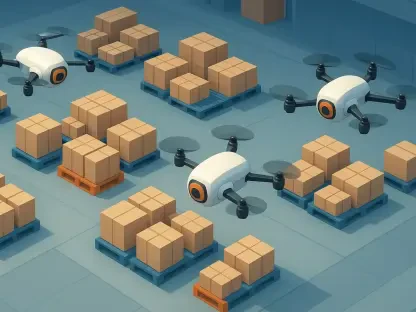
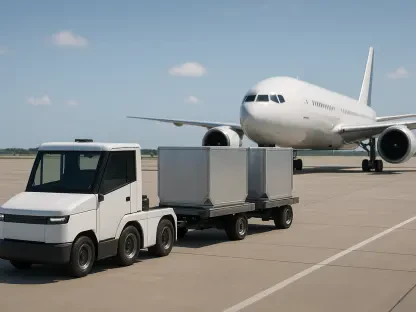
AI is fundamentally shifting the nature of work away from repetitive, rules-based tasks and toward roles that require deep analytical judgment and relationship management. We see stock checking and basic scheduling being taken over by machines, which naturally creates anxiety about job losses, but the more interesting story is how existing jobs are evolving. Planners are no longer just crunching numbers; they are interpreting complex risks, while warehouse workers are becoming high-level collaborators with humanoid robots and autonomous vehicles. This evolution requires a massive investment in reskilling and a thoughtful redesign of work to ensure that efficiency gains do not come at the expense of social responsibility. When people are involved in shaping how the AI is used and they see it as a tool that removes the “drudgery” of their day, trust begins to build, and the focus shifts to more meaningful, high-value strategy.
Deep-learning demand sensing is replacing traditional rule-based forecasting. What are the specific external signals that make this approach so much more responsive than historical data alone?
Traditional forecasting was often stuck looking in the rearview mirror, relying on historical sales and seasonality, but AI-enabled demand sensing looks out the front windshield at a much wider world. We are now integrating signals like local weather patterns, social media trends, competitor moves, and even online search activity to spot shifts in consumer behavior before they ever show up in a sales report. By shortening the time between a signal and a response, companies are seeing significant reductions in inventory holding costs and turnover rates while avoiding the sting of stockouts. It is a more “organic” way of planning that acknowledges that the market is a living system influenced by everything from local events to global supply disruptions. This level of responsiveness allows us to be proactive, matching our capacity to real-world signals rather than outdated spreadsheets.
In the context of workforce and capacity planning, how can AI help managers move away from “firefighting” and toward proactive resource coordination?
Many organizations suffer not from a lack of resources, but from having those resources—labor, equipment, and capacity—in the wrong place at the wrong time. AI and optimization tools are now being used to match these shifting constraints in real-time, which is critical in manufacturing and retail fulfillment where demand can change by the hour. Instead of managers spending their entire day reacting to the latest crisis or labor gap, the system can provide a proactive view of where the bottlenecks will occur. This allows for a more fluid allocation of the workforce and equipment, ensuring that we are meeting service requirements without the exhaustion of constant, unplanned shifts. It turns resource management into a disciplined, data-driven exercise rather than a series of frantic, last-minute adjustments.
Digital twins are often described as virtual representations, but you’ve noted their real value lies in testing scenarios. What are some of the most critical “what-if” questions a manager should be asking their digital twin today?
A digital twin’s true power is that it provides a safe, virtual space to fail before the consequences become real and expensive. Managers should be using these systems to ask, “What happens if our primary warehouse loses half its capacity tomorrow?” or “What if a major customer suddenly changes their ordering pattern by 40 percent?” We can test the impact of a key system going down or even see how adding a carbon constraint to our routing decisions will affect our overall delivery speed and cost. AI strengthens these twins by running thousands of simulations, helping us identify patterns and vulnerabilities that aren’t obvious to the naked eye. It turns resilience from a vague concept into a practical, testable tool, giving us the time to act and prepare while the disruption is still just a line of code in a simulation.
Sustainability is no longer a separate department; it’s a daily operational requirement. How is AI integrating environmental goals like emissions tracking and waste reduction into the core decision-making process?
We have reached a point where sustainability must be baked into the daily decision rules, not just treated as a year-end report. AI is now being used to optimize routes for lower fuel consumption, consolidate loads to reduce the number of trucks on the road, and even manage energy usage across massive automated facilities. The key is to ensure that the AI isn’t just optimizing for the lowest cost or the fastest speed, but is also weighing carbon footprints, waste reduction, and the circular use of materials. By building these environmental factors into the optimization algorithms, we make responsible choices part of the automated workflow. This allows organizations to provide clear, audited evidence of their environmental performance while still maintaining the efficiency required to compete in a global market.
What is your forecast for the future of human-AI collaboration in logistics?
The future will not be a world where machines have replaced every human, but rather a sophisticated hybrid model where each side plays to its unique strengths. I expect to see an even more extensive collaboration where AI handles the data-heavy, repetitive, and time-sensitive tasks that often lead to human error and burnout, while people refocus their energy on ethics, complex relationships, and high-level strategy. The “winners” in this landscape will not necessarily be the ones with the most expensive technology, but the ones who understand where human judgment is non-negotiable and where machine speed is essential. We are moving toward a more adaptive, disciplined, and foresighted version of logistics that treats digital intelligence as a lever for both resilience and care. My advice for readers is to start with small, focused operational questions—find where your decisions are slowest or your visibility is lowest—and build your AI journey from those real-world pain points rather than an abstract strategy.