
The global shipping landscape at the close of 2026 has fundamentally shifted into a state of perpetual high-intensity friction, where the reliability of traditional trade routes is no longer a guaranteed constant for international commerce. This transformation reflects a period where the initial hopes for a return to pre-pandemic stability have been replaced by a “red-hot” shipping environment defined by geopolitical unrest, economic resilience, and severe operational bottlenecks. As the industry navigates the final quarters of 2026, the movement of goods is being dictated more by strategic protectionism and physical constraints than by the standard supply-and-demand metrics of the past. This analysis examines the complex intersection of forces driving these trends and outlines why the current volatility is likely a structural fixture of the new economic order rather than a passing phase.
The current state of the global logistics and freight market is a testament to the resilience of consumption in the face of widespread uncertainty. While various regions grapple with regional conflicts and trade tensions, consumer demand remains surprisingly robust, supported by significant investments in emerging sectors such as artificial intelligence and renewable energy infrastructure. However, this growth is not uniform across the globe; it creates a fragmented reality where tech-centric nations thrive while energy-importing economies struggle under the weight of rising fuel costs and supply chain instability. The purpose of this analysis is to provide a comprehensive view of these shifting dynamics, highlighting how the “rules-based globalization” that once governed the world is being replaced by a more defensive and strategic approach to trade.
As the year 2026 progresses, the disconnect between financial markets and geopolitical reality has become more pronounced. Even as major global indices show growth, the underlying infrastructure of trade is under immense pressure. The vulnerability of supply chains is heightened by the depletion of global inventories and the rising costs of energy, with oil prices recently breaching the threshold of $100 per barrel. These factors, combined with a volatile trade policy landscape, particularly in North America, have created an environment where shippers must constantly adapt to new tariffs and routing challenges. Understanding this landscape is essential for any stakeholder attempting to maintain a competitive edge in a world where the only certainty is change.
Navigating the Intersection of Geopolitical Turmoil and Economic Resilience
The resilience of the global economy throughout 2026 has remained a focal point for market analysts, as consumer spending and business investment have largely decoupled from the immediate shocks of regional conflicts. This phenomenon is largely driven by the continued expansion of digital economies and the massive influx of capital into artificial intelligence infrastructure, which has acted as a buffer against traditional economic downturns. While growth rates remain positive in many advanced economies, the uneven distribution of this prosperity highlights a deepening divide. Energy-dependent nations are currently facing a more difficult path, as the instability in the Middle East has driven transportation costs to levels that challenge the solvency of smaller trade participants.
The current geopolitical climate has forced a fundamental recalibration of how risk is assessed within the logistics sector. In the past, regional tensions were often viewed as temporary disruptions that could be mitigated through short-term rerouting or inventory adjustments. However, in 2026, these tensions are recognized as permanent variables in the supply chain equation. The risk landscape is now dominated by the threat of intensified maritime attacks and the constant possibility of trade wars between major partners. This has led to a situation where economic resilience is no longer just about growth, but about the ability of a nation or a company to absorb and adapt to repeated shocks without total system failure.
Furthermore, the surge in energy costs has reintroduced inflation as a primary concern for the logistics industry. The increase in oil prices is not merely a reflection of limited supply but a consequence of the strategic use of energy as a geopolitical lever. This has direct implications for every segment of the freight market, from the fuel surcharges applied to ocean containers to the operating costs of transcontinental air cargo. As global inventories reach their lowest points in several years, the margin for error in supply chain planning has virtually disappeared. The resilience shown by the global economy is thus a double-edged sword; it keeps demand high, which in turn keeps the pressure on an already strained and expensive logistical infrastructure.
From Predictable Trade to the Era of Strategic Protectionism
To understand the current logistical crisis, it is necessary to look at the broader historical shift from a world of lean, efficient trade to one defined by “just-in-case” survivalism. For several decades, the global economy functioned on the assumption that trade routes would remain open and that the cost of moving goods would remain relatively low and stable. This period of predictable globalization allowed for the rise of complex, multi-country supply chains that maximized efficiency at the expense of redundancy. However, the events of the mid-2020s have definitively ended this era, proving that the assumptions of stability were built on a fragile foundation of geopolitical cooperation that no longer exists.
The background of the 2026 market is one of strategic protectionism, where national security interests are increasingly prioritized over free trade. Governments around the world are no longer hesitant to use tariffs and trade restrictions as tools of foreign policy. This shift has significant roots in the early part of the decade, when the vulnerability of critical supply chains became a matter of national concern. Today, this has evolved into a system where trade is used to reward allies and penalize rivals, leading to a fragmentation of the global market. The transition from “just-in-time” to “just-in-case” logistics is a direct response to this environment, as businesses seek to build inventories and diversify sourcing to protect themselves from sudden policy shifts.
These historical factors matter because they explain why the high freight rates and low reliability observed today are not seasonal fluctuations. They represent a structural change in the global economy where the cost of security is being priced into every transaction. Shippers are no longer just paying for the physical movement of goods; they are paying for the management of geopolitical risk and the maintenance of expensive redundancies. As the era of predictable globalization fades into memory, the industry must come to terms with the fact that the foundations of trade have been permanently altered. This context is vital for understanding why traditional market signals often fail to predict the behavior of carriers and the movement of freight in the current year.
Analyzing the Mechanics of Market Fragmentation and Operational Strain
The Congestion Crisis: Port Bottlenecks and the Reality of Trapped Capacity
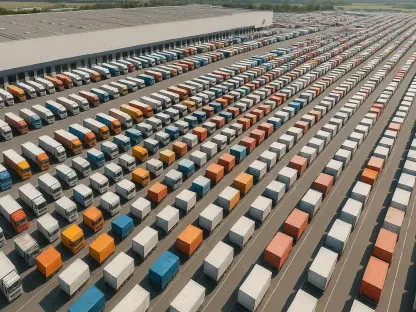
A defining characteristic of the 2026 maritime market is that port congestion has overtaken vessel supply as the most significant driver of freight rates. While there are technically enough ships in the global fleet to handle current demand, a staggering percentage of that capacity is currently “trapped” outside major ports. This phenomenon is caused by a combination of inland transportation delays, labor shortages, and physical infrastructure limitations that prevent ships from berthing and unloading efficiently. When 12% of the global fleet is waiting at anchor, it creates a phantom shortage that allows carriers to maintain high rates regardless of the actual volume of goods being moved.
The situation in Asian gateways like Shanghai and Ningbo illustrates the severity of this issue. These ports have been hit by a series of extreme weather events and vessel bunching that have pushed waiting times to historic levels. When a major terminal shuts down due to a typhoon or a labor dispute, the ripple effects are felt across the entire global network. Ships that are delayed in Asia cannot arrive on time in Europe or North America, leading to further congestion and schedule disruptions. This cycle of delay and congestion has become self-perpetuating, as the physical inability to clear backlogs means that every new arrival only adds to the tension in the system.
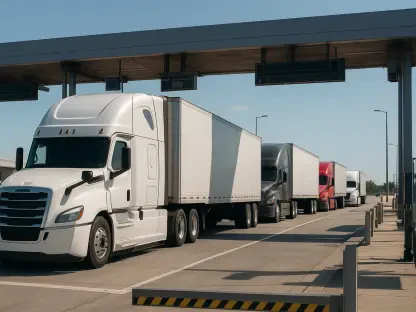
In Europe, the challenges are equally daunting but stem from different sources. Major ports such as Hamburg and Antwerp are struggling with a “triple threat” of labor strikes, pilot shortages, and declining water levels on key inland waterways like the Rhine. These factors have severely limited the ability of ports to move cargo to the interior, leading to overcrowded terminals and further delays for incoming vessels. The result is a market where the physical movement of containers is hindered by a lack of inland coordination and infrastructure resilience. For shippers, this means that even after a vessel arrives, there is no guarantee that their goods will reach their final destination within a reasonable timeframe.
The Suez Canal DilemmBalancing Prohibitive Fuel Costs Against Regional Risks
The maritime industry is currently facing a harrowing choice regarding the use of the Suez Canal, a chokepoint that has historically been the primary artery for trade between Asia and Europe. While security threats in the Red Sea remain a constant concern, many carriers are attempting a phased return to the route to avoid the massive fuel costs associated with circumnavigating the Cape of Good Hope. The financial reality of the situation is stark; as oil prices exceed $100 per barrel, the additional fuel required for the longer route can cost a carrier upwards of $5 million per trip for a single large vessel. This economic pressure is forcing a return to a high-risk zone despite the ongoing threat of maritime attacks.
However, the return to the Suez Canal does not signify a return to safety or stability. Shippers who choose this route must contend with soaring insurance premiums and the constant possibility of their cargo being caught in a regional conflict. The Red Sea remains classified as a high-risk area for war and terrorism, and the presence of international naval task forces has not completely eliminated the threat to commercial vessels. This creates a situation where shipping decisions are based on a complex calculation of risk versus reward, where the savings on fuel must be weighed against the potential for catastrophic loss or significant delay.
This dilemma highlights how regional conflicts now directly dictate the economics of global shipping. The “Strait of Hormuz Joker” remains a significant variable, as any further escalation in that region could lead to a total shutdown of critical lanes. For the logistics market, this means that rates are no longer tied to simple demand curves but are instead tethered to the volatility of international relations. The choice between security and solvency is one that carriers must make daily, and the resulting instability is passed down to shippers in the form of emergency surcharges and unpredictable schedules. This environment forces a level of strategic agility that was never required during the era of stable, low-cost maritime transit.
Trade Enforcement and the Crackdown on Shadow Transshipment Networks
Beyond the physical disruptions of ports and canals, the logistics landscape is being reshaped by an aggressive new era of trade enforcement. The United States and its allies have intensified their focus on “shadow transshipment networks,” which are used by various entities to bypass tariffs and trade restrictions. This crackdown is particularly focused on goods that are rerouted through third-party nations in Southeast Asia to mask their true origin. As a result, countries like Singapore and Vietnam are under intense scrutiny, with customs authorities demanding a much higher level of transparency and documentation regarding the rules-of-origin for all imported cargo.
This focus on regulatory compliance has added a significant layer of complexity to global sourcing strategies. Shippers are finding that they can no longer simply move production to a different country to avoid tariffs; they must now prove that the manufacturing process in that country adds sufficient value to meet strict origin requirements. Failure to do so can result in massive fines, the seizure of goods, and long-term exclusion from major markets. This “strategic protectionism” has turned the logistics department into a legal and compliance hub, where the ability to navigate trade law is just as important as the ability to find space on a ship or airplane.
Furthermore, the eruption of a trade war between the United States and Canada has introduced a new level of volatility to North American logistics. The implementation of retaliatory tariffs on a “dollar for dollar” basis has disrupted one of the world’s most integrated trading relationships, leading to sudden shifts in demand and the need for rapid reconfiguration of supply chains. This situation demonstrates that no trade lane is immune to the effects of political friction. The crackdown on transshipment and the rise of bilateral trade disputes mean that the modern shipper must be a master of international policy, constantly monitoring the legal landscape for any changes that could impact the movement or cost of their goods.
Technological Catalysts and the Shifting Demand for High-Value Cargo
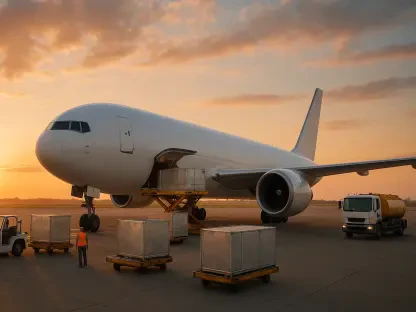
Looking ahead through the remainder of 2026, the logistics market is being transformed by the rise of new demand drivers, most notably the massive infrastructure requirements of the artificial intelligence sector. While traditional e-commerce growth has cooled in some regions due to new customs duties and shifting consumer priorities, the demand for high-value technological components has surged. Semiconductors, advanced processors, and specialized hardware for data centers are now the dominant force in the airfreight market. This shift has kept transpacific air routes operating at near-maximum capacity, with load factors consistently reaching 90% as companies rush to build out their digital capabilities.
This surge in high-tech cargo is also driving an investment in “digital resilience” within the logistics industry itself. Companies are increasingly using artificial intelligence and real-time data analytics to bypass traditional bottlenecks and predict disruptions before they occur. The ability to monitor the location and status of goods in real-time has become a critical competitive advantage, allowing firms to pivot their strategies in response to port closures or weather events. As traditional methods of supply chain management prove inadequate for the current volatility, the adoption of advanced technology is no longer an optional luxury but a necessity for survival in a fragmented market.
Regulatory changes regarding carbon emissions and the continued volatility of jet fuel prices are also set to impact the future of the industry. Jet fuel is projected to remain significantly more expensive than in previous years, which will keep airfreight rates high even as capacity increases. At the same time, new environmental standards are forcing carriers to invest in more efficient aircraft and alternative fuels, the costs of which are likely to be passed on to shippers. The era of low-cost, high-speed shipping is unlikely to return as the industry grapples with the dual pressures of environmental sustainability and energy insecurity. Experts suggest that the market will remain deeply fragmented, with a clear advantage for tech-centric nations that can leverage digital tools to mitigate physical risks.
Strategic Pillars for Building Resilience in a High-Rate Environment
In an environment defined by high costs and low reliability, businesses must adopt a more cautious and proactive approach to supply chain management. The first and most essential strategy is to diversify carrier portfolios and avoid over-reliance on a single mode of transport or a specific trade route. By spreading risk across multiple partners and pathways, companies can ensure that a disruption in one area does not lead to a total failure of their distribution network. This also involves securing comprehensive cargo insurance that specifically covers the modern risks of war, strikes, and civil unrest, which have become increasingly common in key maritime corridors.
Furthermore, shippers should prioritize long-term partnerships with providers who demonstrate high relative reliability. In a market where spot rates are highly volatile and carriers are quick to implement peak season surcharges, having a committed relationship with a reliable carrier can provide a much-needed level of stability. This may involve locking in capacity through long-term contracts, even if the rates are higher than historical norms, to ensure that goods continue to move during periods of extreme congestion. Planning for longer lead times and building in significant buffers for port delays has also become a standard practice for successful logistics operations in 2026.
Finally, the investment in supply chain visibility tools is no longer a secondary consideration. The ability to track shipments and anticipate delays allows businesses to manage customer expectations and make informed decisions about inventory placement. Understanding the “onshore battles” of inland transportation and port congestion is the only way to navigate the complexities of the current market effectively. Companies that prioritize transparency and data-driven decision-making are better positioned to handle the sudden shifts in trade policy and operational constraints that define the modern era. In the end, flexibility and risk mitigation are the only viable paths forward in a world where the old rules of logistics no longer apply.
Final Reflection: Adapting to the Permanent Transformation of Global Freight
The global logistics market throughout 2026 demonstrated that the industry moved beyond the simple cyclical patterns of the past and entered a new era of structural volatility. The transition away from a rules-based globalization model was completed as strategic protectionism and geopolitical friction became the primary determinants of trade flows. Shippers and carriers alike recognized that the previous assumptions of predictability were no longer valid, and they responded by building more resilient, albeit more expensive, supply chain networks. This shift proved that the cost of moving goods in a fragmented world is inherently higher, as businesses must now pay for the security and redundancy that was once taken for granted.
As the industry adapted to this “new normal,” it became clear that technological integration was the only way to mitigate the physical and political risks inherent in the modern market. The rise of artificial intelligence as both a major cargo category and a critical management tool reshaped the demand for air and ocean freight, creating new opportunities for those who could leverage data effectively. Meanwhile, the ongoing challenges of port congestion and energy costs served as constant reminders of the physical limitations of global infrastructure. Organizations that succeeded during this period were those that prioritized agility over pure cost-efficiency, recognizing that a cheap supply chain is of no use if it cannot deliver goods when they are needed.
The path forward for the global freight market remained one of constant adaptation and heightened awareness. The lessons of 2026 taught the world that stability was a luxury of a previous age and that resilience required a fundamental shift in mindset. Looking toward the end of the decade, it is certain that the movement of goods will continue to be impacted by the volatility of international relations and the constraints of a changing climate. For those in the logistics sector, the focus moved toward maintaining a high degree of flexibility and investing in the tools necessary to navigate a world that is as unpredictable as it is interconnected. The commitment to visibility and risk management became the hallmark of any successful global trade strategy.