
Traditional supply chains are undergoing a radical transformation as global logistics leaders pivot away from sprawling, land-intensive facilities toward dense, automated systems that promise to reconcile commercial growth with the non-negotiable demands of environmental preservation. This evolution is no longer a peripheral concern for corporate social responsibility teams but a central pillar of operational strategy. Decarbonization has become a critical objective as the logistics sector faces increasing pressure from both consumers and regulatory bodies to reduce its total environmental impact.
The transition from manual operations to advanced robotics represents a fundamental shift in how physical space is valued. By implementing high-density storage solutions, companies can significantly reduce the physical footprint required to manage their inventory. This spatial optimization is emerging as a primary metric for industrial sustainability, as it directly correlates with reduced land use and lower energy requirements for building maintenance. Key market players are now driving this innovation by proving that mechanical automation can serve as a catalyst for green operations rather than just a tool for speed.
The Green Revolution in Logistics: A Comprehensive Industry Snapshot
The current state of global logistics is defined by a frantic push toward carbon neutrality. Traditional warehouses, which often rely on massive horizontal expansion, are increasingly seen as inefficient relics that contribute to habitat loss and excessive resource consumption. In contrast, modern automated facilities utilize advanced robotics to navigate tightly packed vertical storage structures, allowing for a much higher concentration of goods within a smaller area.
This shift allows for the extraction of maximum performance from every square foot of an industrial site. By consolidating operations, logistics providers can avoid the environmental cost of developing new greenfield sites. The emphasis is moving toward smarter, more compact facilities that utilize mechanical automation to streamline movement and reduce the waste associated with traditional, labor-intensive material handling.
Emerging Paradigms in Sustainable Material Handling
High-Density Storage and the Rise of Compact Warehouse Architecture
Moving from lateral expansion to vertical density allows companies to minimize land consumption significantly while maintaining or even increasing storage capacity. Automated storage and retrieval systems enable facilities to reach heights that would be impractical for manual labor. This compact architecture leads to a direct reduction in the embodied carbon of the building, as smaller structures require fewer raw materials like concrete and structural steel during construction.
When building volumes are reduced by up to 40% compared to traditional sites, the environmental benefits extend throughout the entire life cycle of the facility. Smaller sites are easier to integrate into urban environments, reducing the distance goods must travel to reach the end consumer. This geographic proximity, enabled by the small footprint of automated systems, further contributes to a reduction in transportation-related emissions.
Growth Projections for Eco-Conscious Automation Systems
Analysis of market data regarding the adoption of green robotics suggests a steady upward trajectory through 2030. Industry experts anticipate that the continued integration of smart storage solutions will result in significant carbon savings across the global logistics sector. While the initial production of robotic systems involves an environmental cost, the operational life-cycle impact is often much lower than that of manual facilities.
Comparing the life-cycle environmental impact reveals that automated facilities achieve better long-term outcomes through improved accuracy and reduced waste. The precision of robotics minimizes product damage and optimizes the use of packaging materials. As the technology matures, the cumulative environmental benefits of these systems are expected to become a cornerstone of the industry’s net-zero strategy.
Navigating the Trade-Offs of Increased Energy Demand
Addressing the challenge of higher electricity consumption in automated systems is essential for a balanced sustainability strategy. While it is true that robotic fleets and conveyors draw more power than manual labor, this demand is frequently offset by significant savings in climate control. Automated warehouses can often operate with reduced heating, cooling, and lighting, especially in sections where human presence is minimal or unnecessary.
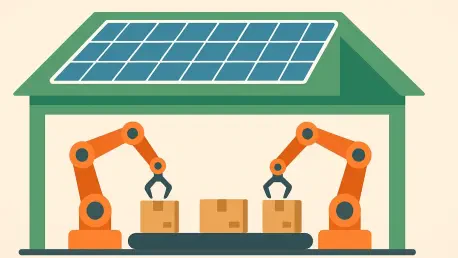
To further mitigate the impact, many operators are turning to renewable energy sources to power their robotic fleets. Solar arrays installed on warehouse roofs can provide a significant portion of the electricity needed for daily operations. Additionally, the manufacturing of the hardware itself is becoming greener. Some manufacturers have started using steel produced from 80% scrap metal, which can reduce the carbon footprint of individual robotic systems by nearly 30%.
The Regulatory Landscape and the Push for Quantifiable Transparency
Upcoming mandates for carbon disclosure are forcing a shift toward quantifiable transparency throughout the supply chain. Starting recently, industry leaders have committed to including specific carbon figures in every customer quotation, reflecting a broader trend of data-driven procurement. Customers no longer accept vague sustainability claims; they require hard data to understand the climate impact of their logistics partners.
Standardizing life-cycle assessments for equipment and infrastructure has become a priority for global regulatory bodies. These assessments allow for a fair comparison between different automation technologies and help operators make informed decisions based on environmental performance. Adhering to these evolving standards is becoming a requirement for doing business in an increasingly regulated international market.
The Future of Decarbonized Warehousing and Technological Innovation
The role of artificial intelligence and machine learning is expanding to optimize energy-efficient robot paths within the warehouse. By calculating the most direct routes and minimizing unnecessary movements, AI reduces the total energy consumption of the system. This leads to the possibility of fully autonomous, lights-out warehouses that operate in complete darkness and without the need for intensive climate control for human comfort.
Integration of circular economy principles is also reshaping the manufacturing of automation hardware. Designers are focusing on modularity and ease of recycling to ensure that robotic components can be refurbished or repurposed at the end of their functional life. Despite shifting global economic conditions, the momentum behind sustainable logistics technology remains strong, driven by both environmental necessity and the long-term cost savings associated with efficiency.
Final Assessment: Automation as a Catalyst for Net-Zero Logistics
Spatial efficiency and smart manufacturing drove a 25% reduction in emissions for early adopters of advanced automation. The industry recognized that data transparency was essential for fostering trust and ensuring future growth in a climate-conscious market. Operators who prioritized compact architecture and renewable energy integration found themselves better positioned to meet both regulatory requirements and consumer expectations.
Moving forward, the focus shifted toward refining the life-cycle impact of all warehouse hardware. Investors and operators were encouraged to align their efficiency goals with environmental stewardship to remain competitive. The integration of sustainable practices into the core of logistics technology proved that industrial growth could be achieved without compromising the planet’s health.