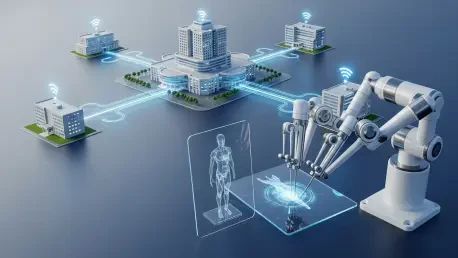

The traditional landscape of surgical robotics has functioned for decades as a closed loop where expensive, proprietary systems forced hospitals into rigid ecosystems that stifled broader innovation. This historical model of “walled gardens” often prioritized brand loyalty over clinical flexibility. KARL STORZ is currently dismantling this status quo by pivoting toward an open, connected ecosystem that prioritizes interoperability over isolation.
The End of Proprietary Isolation in the Modern Operating Room
Moving away from rigid, proprietary models ensures that the latest surgical innovations are no longer confined to the world’s most well-funded medical institutions. This shift fosters a marketplace where hardware and software from different vendors can finally communicate without friction. By championing this open standard, the industry moves closer to a reality where patient care is dictated by the best available technology rather than contractual obligations to a single manufacturer.
The Growing Divide Between Urban Centers and Rural Surgical Access
Advanced minimally invasive surgery has traditionally been a luxury of high-volume urban hospitals, leaving rural facilities and ambulatory surgery centers struggling to keep pace. This geographic disparity creates a significant barrier to patient care, where the quality of a procedure often depends on a patient’s zip code. As healthcare trends shift toward decentralized care, there is an urgent need for flexible, cost-effective robotic solutions that can be integrated into diverse clinical environments without requiring a complete overhaul of existing infrastructure.
Driving Efficiency with AI-Native Physical Robotics and 3D Visualization
The partnership between KARL STORZ and Moon Surgical centers on the Maestro platform, an AI-native system designed to automate complex intraoperative tasks. By combining Maestro’s physical AI with high-definition 3D visualization, surgeons can achieve a level of predictability and precision that was previously manual and labor-intensive. This integration streamlines workflows, allowing smaller clinics to perform sophisticated robotic procedures with a smaller footprint and reduced overhead, effectively bringing elite surgical capabilities to the community level.
Overcoming Geographic Barriers Through Remote Surgical Mentorship
Democratization also requires the transfer of expert knowledge, which is often limited by the physical location of top-tier specialists. Through its collaboration with Sovato, KARL STORZ is integrating visualization tools into a digital platform that facilitates remote surgical collaboration and tele-mentoring. This framework allows a specialist in one city to support a procedure in another, providing real-time guidance and decentralized training that empowers local surgical teams and improves patient outcomes in underserved regions.
Leveraging 15,000 Integrated Systems to Standardize Global Care
The credibility of this democratization effort is backed by an immense global footprint, with KARL STORZ already maintaining over 15,000 integrated operating rooms worldwide. This existing infrastructure provides a massive foundation for the rollout of new robotic and AI-driven capabilities without the need for redundant hardware. By synthesizing physical robotics with a pre-established digital network, the company is creating a unified standard of care that can be scaled rapidly across different continents and healthcare systems.
A Framework for Adopting Open-System Robotic Solutions
To successfully transition to this new era of surgery, healthcare providers adopted a strategic framework focused on technological synergy. Facilities began by auditing their current visualization hardware for compatibility with open-platform robotic arms, which reduced the need for total system replacements. Furthermore, hospital administrators prioritized platforms that supported remote digital connectivity. This ensured their staff accessed global training networks and tele-mentoring services to maintain high standards of excellence regardless of facility size.